
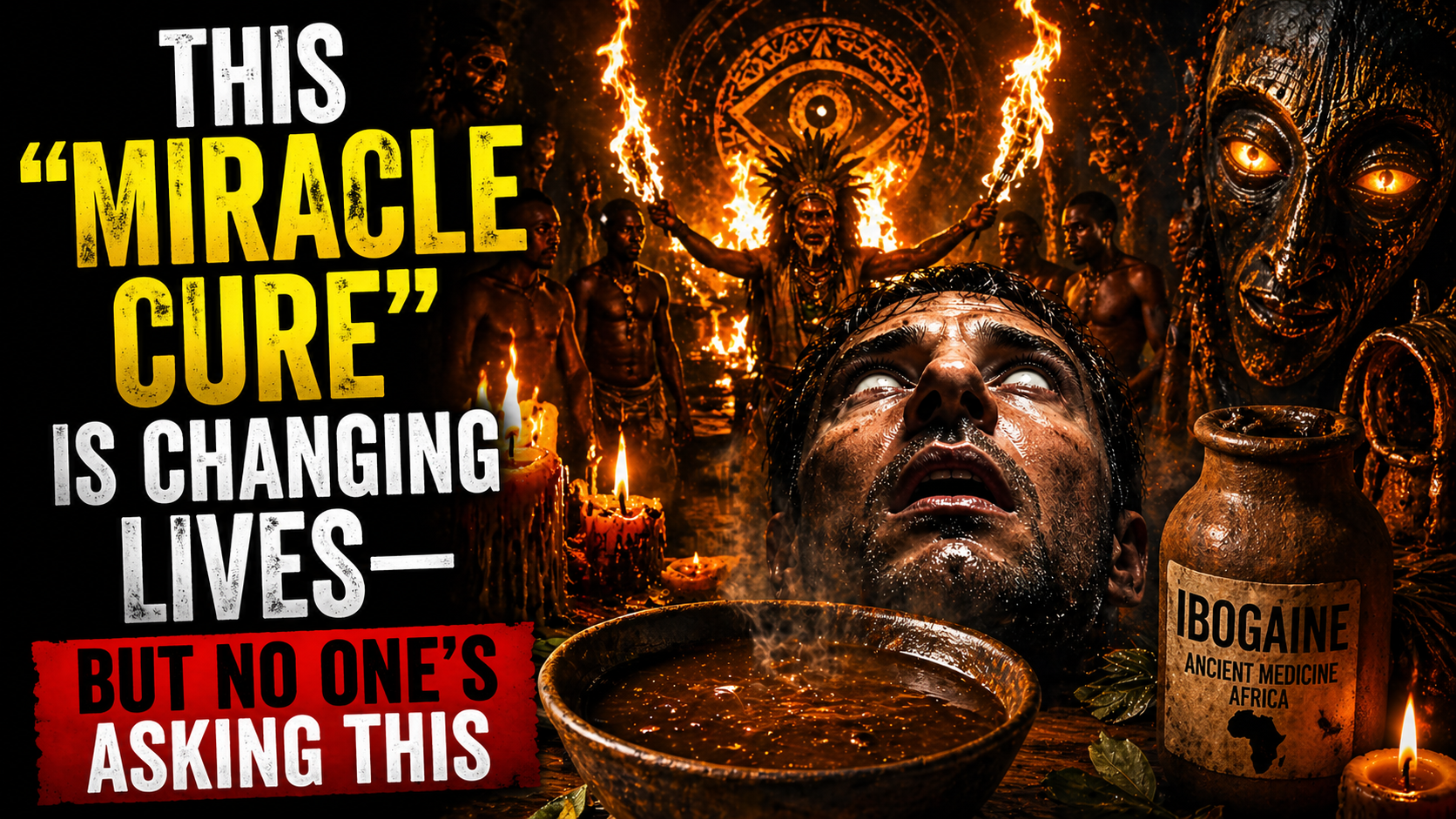
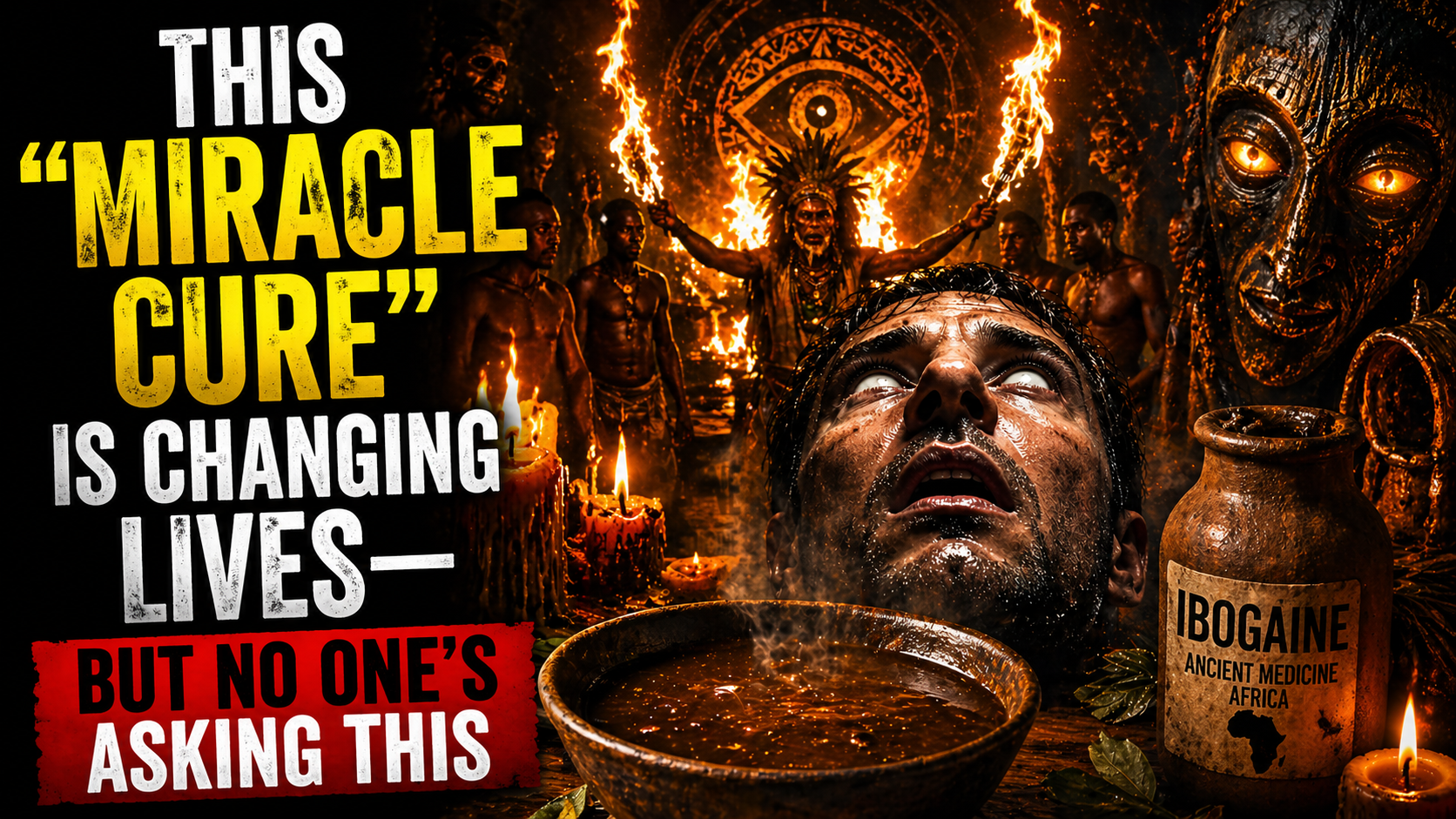
Ibogaine Treatment for Addiction: Benefits, Risks, and What No One Tells You
In this article, Darren Stott exposes a rapidly emerging cultural shift hiding in plain sight.
Ibogaine Treatment for Addiction: Benefits, Risks, and What No One Tells You
Drawing readers from the power-filled atmosphere of the Oval Office into the underground world of ibogaine ceremonies, he unpacks how a once-obscure African plant medicine is being rebranded as a “miracle cure” for addiction, trauma, and PTSD—now gaining attention from influential voices like Joe Rogan, Robert F. Kennedy Jr., and Donald Trump.
THE MIRACLE DRUG IN THE OVAL OFFICE
The Oval Office has a way of shrinking conversations down to their essence. It is not just the weight of history or the symbolism of power, but the pace. Ideas do not linger there—they accelerate. What begins as discussion often ends as direction.
On this particular day, the conversation was not about war, trade, or elections. It was about a plant. A compound derived from the bark of a tree native to Central Africa. Something ancient, obscure, and until recently, largely confined to underground clinics and ceremonial settings. And yet, here it was—being discussed at the highest level of American influence.
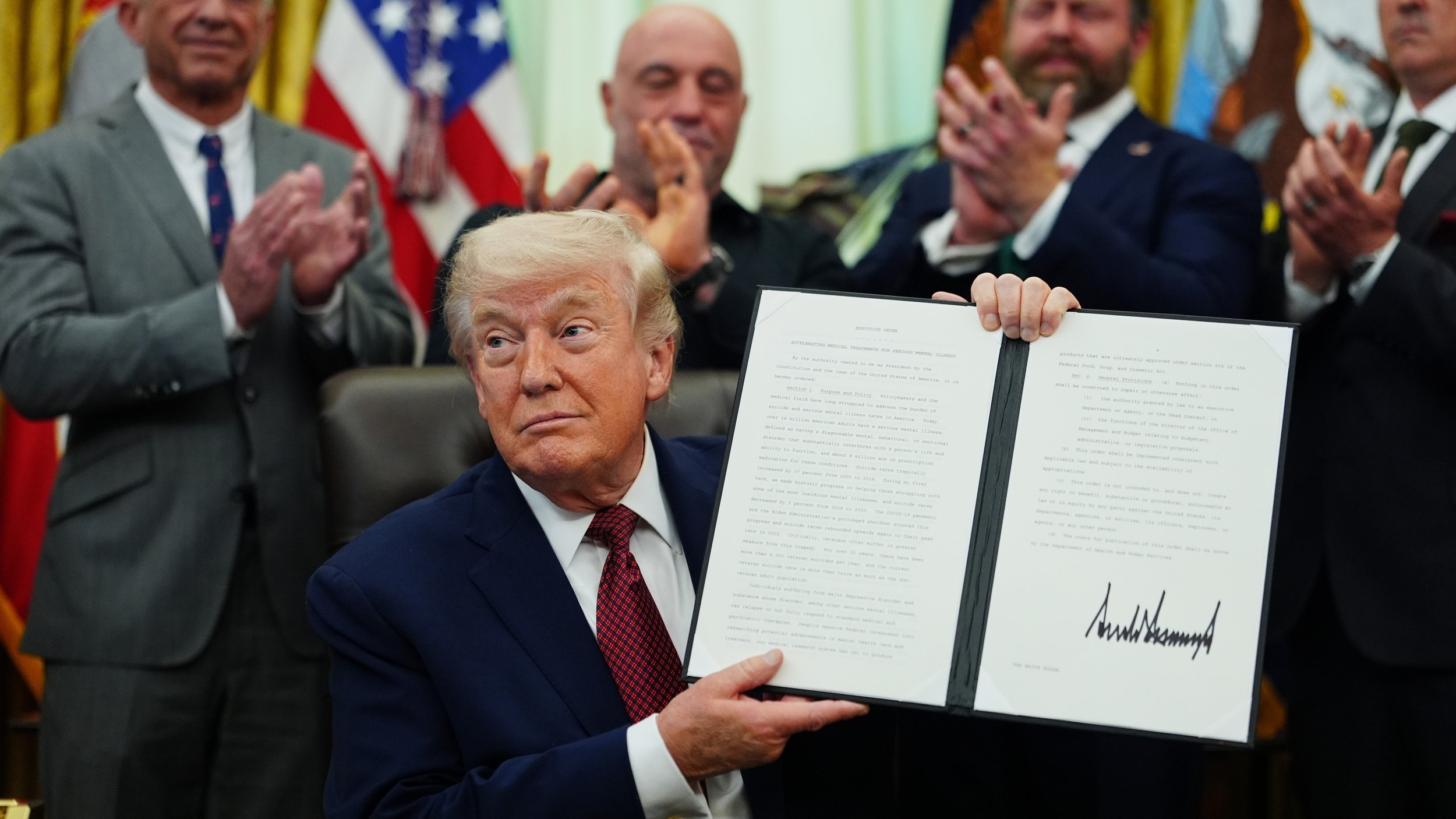
Joe Rogan leaned forward and described it plainly. He called it a “miracle drug,” pointing to claims that it could help people break opioid addiction at astonishing rates. Sitting nearby, Robert F. Kennedy Jr. listened with interest, recognizing both the urgency of the addiction crisis and the potential implications of such a treatment. Then, in a moment that reflects the speed at which modern decisions can be made, Donald Trump responded with characteristic directness: “Sounds great. Do you want FDA approval? Let’s do it.”
With that exchange, something that had long existed on the margins suddenly felt close to entering the mainstream. Ibogaine—once a fringe, controversial substance—was now part of a national conversation.
From Ceremony to Conversation
Outside of Washington, however, the reality of Ibogaine looks very different from the language of policy and approval. Traditionally, it is administered in a setting that feels less clinical and more ceremonial. The substance itself is often prepared as a thick, bitter mixture derived from the iboga plant, and in some traditions, its use is preceded by rituals in which practitioners seek permission from what they believe to be the spirit associated with the plant.
The experience is not casual. It is intense, prolonged, and deeply immersive. Those who undergo it often describe a process that unfolds over the course of one to three days. It begins with physical discomfort—nausea, heaviness, and a sense that the body is resisting what is about to happen. From there, the experience shifts into something far more complex.
Participants frequently report entering a state that resembles a waking dream. Memories emerge not as distant recollections but as vivid, fully formed scenes. Individuals revisit moments from their past, sometimes beginning with early childhood, and in some cases, even earlier experiences that they interpret as pre-birth or womb-related memories. The progression can feel chronological, as if one is walking through an entire life story with unusual clarity and detail.
What distinguishes this experience from ordinary memory is the sense of detachment. Rather than being overwhelmed by emotion, individuals often describe observing their past from a third-person perspective. This distance appears to allow them to process events that previously felt too painful or complex to confront. In this state, many report a sense of acceptance and reconciliation with their past, as well as a release of emotional burdens that had persisted for years.
Why It Feels Like Healing
This is one reason Ibogaine has gained attention as a potential treatment for addiction and trauma. From a neurological perspective, addiction—particularly to opioids—can fundamentally alter the brain’s reward system. Substances like heroin or oxycodone flood the brain with dopamine at levels far beyond what natural experiences can produce. Over time, the brain adapts by reducing its own ability to generate pleasure, creating a cycle in which the substance becomes necessary simply to feel normal.
Ibogaine appears to interact with the same regions of the brain involved in memory, emotion, and identity. By allowing individuals to revisit traumatic experiences from a detached perspective, it may help disrupt the patterns that sustain addiction and psychological distress. This capacity to interrupt deeply embedded loops is often cited as a reason for its reported effectiveness.
At a human level, this can feel like something more than treatment. When someone who has been trapped in addiction suddenly experiences clarity, distance from their pain, and the ability to process it without being overwhelmed, the result is often described in transformational terms. Words like “freedom,” “rebirth,” and “new life” are common—not because they are metaphorical, but because they feel literal to the person experiencing them.
The Experiences That Raise Questions

However, the experience is not limited to memory and emotional processing. Many participants also describe encounters that are more difficult to categorize within a purely neurological framework. These include interactions with what are perceived as guiding presences or entities. Some describe geometric or fractal-like beings that communicate through images, movement, or an intuitive transfer of understanding. Others report encountering figures that feel nurturing or instructive, sometimes described in terms such as “guides” or “teachers.”
What is particularly notable is the consistency of these reports. Across different individuals and settings, similar types of encounters are described. Moreover, comparable experiences have been reported in other altered states of consciousness, including those induced by different substances, intensive breathwork, and certain forms of meditation. This overlap raises questions that extend beyond chemistry and into the nature of perception and consciousness itself.
For many, these encounters are interpreted as meaningful and even beneficial. They can provide a sense of direction, understanding, or resolution. At the same time, they introduce a dimension to the experience that is not easily explained or measured, and that can shape how individuals interpret what has happened to them.
A Conversation Focused on Outcomes
As interest in Ibogaine grows, the public conversation has largely focused on its potential benefits. This is understandable. The opioid crisis continues to affect millions of people, and existing treatments are often limited in their effectiveness. Any substance that offers even the possibility of significant improvement is likely to generate attention and support.
In environments like the Oval Office, this conversation naturally centers on outcomes. Does it reduce addiction? Can it be studied? Should it be approved? These are practical and necessary questions, particularly when public health is at stake.
However, they do not fully capture the nature of the experience being discussed. If a treatment not only alters brain function but also introduces individuals to vivid, structured experiences that feel deeply personal or even spiritual, then its impact extends beyond biology. It begins to shape interpretation, belief, and meaning.
Looking Beneath the Surface
The structure of the Ibogaine experience itself is also worth examining. Many descriptions follow a similar pattern: a confrontation with one’s past, a sense of symbolic death or dissolution, a guided process of reflection or transformation, and a return with a renewed sense of life and identity. This sequence is powerful, and it resonates with broader human themes of change and renewal.
As Ibogaine moves closer to mainstream acceptance, the conversation surrounding it is likely to become more focused on measurable data—success rates, clinical trials, and regulatory pathways. These are essential components of responsible evaluation. At the same time, they do not fully address the experiential dimension that many participants report.
Ultimately, the emergence of Ibogaine into public awareness reflects a broader moment in which scientific inquiry, personal experience, and cultural narratives are intersecting. It highlights both the urgency of addressing addiction and the complexity of doing so through methods that extend beyond conventional frameworks.
The Question That Remains
The question, then, is not simply whether Ibogaine works, but how it works—and what accompanies that process. As with many developments that move rapidly from the margins to the center of attention, there is value in examining not only the outcomes but also the underlying experiences involved.
In the Oval Office, conversations tend to resolve quickly. Decisions are made, and momentum builds. Outside of it, the reality is more layered. And as this substance continues to move into the mainstream, those layers may prove just as important as the results themselves.
WHY I VOTED FOR TRUMP AND CULP
The following is a response that I gave to the Seattle Times reporter recently when interviewed for the front page story on leaders in our region and what they are seeing and feeling in this current election.

So, I am a Christian, and I pastor a church.
This means that I am pro-God, pro-religious-gatherings, pro-Israel, and pro-life. These are values of mine. So when it comes to Trump's platform, he doesn't come across to be against God, against religious gatherings, against Israel, and against the unborn. He just doesn't come across to be that way.
The fact that churches were shut down this year should have been a choice that we were allowed to make, and it wasn't. Despite horrific pandemics in history, this was unprecedented. Local governors got to act like adults, and pastors were treated like children.
We were not allowed to decide for ourselves.
Do you blame Inslee?
The Church never really prospers when everything is going well. It is during times of great adversity, calamity, and hopelessness that the Church prospers. The Church is the Church for this very reason.
Just look at the role of Providence Hospital in Seattle and our State statue (Mother Joseph of the Sisters of Providence). In a time of great hardship and primitive conditions, the first hospital in Seattle was birthed by the Church!
Our (Seattle Revival Center) hands were tied because of the State Government. They were telling us exactly what we could do or not do. They were like, "Hey, you can do Zoom meetings." My response is like, "Alright, that's very liberating of you."
I get particular freedoms in the hospital because I am clergy. I get specials freedoms that sometimes even the family doesn't get. Hospitals recognize the power of prayer and spiritual counsel. I was just in a hospital room last week that was considered to be dangerous. The man had a contagious infection.
I had to gown up. It was dangerous, but the hospital recognized the importance of the visit, I was treated like an adult, and I assessed the risk for myself. I went in. He needed me. He was in (what doctors were telling him were) his final days of fighting cancer. I went in and prayed with him.
This is when religion is needed.
Faith is most important when (in the natural) you have no hope. When people are wrestling with depression, when lives are at stake, the Church is needed. We saw record suicide numbers in our state, and Governor Inslee said, "You are not allowed to go to church."
We saw record suicide numbers in our state, and Governor Inslee said, "You are not allowed to go to church."
This should have been our choice as pastors and leaders. This was the first time in the State of Washington it was illegal to go to church, and I think that was a tragedy.
Governor Inslee made some massive calls. He said Churches need to shut down just for a short time. That we just need to, "flatten the curve."
He said that if we all work together, we will flatten the curve if we all shut down and then we can reopen.
We thought, sure, we can shut down for two weeks. We said, "We can cooperate. We don't want to be reckless, unwise, and unlawful." So we submitted to our governing authorities.
President Trump got on TV and said that churches were essential, but Governor Inslee disagreed. We flattened the curve right away, but then Inslee changed his mind and informed us that we could not reopen until no one was dying. He moved the goal post. I was like, "No church until people stop dying?"
Inslee said (with his actions) that the Church was not essential, but that (packed out) marijuana stores and (jammed packed) Costcos are.
Inslee said (with his actions) that the Church was not essential, but that (packed out) marijuana stores and (jammed packed) Costcos are.
Then, after twelve weeks, Inslee said that we could now host outdoor meetings up to fifty people. So we started hosting multiple meetings, back to back, in a tent, for another four weeks.
While we were in that tent, many Sundays were windy, cold, and pouring rain. We were standing outside, freezing. Families outside, shivering and singing to Jesus with masks on. All because of what Inslee calls "science" and "the facts."
We have a building that can seat a thousand people. We could have practiced social distancing, but instead, we have people getting colds, manifesting the same symptoms as covid (runny nose and cough) all in the pursuit of health. We were outside in the cold, underneath a tent, worshiping, when we could have been inside our building.
There was no choice in this. One man said, "This is what's good for you. You will do it this way, or you are breaking the law."
So, we played by the rules, but there was an absurdity it in. There was this feeling that we were being controlled, and we fought to maintain the right attitude despite the government overreach.
The public safety measures did not make us feel any safer.
There was all this health concern from Governor Inslee, but no health advice. No vitamin regiments. No tips. Just control.
I am voting for Trump and Culp because I truly believe that they assume that responsible adults can make wise choices for themselves.
WHY I HATE POLITICS
The following is a response that I gave to the Seattle Times reporter recently when interviewed for front-page story on leaders in our region and what they are seeing and feeling in this current election.

Front page of The Seattle Times, November 1, 2020
For me, when I vote, it is not going to be about Trump versus Biden.
For me, there are some things that are really important, and there are some things that I am watching closely.
For example, I am watching what the “new normal” is for Seattle. I am looking at how my wife and I do not feel safe to go for a date night downtown. I am looking at what seems to be a severe lack of vision and direction and unity within our State. I am looking at all these negative factors and the fact that our elected officials (who happen to be Democrats) are not taking responsibility.
I am looking at all these negatives that exist because of liberal ideals within our region, and they are resulting in negative consequences. Then I marvel at how the people that live here are seeing everything that is taking place and they blame it all on President Trump. For example, all the fires we just had here in Washington, Oregon, and California. Somehow, that is President Trump’s fault. The riots, those are Trump's fault as well, right? CHOP, that was also Trump's fault too apparently.
I am concerned for our city and our State because I love Seattle, and I love the people who are here that make our city great.
Seattle is such an amazing, innovative, and creative city. There is no other city like Seattle. Sometimes I wonder what would be possible in our city actually valued our businesses? What would happen if Jeff Bezos was not treated as though he was the Antichrist and if Boeing was not seen as this large evil corporate machine.
What would happen if we could celebrate innovation instead of demonizing it?
I would love to see some sort of courageous leadership where it is not about politics, but it is about true government.
I love government. I have even been involved in our local government, but, I hate politics.
I hate the political performance that takes place on both sides of the aisle.
Performance does not do good.
Performance does not bring about positive changes in the culture.
Performance does not create contrast.
Performance is just about approval and getting votes, and then once the election is over, everybody gripes and complains.
What if there were some courageous leaders who could paint a compelling vision for our city and State, but with the right motivation?
Amazing things could be accomplished, but not for the glory of a political party, but rather a motivation birthed out of sincere love and appreciation for our city and for our State.
That is not what I see.
I see all this stuff on the news and social media and it is not about government; it is political performance, and as a millennial, it makes me so disillusioned with the whole political scene, system, and process.
As a pastor, I am saying, “Go and vote. Vote your conviction and your values. If you vote democrat, I will still honor you, and when I vote Republican, I ask that you do the same.”
When we are all face to face, we are friends and family, but sometimes when we get on to social media, we become enemies and monsters.
This is why I hate politics. It is drama and hype that everybody gets to entangle in, where our only responsibility is to vote. When voting is our only responsibility, then we get to continue to surrender our leadership and influence, and if the election does not go our way, we all get to be victims of the election.
I will not be a victim of any election!
Regardless of what happens in this election, I chose to be a governing one who will leverage my partnerships, influence, and revelation to transform our city and nation with love as the primary motivator.