
Ibogaine Treatment for Addiction: Benefits, Risks, and What No One Tells You
In this article, Darren Stott exposes a rapidly emerging cultural shift hiding in plain sight.
Ibogaine Treatment for Addiction: Benefits, Risks, and What No One Tells You
Drawing readers from the power-filled atmosphere of the Oval Office into the underground world of ibogaine ceremonies, he unpacks how a once-obscure African plant medicine is being rebranded as a “miracle cure” for addiction, trauma, and PTSD—now gaining attention from influential voices like Joe Rogan, Robert F. Kennedy Jr., and Donald Trump.
THE MIRACLE DRUG IN THE OVAL OFFICE
The Oval Office has a way of shrinking conversations down to their essence. It is not just the weight of history or the symbolism of power, but the pace. Ideas do not linger there—they accelerate. What begins as discussion often ends as direction.
On this particular day, the conversation was not about war, trade, or elections. It was about a plant. A compound derived from the bark of a tree native to Central Africa. Something ancient, obscure, and until recently, largely confined to underground clinics and ceremonial settings. And yet, here it was—being discussed at the highest level of American influence.

Joe Rogan leaned forward and described it plainly. He called it a “miracle drug,” pointing to claims that it could help people break opioid addiction at astonishing rates. Sitting nearby, Robert F. Kennedy Jr. listened with interest, recognizing both the urgency of the addiction crisis and the potential implications of such a treatment. Then, in a moment that reflects the speed at which modern decisions can be made, Donald Trump responded with characteristic directness: “Sounds great. Do you want FDA approval? Let’s do it.”
With that exchange, something that had long existed on the margins suddenly felt close to entering the mainstream. Ibogaine—once a fringe, controversial substance—was now part of a national conversation.
From Ceremony to Conversation
Outside of Washington, however, the reality of Ibogaine looks very different from the language of policy and approval. Traditionally, it is administered in a setting that feels less clinical and more ceremonial. The substance itself is often prepared as a thick, bitter mixture derived from the iboga plant, and in some traditions, its use is preceded by rituals in which practitioners seek permission from what they believe to be the spirit associated with the plant.
The experience is not casual. It is intense, prolonged, and deeply immersive. Those who undergo it often describe a process that unfolds over the course of one to three days. It begins with physical discomfort—nausea, heaviness, and a sense that the body is resisting what is about to happen. From there, the experience shifts into something far more complex.
Participants frequently report entering a state that resembles a waking dream. Memories emerge not as distant recollections but as vivid, fully formed scenes. Individuals revisit moments from their past, sometimes beginning with early childhood, and in some cases, even earlier experiences that they interpret as pre-birth or womb-related memories. The progression can feel chronological, as if one is walking through an entire life story with unusual clarity and detail.
What distinguishes this experience from ordinary memory is the sense of detachment. Rather than being overwhelmed by emotion, individuals often describe observing their past from a third-person perspective. This distance appears to allow them to process events that previously felt too painful or complex to confront. In this state, many report a sense of acceptance and reconciliation with their past, as well as a release of emotional burdens that had persisted for years.
Why It Feels Like Healing
This is one reason Ibogaine has gained attention as a potential treatment for addiction and trauma. From a neurological perspective, addiction—particularly to opioids—can fundamentally alter the brain’s reward system. Substances like heroin or oxycodone flood the brain with dopamine at levels far beyond what natural experiences can produce. Over time, the brain adapts by reducing its own ability to generate pleasure, creating a cycle in which the substance becomes necessary simply to feel normal.
Ibogaine appears to interact with the same regions of the brain involved in memory, emotion, and identity. By allowing individuals to revisit traumatic experiences from a detached perspective, it may help disrupt the patterns that sustain addiction and psychological distress. This capacity to interrupt deeply embedded loops is often cited as a reason for its reported effectiveness.
At a human level, this can feel like something more than treatment. When someone who has been trapped in addiction suddenly experiences clarity, distance from their pain, and the ability to process it without being overwhelmed, the result is often described in transformational terms. Words like “freedom,” “rebirth,” and “new life” are common—not because they are metaphorical, but because they feel literal to the person experiencing them.
The Experiences That Raise Questions

However, the experience is not limited to memory and emotional processing. Many participants also describe encounters that are more difficult to categorize within a purely neurological framework. These include interactions with what are perceived as guiding presences or entities. Some describe geometric or fractal-like beings that communicate through images, movement, or an intuitive transfer of understanding. Others report encountering figures that feel nurturing or instructive, sometimes described in terms such as “guides” or “teachers.”
What is particularly notable is the consistency of these reports. Across different individuals and settings, similar types of encounters are described. Moreover, comparable experiences have been reported in other altered states of consciousness, including those induced by different substances, intensive breathwork, and certain forms of meditation. This overlap raises questions that extend beyond chemistry and into the nature of perception and consciousness itself.
For many, these encounters are interpreted as meaningful and even beneficial. They can provide a sense of direction, understanding, or resolution. At the same time, they introduce a dimension to the experience that is not easily explained or measured, and that can shape how individuals interpret what has happened to them.
A Conversation Focused on Outcomes
As interest in Ibogaine grows, the public conversation has largely focused on its potential benefits. This is understandable. The opioid crisis continues to affect millions of people, and existing treatments are often limited in their effectiveness. Any substance that offers even the possibility of significant improvement is likely to generate attention and support.
In environments like the Oval Office, this conversation naturally centers on outcomes. Does it reduce addiction? Can it be studied? Should it be approved? These are practical and necessary questions, particularly when public health is at stake.
However, they do not fully capture the nature of the experience being discussed. If a treatment not only alters brain function but also introduces individuals to vivid, structured experiences that feel deeply personal or even spiritual, then its impact extends beyond biology. It begins to shape interpretation, belief, and meaning.
Looking Beneath the Surface
The structure of the Ibogaine experience itself is also worth examining. Many descriptions follow a similar pattern: a confrontation with one’s past, a sense of symbolic death or dissolution, a guided process of reflection or transformation, and a return with a renewed sense of life and identity. This sequence is powerful, and it resonates with broader human themes of change and renewal.
As Ibogaine moves closer to mainstream acceptance, the conversation surrounding it is likely to become more focused on measurable data—success rates, clinical trials, and regulatory pathways. These are essential components of responsible evaluation. At the same time, they do not fully address the experiential dimension that many participants report.
Ultimately, the emergence of Ibogaine into public awareness reflects a broader moment in which scientific inquiry, personal experience, and cultural narratives are intersecting. It highlights both the urgency of addressing addiction and the complexity of doing so through methods that extend beyond conventional frameworks.
The Question That Remains
The question, then, is not simply whether Ibogaine works, but how it works—and what accompanies that process. As with many developments that move rapidly from the margins to the center of attention, there is value in examining not only the outcomes but also the underlying experiences involved.
In the Oval Office, conversations tend to resolve quickly. Decisions are made, and momentum builds. Outside of it, the reality is more layered. And as this substance continues to move into the mainstream, those layers may prove just as important as the results themselves.

Understanding Soul Spirit Hurts & Demonic Oppression
We are the most trauma-aware generation in history — and somehow the most spiritually tormented.
We have language for everything now. Trauma, triggers, attachment wounds, emotional dysregulation, nervous system dysrhythmia, trauma-bonding, shadow work. We’ve created an emotional dictionary that would impress Freud and bewilder Moses.
The Church is not well.
We are the most trauma-aware generation in history — and somehow the most spiritually tormented.
Isn’t that strange?
We have language for everything now. Trauma, triggers, attachment wounds, emotional dysregulation, nervous system dysrhythmia, trauma-bonding, shadow work. We’ve created an emotional dictionary that would impress Freud and bewilder Moses.
And yet — anxiety is up. Depression is rising. Trust is collapsing. Loneliness is epidemic. Self-harm among teens is skyrocketing. Marriages are dissolving. Friendships are thinning. Faith is fading behind a fog of exhaustion.
We are not well.
And the Christians aren’t doing much better. In fact, many believers feel like they’re drowning silently.
They love God.
They worship sincerely.
They pray earnestly.
But spiritually?
Emotionally?
They’re numb.
They’re tired.
They’re stuck in cycles they can’t explain or escape.
If emotional vocabulary could save the soul, we’d be the healthiest saints who ever lived. Instead, we are medicated, exhausted, overwhelmed, and spiritually compromised.
Why?
Because trauma isn’t just overwhelming pain from the past.
Trauma — when unhealed — becomes architecture.
It builds something.
A structure.
A legal opening.
A spiritual doorway.
And the enemy loves doorways.
We Don’t Have a Mental Health Crisis. We Have a Soul Crisis.
People say:
“I’m hurting emotionally.”
But look beneath that surface and you find:
Spiritual numbness
Suspicion toward God
Prayer fatigue
Trust collapse
Hope erosion
A constant sense of threat or abandonment
This isn’t just psychology.
This is spiritual biology.
Yes, humans have emotions — but the Bible says we also have souls.
And the soul can be:
Broken (Psalm 34:18)
“The LORD is near to the brokenhearted and saves those who are crushed in spirit.”
Crushed (Psalm 51:17)
“A broken and contrite heart, O God, You will not despise.”
Wounded (Psalm 147:3)
“He heals the brokenhearted and binds up their wounds.”
Cast down (Psalm 42:5)
“Why are you cast down, O my soul, and why are you in turmoil within me?”
Fragmented (Ezekiel 34:16)
“I will seek the lost, bring back the strayed, bind up the injured, and strengthen the weak…”
(speaks of God restoring the scattered, shattered, and broken parts of His people)
Tormented (Lamentations 3:17–19)
“My soul is bereft of peace… my soul continually remembers it and is bowed down within me.”
Scripture isn’t polite about this. It stares trauma in the face and names it.
Meanwhile, culture glamorizes trauma as identity, and the church often treats trauma like a bad mood.
So believers limp along, inwardly bleeding, outwardly smiling, doing their best to worship through internal shrapnel.
But here’s the truth most people never hear:
You can't worship your way out of a lie that lives in your soul.
You can be saved and still be stuck.
Not because you don't love God — but because you're injured.
How Trauma Becomes a Door
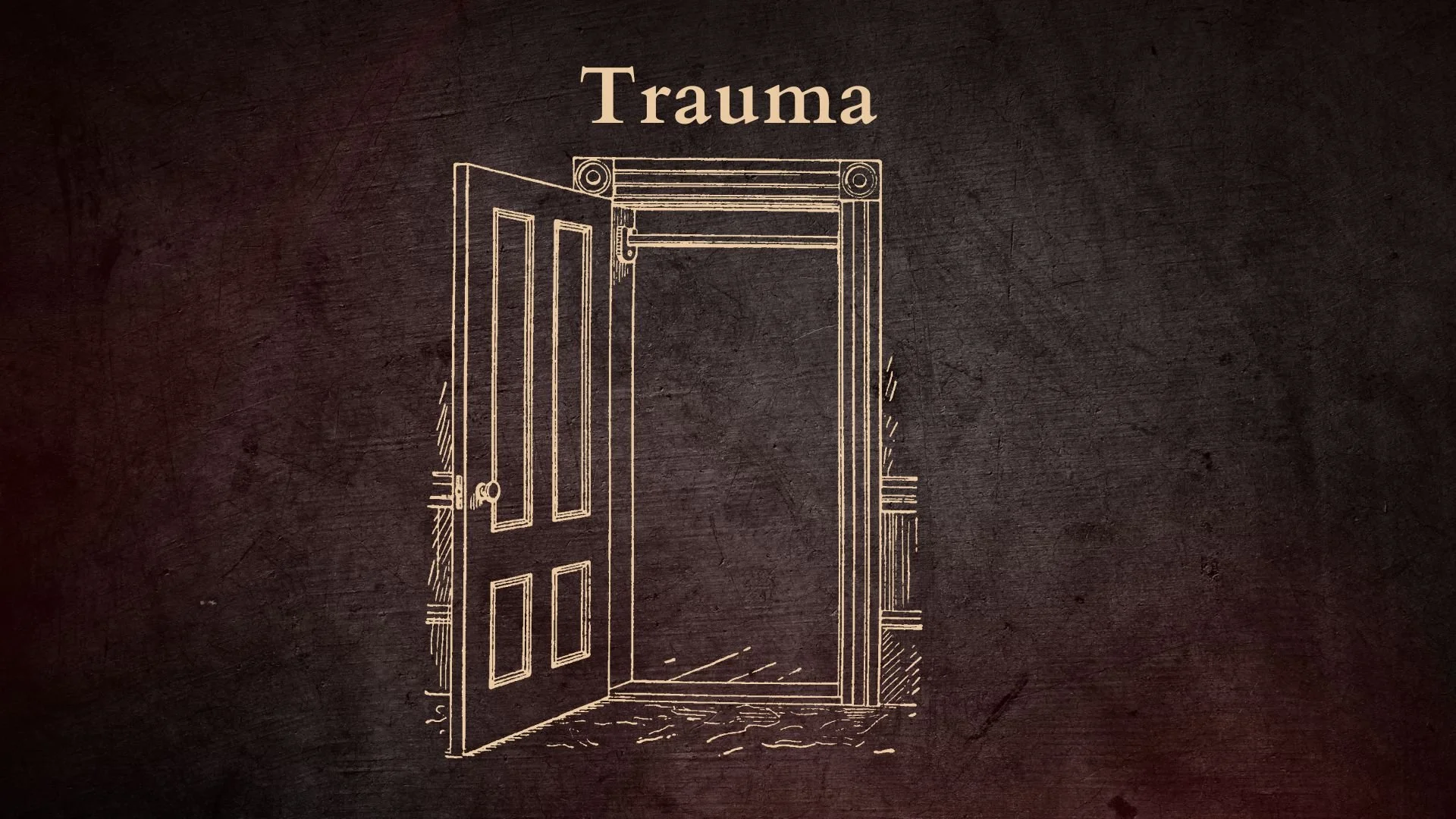
Trauma happens.
And for a moment, everything freezes.
But here’s the part no one talks about:
The doorway isn't built during the trauma.
It's built afterward. Quietly. Piece by piece.
Like a spiritual IKEA project, assembled without instructions but with devastating precision.
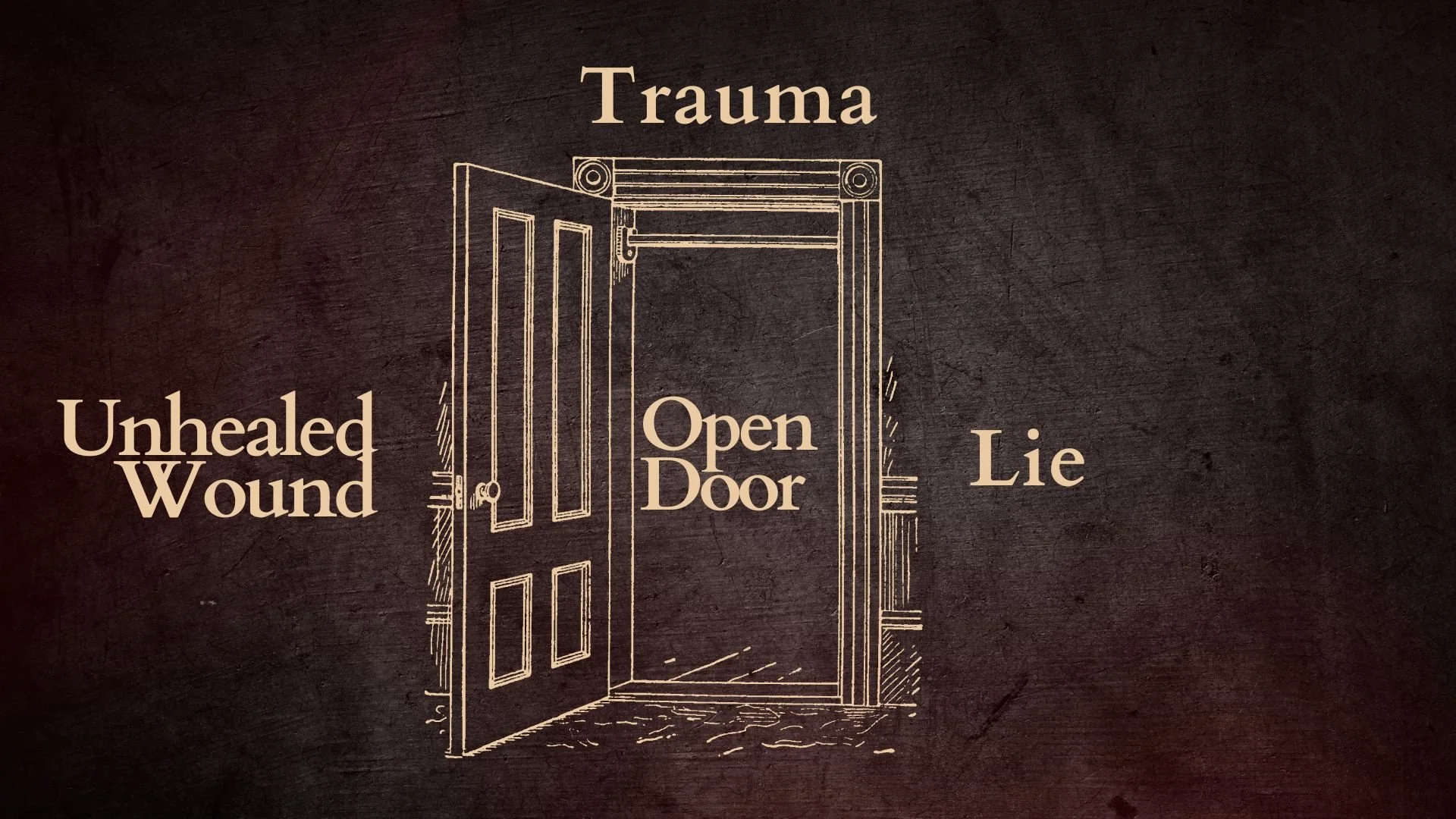
It starts with the trauma — the moment something broke. That becomes the top beam of the frame. Then comes the unhealed wound — the lingering ache we never really processed or resolved. That takes its place as the left post, holding the structure steady. Now comes the crucial moment: a lie enters — whispered at the point of maximum vulnerability…
“You’re alone.”
“You’re not safe.”
“You don’t matter.”
“God didn’t show up for you.”
“You’re unlovable.”
That lie becomes the right post — the supporting beam. And once you believe it, agreement forms — like a hinge. That hinge swings open the moment you emotionally nod along. Then coping mechanisms arrive — the doorknob — the habits we think are protecting us but that actually become re-entry points for bondage. And then, quietly, like a thief slipping through the night, the intruder steps in: fear, shame, despair, rejection, torment, heaviness — not invited, but legally permitted.
No one intends to build a spiritual doorway.
But unresolved pain, embraced lies, and survival habits become the raw materials.
Time passes. Life moves on.
And suddenly, there it is — a door you never meant to construct, opened to something God never invited in.
Why So Many Believers Feel Spiritually “Blocked”
Modern Christian advice often sounds like:
“Just pray about it.”
“Praise through it.”
“Try harder.”
“Trust God.”
And those things matter — deeply.
But here's the catch:
You can’t cast out what has legal right,
and you can’t praise away what has permission to stay.
You don’t have a faith problem.
You have a wound problem.
And wounds don’t heal through striving — they heal through truth.
How The Devil Uses Pain To Train
Satan doesn’t simply wound you.
He teaches you through the wound.
Trauma becomes his classroom.
And pain becomes a megaphone.
Right after the impact, while your soul is raw, he feeds you doctrine:
“You’re abandoned.”
“You’re unsafe.”
“You’re unseen.”
“You’re worthless.”
“Love hurts.”
“God protects everyone else.”
“You’re damaged.”
And you don’t say it out loud, but a part of your soul whispers,
“…maybe that’s true.”
That is the agreement.
That is the hinge.
That is the moment the door creaks open.
The enemy does not need rebellion —
just cooperation with a lie.
Five Real Doorway Blueprints
1. Abandonment
Trauma: A parent leaves, emotionally or physically.
Wound: Rejection.
Lie: “No one will ever stay.”
Agreement: “I must protect myself.”
Doorway: Self-isolation, mistrust.
Spirit: Rejection, fear, loneliness.
They don’t fear commitment —
they fear devastation.
2. Betrayal
Trauma: Someone you trusted violated you.
Wound: Shattered trust.
Lie: “I can only rely on myself.”
Agreement: “Never trust fully again.”
Doorway: Control, emotional shutdown.
Spirit: Suspicion, fear, jealousy.
They call it discernment —
but it’s actually fear with Bible verses.
3. Humiliation / Shame
Trauma: Mocked, belittled, bullied.
Wound: Identity rupture.
Lie: “I’m not enough.”
Agreement: “I must hide my real self.”
Doorway: People-pleasing, self-rejection.
Spirit: Shame, insecurity, self-loathing.
They don’t lack confidence —
they lack safety.
4. Sudden Loss
Trauma: Unexpected grief or abandonment by circumstance.
Wound: Despair, heartbreak.
Lie: “God didn’t show up.”
Agreement: “I can’t trust God with my heart again.”
Doorway: Withdrawing from faith.
Spirit: Heaviness, hopelessness.
They don’t doubt God exists —
they doubt His care.
5. Sexual Violation
Trauma: Abuse, betrayal of innocence, unwanted exposure.
Wound: Soul defilement.
Lie: “I am dirty.”
Agreement: “I have no worth.”
Doorway: Self-hate, secret shame, compulsion.
Spirit: Lust, torment, confusion.
They don’t struggle with purity —
they struggle with violation.
Why the Church Often Misses It
Because we preach forgiveness without inner healing.
Deliverance without soul repair.
Holiness without emotional restoration.
But Jesus didn’t come just to save you.
He came to heal your soul and then set you free.
Heal the brokenhearted → proclaim liberty
(Luke 4:18)
Not the other way around.
You don’t free captives by yelling at chains —
you heal the heart that forged them.
Healing Doesn’t Mean Pretending It Didn’t Hurt
Healing means:
You remember without bleeding
You feel without drowning
You trust without terror
You love without bracing for abandonment
You rest without fear
You worship with an open heart again
Healing isn’t forgetting.
It's removing the power, authority, and influence of the wound.
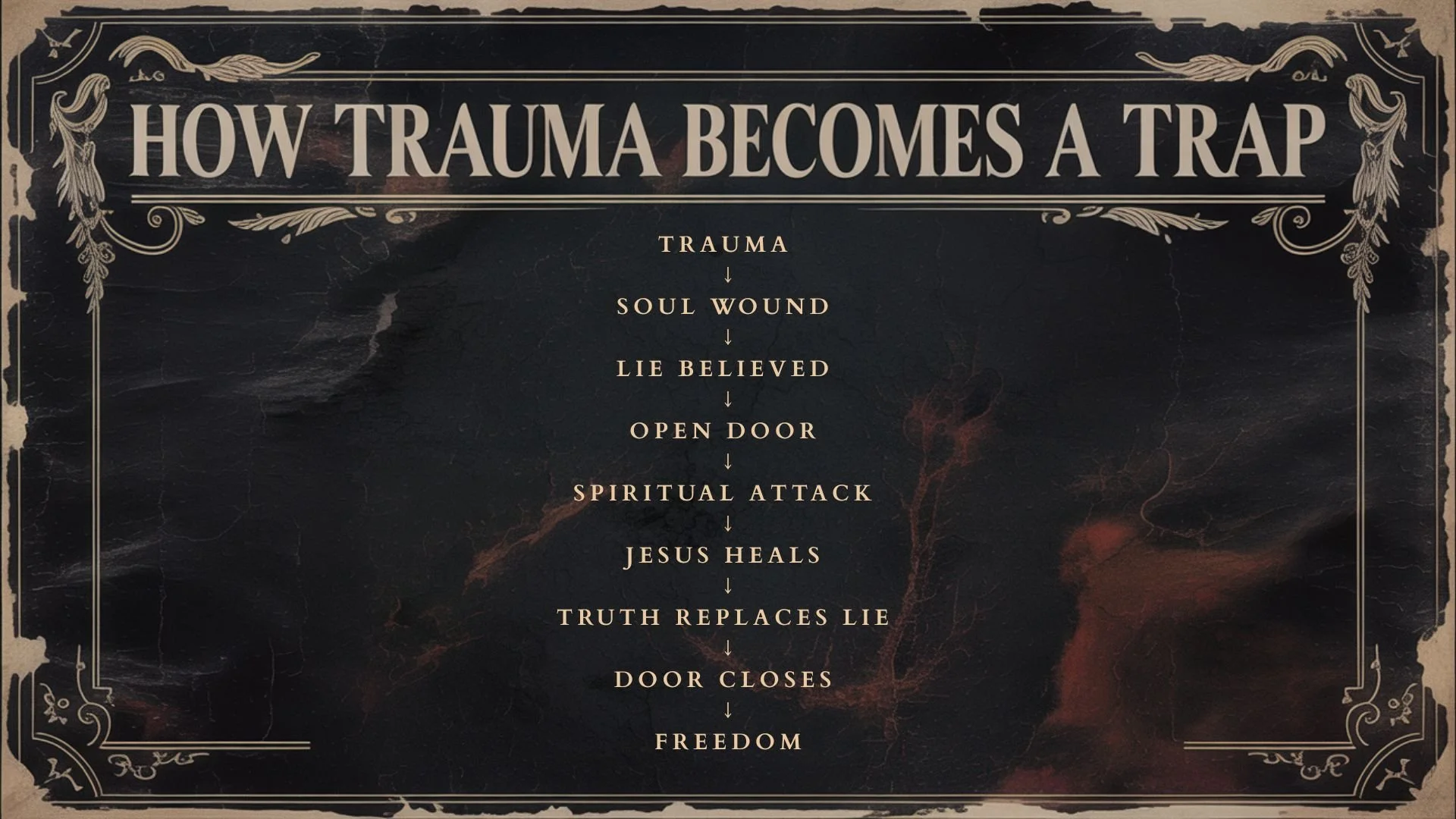
The Door-Closing Prayer
(Intentionally unchanged — this is the legal language that shuts doors.)
Lord Jesus, I come before You…
(full inner-healing prayer as provided)
Pray it slowly.
Name the wound. ___________________________
Break agreement with the lie.
Close the door.
Invite the Spirit of Truth to fill the now-vacated space.
Mercy rebuilds.
Truth seals.
Freedom enters.
This is how you heal a soul.
You're Not Weak — You're Wounded
You don’t need shame.
You don't need to “try harder.”
You don’t need to fake being fine.
You need healing — and Jesus heals deeply.
The enemy hoped your trauma would become a tomb.
Instead, it’s becoming your testimony.
You are not broken beyond repair.
You are being rebuilt by the One who restores souls.
Trauma doesn’t get the last word —
Jesus does.
And He calls you whole.

The Power of Covenant
Most of us are great at making commitments.
We commit to eating clean.
To going to the gym.
To being nicer to our spouse.
To getting serious about God.
And then… life happens.
You get tired.
You get offended.
You get distracted.
And just like that, your commitment is out the window.
You know why?
Because commitment isn’t the same as covenant.
Most of us are great at making commitments.
We commit to eating clean.
To going to the gym.
To being nicer to our spouse.
To getting serious about God.
And then… life happens.
You get tired.
You get offended.
You get distracted.
And just like that, your commitment is out the window.
You know why?
Because commitment isn’t the same as covenant.
Covenant isn’t sexy. But it’s powerful.
In the book of Nehemiah, something radical happens.
The people don’t just apologize for messing up.
They go all in.
They write it down.
They sign their names.
They say, “We’re done playing games. This time, we mean it.”
That’s not commitment.
That’s covenant.
Here’s the difference:
Commitment is emotional.
Covenant is intentional.
Commitment says, “As long as this feels right.”
Covenant says, “Even when it doesn’t.”
You’re not tired. You’re unaligned.
You’ve been praying for power, for breakthrough, for purpose.
And you keep wondering why you’re not seeing results.
I’ll tell you why:
Because power follows covenant, not feelings.
You can cry all you want.
You can mean well.
You can post inspirational Bible verses on Instagram all day long.
But if you’re not living in covenant, nothing sticks.
You want results? Make it real.
Here’s how:
1. Make it public.
Stop hiding.
Tell someone what God is doing in your life.
Say it out loud. Write it down. Own it.
You want change? Great. Put it out there.
2. Make it disciplined.
Want to walk in freedom?
It’s not about motivation. It’s about rhythm.
Set the schedule. Show up. No excuses.
Sunday church. Daily prayer. Real accountability.
That’s how grown-ups build a life that lasts.
3. Make it holy.
This isn’t self-help.
This isn’t about being a better person.
This is about surrender.
You don’t need another plan. You need a Savior.
You don’t need to try harder. You need to die to yourself.
Religion says “Do better.”
Covenant says “It’s already done.”
You’re not loved because you perform.
You’re loved because He bled.
You’re not saved because you “meant well.”
You’re saved because Jesus said, “It is finished.”
Listen to me.
You’re not broken beyond repair.
You’re not too far gone.
You’re not the exception.
You are loved.
Right now.
As you are.
And He’s waiting for your yes.
Not your perfect behavior.
Not your spotless record.
Just your yes.
That’s the beginning of covenant.
And that’s where the power is.
Now stop waiting for the feeling.
Stop waiting for the mood.
Step in.
Say yes.
And watch what happens.
You don’t need to be perfect. You just need to be all in.
Let’s go.

Affirmation Is Not the Doorway to Joy
This article challenges the cultural obsession with affirmation as the path to healing, arguing instead that true joy begins with truth—not comfort. It explores how grace-fueled transformation starts with conviction, confession, and repentance, not denial or flattery. Rooted in the gospel, it reminds us that while tears may come first, they are the seeds of a deeper joy only Christ can bring. Transformation isn’t achieved—it’s received. And joy, in the end, is not manufactured but harvested through surrender.

Affirmation of a lie only leads to further deception—and deeper bondage.
It might numb the shame.
It might offer a quick hit of soul relief.
But hours later, truth comes knocking… and the hangover begins.
Simply trying to verbally rescue people from shame or suffering isn’t the role of a Christian.
Our job isn’t to edit reality for comfort.
It’s to tell the truth—with love, with grace, and with an eye toward real freedom.
Because real transformation doesn’t begin with affirmation.
It begins with truth.
But not cold, detached truth—truth carried by grace.
Salvation by grace through faith in Christ alone opens the door.
It’s the Spirit who convicts.
It’s grace that leads to confession.
And it’s the kindness of God that empowers repentance.
We don’t climb our way into joy.
We’re led into it.
This is how joy is born.
Before there is real, lasting joy, there are tears.
Tears are the seeds.
Not because sadness is spiritual, but because honesty is.
Remorse.
Shame.
Conviction.
These aren’t enemies to avoid.
They’re signals—pointing us back to the One who carries our burden and rewrites our story.
They bring us fully and honestly to the end of ourselves—
To the revelation of our dependency.
To the reality of our union with Christ.
Transformation doesn’t happen when we hide from the truth.
It happens when we step into it—
Fully exposed, completely known, and deeply loved.
So sow your sorrow.
Water it with grace.
Let the Spirit do what only He can do.
Because in Christ, even your tears have purpose.
And joy is not just possible—it’s inevitable.
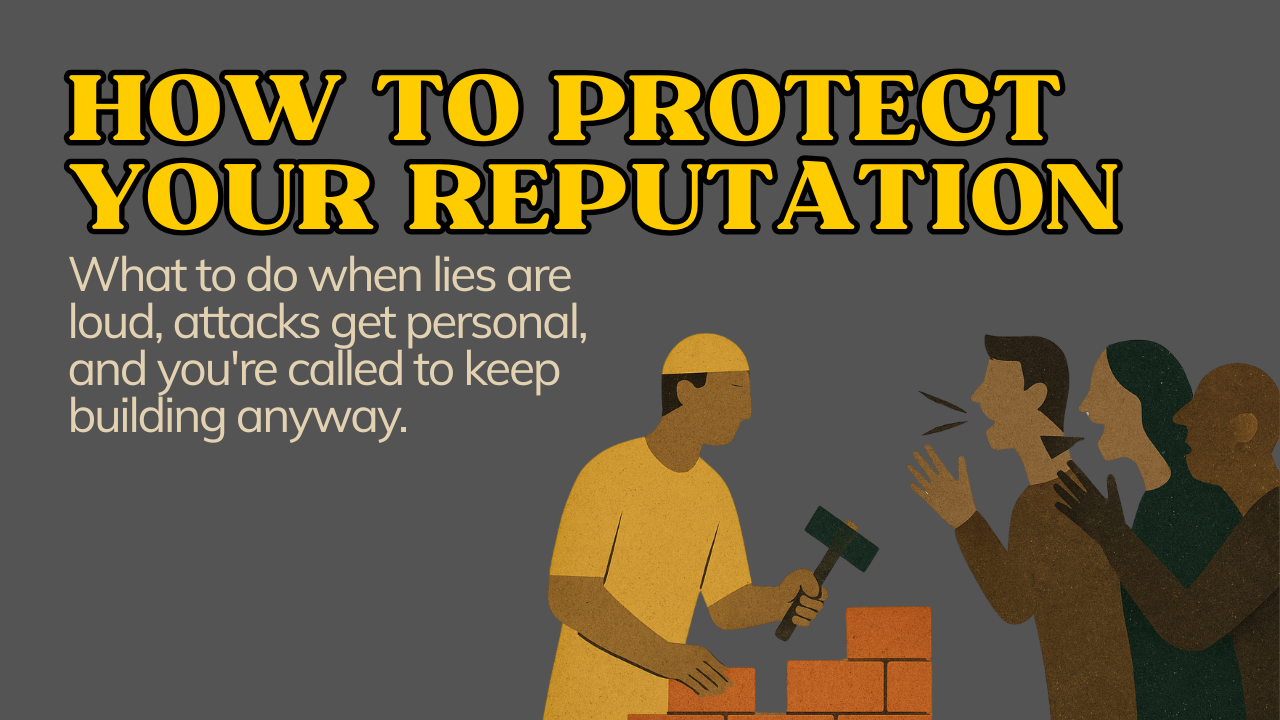
How to Protect Your Reputation
How to protect your reputation when you're under spiritual, personal, or public attack—drawing wisdom from Nehemiah 6. When you're building something meaningful, resistance is inevitable. Rather than reacting to gossip, slander, or false accusations, the biblical approach is to stay grounded in integrity, avoid petty arguments, trust God for vindication, and keep your hands on the work. With a bold, minimalist tone inspired by Seth Godin, this piece challenges readers to remain faithful to their calling in the face of character assassination and distraction. The higher you build, the louder it gets—but your persistence is your protection.

Nehemiah was almost done. The wall was nearly finished. The noise got louder.
That’s the pattern.
Build something that matters, and opposition will follow. Not just criticism — assassination. Of your purpose. Your character. Your authority.
But you don’t have to play their game.
In the Kingdom, the win isn’t applause — it’s obedience.
Staying faithful to your assignment is the victory.
When resistance comes — and it will — don’t panic. Don’t retaliate.
Keep building.
1. Guard Your Private Life Like It’s Sacred (Because It Is)
The enemy doesn’t need much — just a crack in the door. A scrap of gossip. A late-night message that never should’ve been sent.
And if he can’t find anything real? He’ll make it up.
So don’t give him anything.
No fuel. No crumbs. No open windows.
Your integrity is the firewall. Your character is your cloak.
Your private life is the scaffolding of your public influence. Protect it like your calling depends on it — because it does.
2. Don’t Argue with Fools
There’s a difference between being wise and being loud.
Proverbs says, “Do not answer a fool according to his folly.” Translation? Stop arguing with trolls.
The moment you start defending yourself to the wrong crowd, you’ve already lost. Because their goal isn’t truth — it’s distraction.
And the minute you stop to engage, the wall stops rising.
Let them tweet. Let them spin. Let them make YouTube videos about you.
You don’t owe everyone an answer. You owe God your obedience.
3. Let God Be Your PR Team
Psalm 37:6 — “He will make your righteousness shine like the dawn.”
God is better at vindicating you than you are. Way better.
When you walk in obedience, your life becomes undeniable.
And when that fruit starts falling off your tree? Even your enemies will have to admit it’s real.
Time and truth are a team — and they always win in the end.
4. Keep Your Hands on the Bricks
This is where it gets gritty.
Nehemiah didn’t stop. Not for threats. Not for gossip. Not for false accusations.
He stayed on the wall.
He knew what we often forget: the goal of slander is not just to hurt you — it’s to stop you.
But every brick you lay is a middle finger to hell. Every prayer, every step, every act of faithfulness is a declaration: I will not come down.
Because Heaven is watching. And Hell is trembling.
The Higher You Build, the Louder It Gets
This isn’t just about damage control. It’s about destiny.
If they’re trying to pull you down, it’s probably because you’re finally standing up.
So let them talk.
You? Keep your hands dirty with the work.
Don’t let a liar’s words stop a holy assignment.
Don’t trade your hammer for a microphone.
Don’t come down from that wall.
What you’re building is bigger than the backlash.
And what God is doing in you is louder than anything they can say about you.

Influence Without Control
In this article, Darren explores the powerful difference between control and influence through the lens of Nehemiah’s leadership. He challenges the idea that leadership requires a title or authority, showing instead that true influence is built on moral authority, integrity, and consistency.
You can’t make anyone do anything.
Not really.
You can coerce.
You can manipulate.
You can force.
But that’s not leadership. That’s control.
Nehemiah didn’t control people.
He influenced them.
And that’s the invitation:
To lead without control. To influence without a title.
You want to change your world?
Start here.

When the People Cry Out
There’s a moment—
A shift.
A sound too raw, too human, too urgent to ignore.
It doesn’t come from enemies.
It comes from within the walls.
From the people we thought were safe.
From the voices we trained ourselves not to hear.
They weren’t strangers.
They were family.
The very people of God.
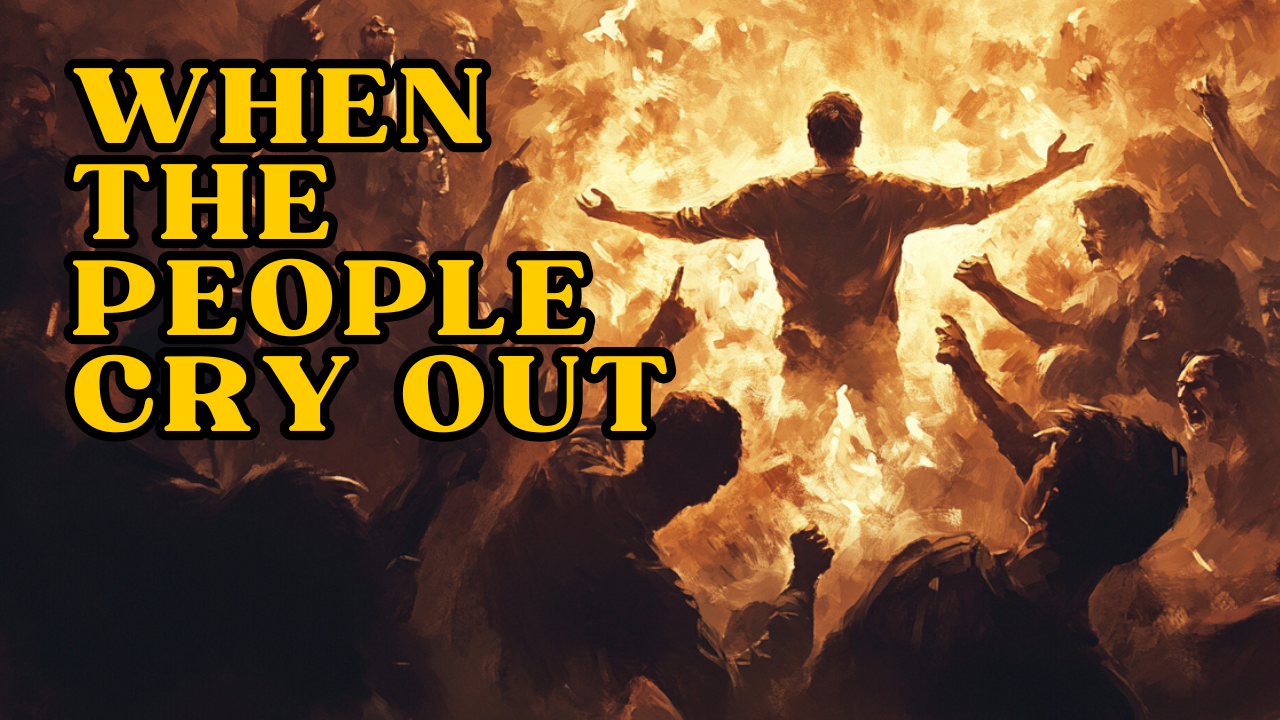
Nehemiah 5:1–13
There’s a moment—
A shift.
A sound too raw, too human, too urgent to ignore.
It doesn’t come from enemies.
It comes from within the walls.
From the people we thought were safe.
From the voices we trained ourselves not to hear.
They weren’t strangers.
They were family.
The very people of God.
And they were being crushed.
The text says,
“There arose a great outcry...”
It wasn’t noise.
It was signal.
The kind that slices through distraction.
The kind that makes a true leader pause—
Not to analyze, but to act.
Nehemiah didn’t manage the crisis.
He embodied it.
He got angry.
But not the kind of anger that burns bridges—
The kind that builds new ones.
Because he knew:
What’s the point of rebuilding walls if the people behind them are enslaved?
What good is a move of God if it doesn’t move us toward justice?
What’s the value of leadership that only asks, “What’s in it for me?”
Leadership isn’t about being in charge.
It’s about being in between.
Between the pain and the promise.
Between the silence and the sound.
1. Hear the Cry. Prophesy the Future.
Don’t dismiss what disturbs you.
Leadership begins with listening—not with the ears, but with the soul.
You can’t solve what you refuse to feel.
“There arose a great outcry of the people…” (Nehemiah 5:1)
Real leaders hear what others ignore.
And when they hear it—they speak.
They name what God is saying.
They create the future by declaring it.
2. Name the Wrong. Don’t Cover It.
Call it. Don’t coat it.
Injustice thrives in ambiguity.
Religious language has a way of making rot look holy.
But Nehemiah didn’t spiritualize sin—he exposed it.
“I was very angry… I brought charges against the nobles and the officials.” (Nehemiah 5:6–7)
Confrontation is compassion in motion.
When you name the wrong, healing can finally begin.
3. Expect Repentance. Build for Breakthrough.
Bold leadership breaks strongholds.
We’ve grown too used to managing dysfunction.
Nehemiah demanded change—and got it.
Not because he was loud, but because he was clear.
“We will restore… we will do as you say.” (Nehemiah 5:12–13)
When leaders speak with integrity, people respond.
Not just with applause—but with action.
You’ve heard something
A whisper. A rumble. A cry.
Maybe it’s not public.
But in your spirit, it’s loud.
This is your cue.
Not to wait.
Not to delegate.
Not to play it safe.
Because Kingdom leadership doesn’t wait for permission.
It answers the cry.
So—will you?
Will you rise?
Will you risk?
Will you lead?
Because heaven is listening.
And the people are crying.
Let it be you.
Let it be now.
Let it be loud.

Build And Defend
We love the idea of building.
The thrill of starting something new. The excitement of vision, calling, purpose. The sense that we’re participating in something bigger than ourselves.
But what happens when opposition shows up?
What happens when the enemy sees what you're building and decides it’s worth tearing down?
Most people hesitate. They assume that if an idea is truly from God, it shouldn’t require a fight.
Nehemiah knew better.

We love the idea of building
The thrill of starting something new. The excitement of vision, calling, purpose. The sense that we’re participating in something bigger than ourselves.
But what happens when opposition shows up?
What happens when the enemy sees what you're building and decides it’s worth tearing down?
Most people hesitate. They assume that if an idea is truly from God, it shouldn’t require a fight.
Nehemiah knew better. His people weren’t just building. They were battling while they built.
They worked with one hand and held a weapon in the other. They didn’t take off their armor. They never let their guard down.
Because if it’s worth building, it’s worth protecting.
We Build, but We Don’t Guard
It happens all the time.
A business launches, but no one builds the systems to sustain it.
A marriage begins, but no effort is made to protect it.
A dream is birthed, but distractions steal it away.
We ask for blessing but don’t build boundaries.
We cry out for breakthrough but don’t establish safeguards.
We get frustrated by attacks but never take steps to prevent them.
Nehemiah’s people understood that anything worth building will be challenged. So, they stayed ready.
If You Don’t Guard It, You’ll Lose It
"Those who carried burdens were loaded in such a way that each labored on the work with one hand and held his weapon with the other." (Nehemiah 4:17)
Imagine building a house with one hand while holding a sword in the other.
It’s not convenient. But it’s necessary.
Because if you aren’t holding a sword, the enemy assumes you’re easy to take down.
Want to protect your marriage? Guard your words, your time, your priorities.
Want to keep your calling alive? Guard your focus.
Want to build a lasting legacy? Guard your habits.
Loose grips sink ships.
The solution is simple.
Guard it and grip it!
Stay Ready So You Don’t Have to Get Ready
"None of us took off our clothes; each kept his weapon at his right hand." (Nehemiah 4:23)
Most people think they’ll get battle-ready when the fight comes.
They assume they’ll develop discipline when life demands it.
They hope they’ll build resilience when hardship shows up.
It doesn’t work that way.
Nehemiah’s men slept in their armor. They were always ready.
You don’t wait until the attack to pray.
You don’t wait until the crisis to strengthen your marriage.
You don’t wait until the enemy starts taking ground to fight back.
Prepare now, so when the moment comes, you don’t have to scramble.
Find Your People and Fight Together
"In the place where you hear the sound of the trumpet, rally to us there. Our God will fight for us!" (Nehemiah 4:20)
You can’t win this fight alone.
You need people who will rally when you’re under attack.
You need voices that will remind you of the vision when you’re ready to quit.
You need a team that doesn’t scatter when the enemy shows up.
Nehemiah’s men didn’t run from the fight. They ran toward it.
When your marriage is struggling, don’t isolate—get help.
When your business is under attack, don’t retreat—find support.
When you feel spiritually drained, don’t disengage—press into your community.
The enemy wants you alone. The wise know better.
What Are You Building and Are You Protecting It?
Most people don’t fail because they lacked vision.
They fail because they weren’t ready for resistance.
The difference between those who finish and those who quit isn’t calling, talent, or gifting.
It’s vigilance.
Are you guarding what God gave you?
Are you staying battle-ready?
Are you surrounding yourself with people who will fight with you?
Building is only half the job.
Protecting is the other half.