
Ibogaine Treatment for Addiction: Benefits, Risks, and What No One Tells You
In this article, Darren Stott exposes a rapidly emerging cultural shift hiding in plain sight.
Ibogaine Treatment for Addiction: Benefits, Risks, and What No One Tells You
Drawing readers from the power-filled atmosphere of the Oval Office into the underground world of ibogaine ceremonies, he unpacks how a once-obscure African plant medicine is being rebranded as a “miracle cure” for addiction, trauma, and PTSD—now gaining attention from influential voices like Joe Rogan, Robert F. Kennedy Jr., and Donald Trump.
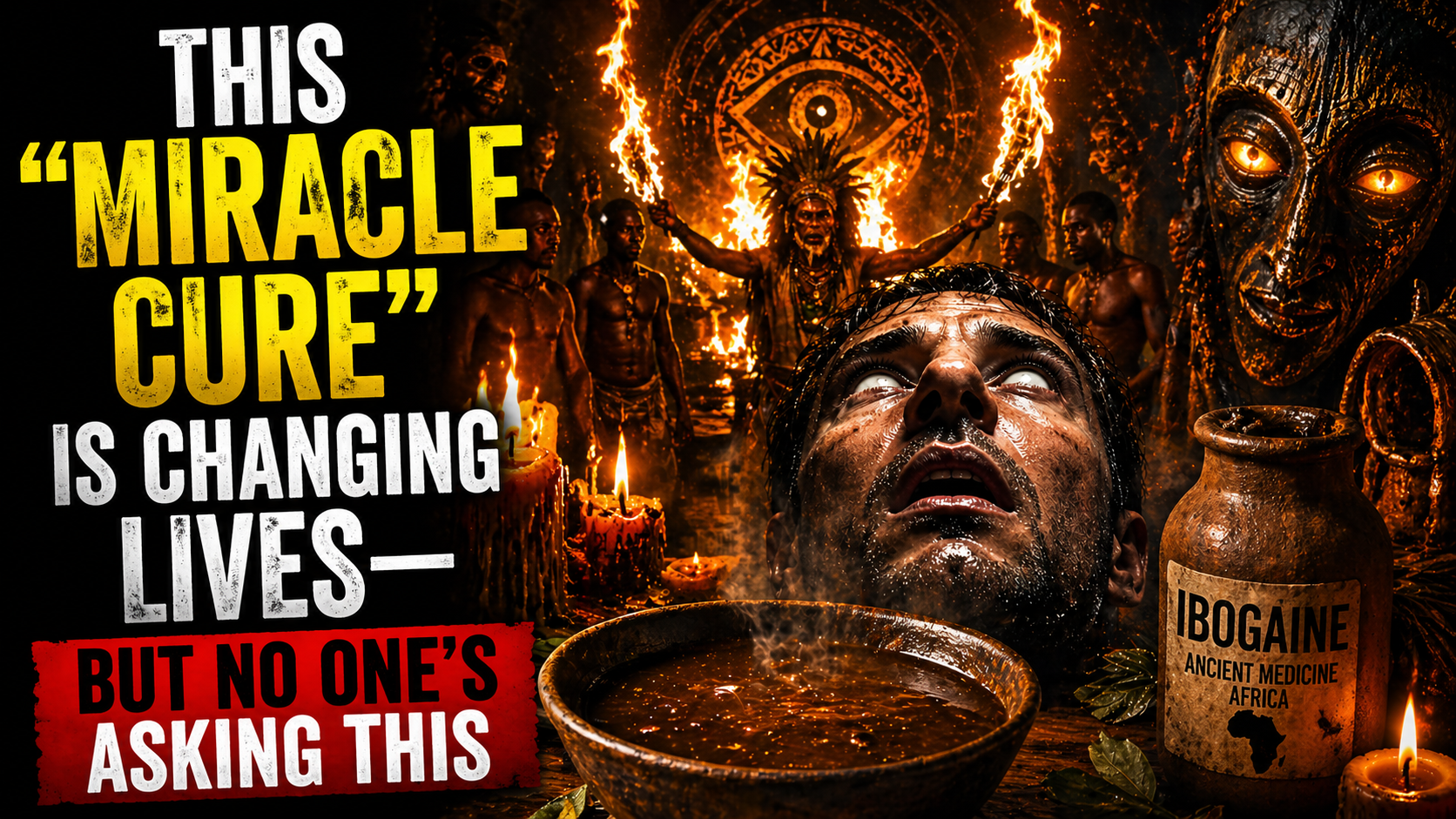
THE MIRACLE DRUG IN THE OVAL OFFICE
The Oval Office has a way of shrinking conversations down to their essence. It is not just the weight of history or the symbolism of power, but the pace. Ideas do not linger there—they accelerate. What begins as discussion often ends as direction.
On this particular day, the conversation was not about war, trade, or elections. It was about a plant. A compound derived from the bark of a tree native to Central Africa. Something ancient, obscure, and until recently, largely confined to underground clinics and ceremonial settings. And yet, here it was—being discussed at the highest level of American influence.

Joe Rogan leaned forward and described it plainly. He called it a “miracle drug,” pointing to claims that it could help people break opioid addiction at astonishing rates. Sitting nearby, Robert F. Kennedy Jr. listened with interest, recognizing both the urgency of the addiction crisis and the potential implications of such a treatment. Then, in a moment that reflects the speed at which modern decisions can be made, Donald Trump responded with characteristic directness: “Sounds great. Do you want FDA approval? Let’s do it.”
With that exchange, something that had long existed on the margins suddenly felt close to entering the mainstream. Ibogaine—once a fringe, controversial substance—was now part of a national conversation.
From Ceremony to Conversation
Outside of Washington, however, the reality of Ibogaine looks very different from the language of policy and approval. Traditionally, it is administered in a setting that feels less clinical and more ceremonial. The substance itself is often prepared as a thick, bitter mixture derived from the iboga plant, and in some traditions, its use is preceded by rituals in which practitioners seek permission from what they believe to be the spirit associated with the plant.
The experience is not casual. It is intense, prolonged, and deeply immersive. Those who undergo it often describe a process that unfolds over the course of one to three days. It begins with physical discomfort—nausea, heaviness, and a sense that the body is resisting what is about to happen. From there, the experience shifts into something far more complex.
Participants frequently report entering a state that resembles a waking dream. Memories emerge not as distant recollections but as vivid, fully formed scenes. Individuals revisit moments from their past, sometimes beginning with early childhood, and in some cases, even earlier experiences that they interpret as pre-birth or womb-related memories. The progression can feel chronological, as if one is walking through an entire life story with unusual clarity and detail.
What distinguishes this experience from ordinary memory is the sense of detachment. Rather than being overwhelmed by emotion, individuals often describe observing their past from a third-person perspective. This distance appears to allow them to process events that previously felt too painful or complex to confront. In this state, many report a sense of acceptance and reconciliation with their past, as well as a release of emotional burdens that had persisted for years.
Why It Feels Like Healing
This is one reason Ibogaine has gained attention as a potential treatment for addiction and trauma. From a neurological perspective, addiction—particularly to opioids—can fundamentally alter the brain’s reward system. Substances like heroin or oxycodone flood the brain with dopamine at levels far beyond what natural experiences can produce. Over time, the brain adapts by reducing its own ability to generate pleasure, creating a cycle in which the substance becomes necessary simply to feel normal.
Ibogaine appears to interact with the same regions of the brain involved in memory, emotion, and identity. By allowing individuals to revisit traumatic experiences from a detached perspective, it may help disrupt the patterns that sustain addiction and psychological distress. This capacity to interrupt deeply embedded loops is often cited as a reason for its reported effectiveness.
At a human level, this can feel like something more than treatment. When someone who has been trapped in addiction suddenly experiences clarity, distance from their pain, and the ability to process it without being overwhelmed, the result is often described in transformational terms. Words like “freedom,” “rebirth,” and “new life” are common—not because they are metaphorical, but because they feel literal to the person experiencing them.
The Experiences That Raise Questions

However, the experience is not limited to memory and emotional processing. Many participants also describe encounters that are more difficult to categorize within a purely neurological framework. These include interactions with what are perceived as guiding presences or entities. Some describe geometric or fractal-like beings that communicate through images, movement, or an intuitive transfer of understanding. Others report encountering figures that feel nurturing or instructive, sometimes described in terms such as “guides” or “teachers.”
What is particularly notable is the consistency of these reports. Across different individuals and settings, similar types of encounters are described. Moreover, comparable experiences have been reported in other altered states of consciousness, including those induced by different substances, intensive breathwork, and certain forms of meditation. This overlap raises questions that extend beyond chemistry and into the nature of perception and consciousness itself.
For many, these encounters are interpreted as meaningful and even beneficial. They can provide a sense of direction, understanding, or resolution. At the same time, they introduce a dimension to the experience that is not easily explained or measured, and that can shape how individuals interpret what has happened to them.
A Conversation Focused on Outcomes
As interest in Ibogaine grows, the public conversation has largely focused on its potential benefits. This is understandable. The opioid crisis continues to affect millions of people, and existing treatments are often limited in their effectiveness. Any substance that offers even the possibility of significant improvement is likely to generate attention and support.
In environments like the Oval Office, this conversation naturally centers on outcomes. Does it reduce addiction? Can it be studied? Should it be approved? These are practical and necessary questions, particularly when public health is at stake.
However, they do not fully capture the nature of the experience being discussed. If a treatment not only alters brain function but also introduces individuals to vivid, structured experiences that feel deeply personal or even spiritual, then its impact extends beyond biology. It begins to shape interpretation, belief, and meaning.
Looking Beneath the Surface
The structure of the Ibogaine experience itself is also worth examining. Many descriptions follow a similar pattern: a confrontation with one’s past, a sense of symbolic death or dissolution, a guided process of reflection or transformation, and a return with a renewed sense of life and identity. This sequence is powerful, and it resonates with broader human themes of change and renewal.
As Ibogaine moves closer to mainstream acceptance, the conversation surrounding it is likely to become more focused on measurable data—success rates, clinical trials, and regulatory pathways. These are essential components of responsible evaluation. At the same time, they do not fully address the experiential dimension that many participants report.
Ultimately, the emergence of Ibogaine into public awareness reflects a broader moment in which scientific inquiry, personal experience, and cultural narratives are intersecting. It highlights both the urgency of addressing addiction and the complexity of doing so through methods that extend beyond conventional frameworks.
The Question That Remains
The question, then, is not simply whether Ibogaine works, but how it works—and what accompanies that process. As with many developments that move rapidly from the margins to the center of attention, there is value in examining not only the outcomes but also the underlying experiences involved.
In the Oval Office, conversations tend to resolve quickly. Decisions are made, and momentum builds. Outside of it, the reality is more layered. And as this substance continues to move into the mainstream, those layers may prove just as important as the results themselves.
MAKE GOD KNOWN
If the promise is visibility… why is He so often invisible?
Now to him who is able to do far more abundantly than all that we ask or think, according to the power at work within us, to him be glory in the church and in Christ Jesus throughout all generations, forever and ever. Amen. - Ephesians 3:20-21
Ephesians 3:20–21 isn’t subtle.
It doesn’t describe a helpful God.
Or an encouraging God.
Or a symbolic God.
It describes a God who does immeasurably more than we ask or imagine — and then says the point of that is His glory showing up in the Church.
Not in theory.
Not in heaven someday.
Here. Where people can actually notice.
Which raises the uncomfortable question:
If the promise is visibility… why is He so often invisible?
False Humility
False humility sounds wise.
“We don’t want to overstate.”
“Let’s be balanced.”
“I don’t want to assume.”
But false humility isn’t making God big and us small.
It’s making expectations small so we stay safe.
We soften prayers.
We hedge stories.
We avoid clear credit.
Because clarity costs reputation.
If we say God did something and we’re wrong, we lose status.
So we choose language that can’t be tested.
Now no one argues with us —
and no one encounters God either.
You can respect a distant God forever.
You only glorify a God you can’t ignore.
Why We Do It
People protect belonging.
A bold claim rearranges the room.
It demands a response.
So we lower the volume until no response is needed.
Humility becomes performance.
Faith becomes philosophy.
We still believe in God —
just not in a way that interrupts anything.
So life stays explainable.
And God stays abstract.
What’s at Stake
When expectations shrink, God looks inactive.
When language blurs, God feels far away.
When everything stays cautious, God becomes an idea.
This isn’t about enthusiasm.
It’s about whether anyone can tell He’s actually here.
A hidden God gets polite agreement.
A visible God gets glory.
The Life That Reveals Him
Jesus didn’t manage perception.
He revealed the Father.
Not optimized for comfort.
Optimized for clarity.
And the same pattern holds:
God becomes noticeable when people expect Him, name Him, and make room for Him.
Stop Editing
Try honesty.
Pray like intervention is possible.
Say His name when something happens.
Act like He might interrupt your plans.
Not louder. Clearer.
Because the issue isn’t whether we sound impressive.
It’s whether God remains theoretical.
God is glorified when He’s unmistakable.
And what keeps Him hidden most effectively isn’t rebellion.
It’s careful language.
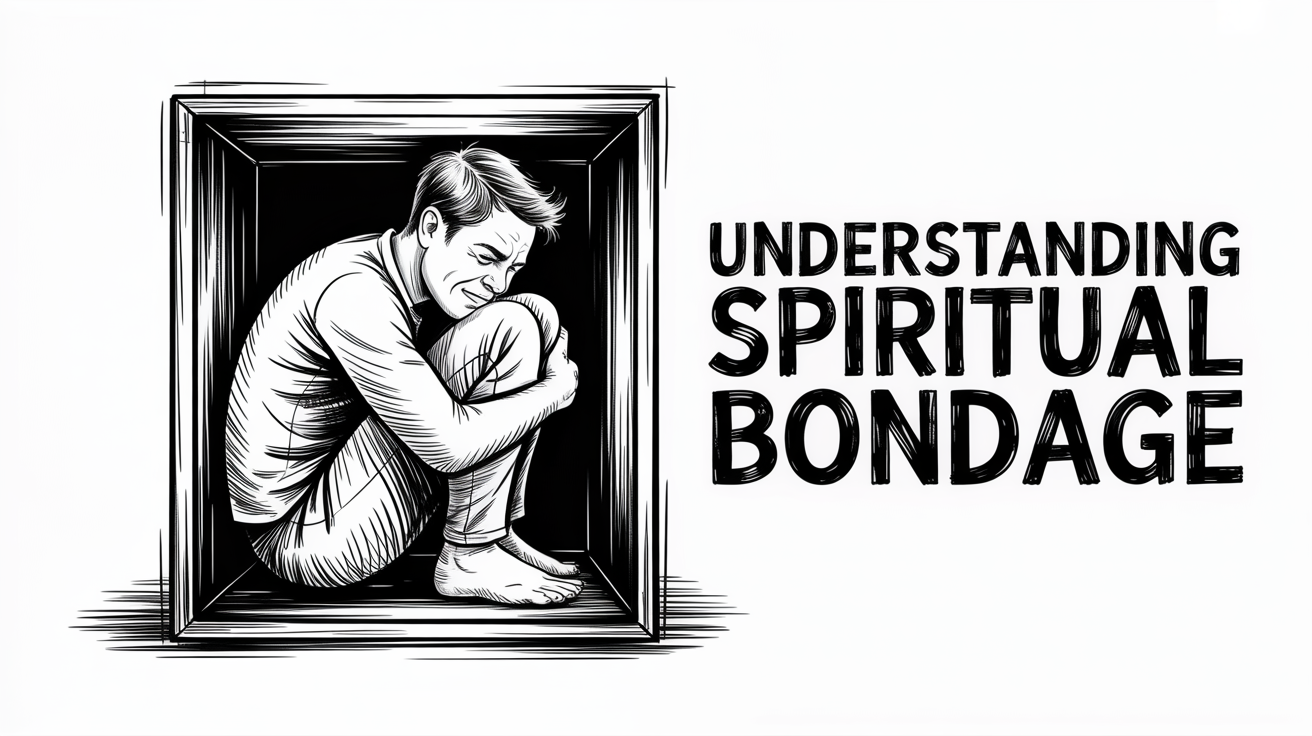
Understanding Spiritual Bondage
We call it “survival.” We call it “doing our best.”
But let’s be honest—sometimes “doing our best” just means “barely holding it together with duct tape and caffeine.”
We’ve got people out here calling burnout “purpose” and anxiety “just part of the grind.” That’s not freedom—that’s a hostage situation with good branding.
We call it “survival.” We call it “doing our best.”
But let’s be honest—sometimes “doing our best” just means “barely holding it together with duct tape and caffeine.”
We’ve got people out here calling burnout “purpose” and anxiety “just part of the grind.” That’s not freedom—that’s a hostage situation with good branding.
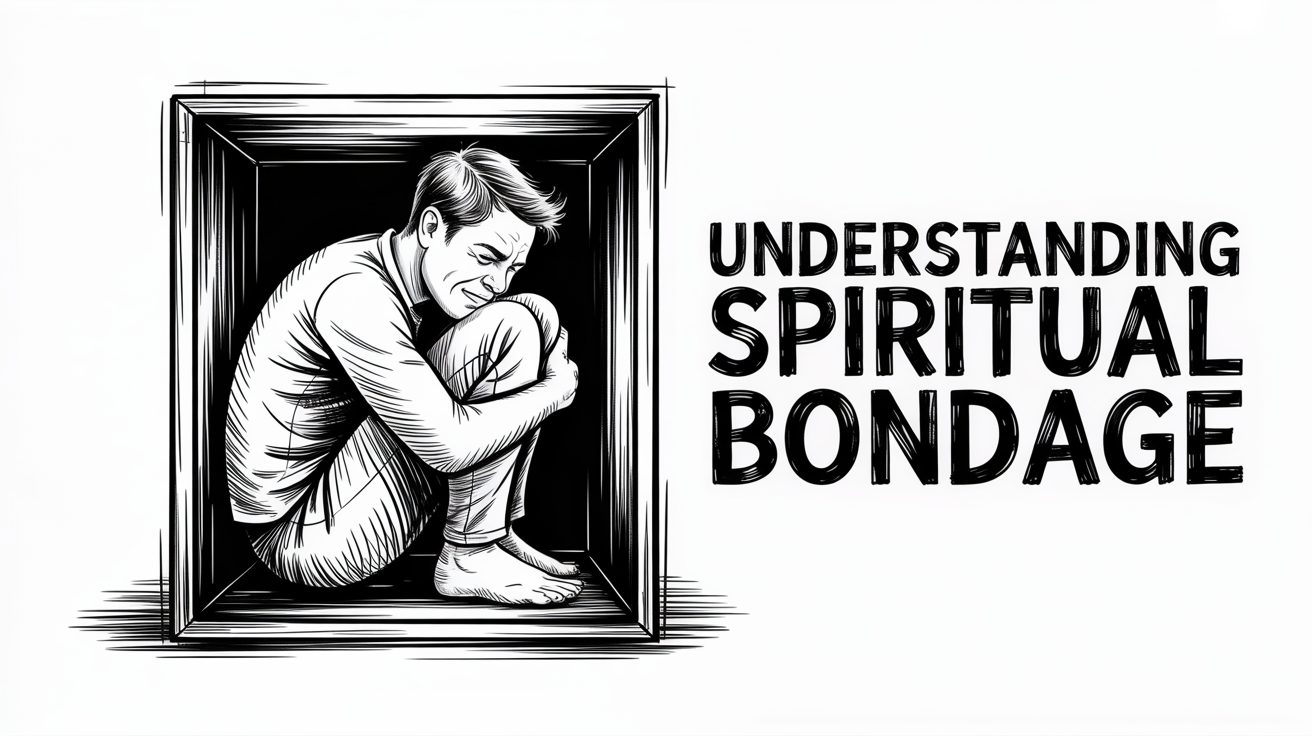
Bondage is subtle. It doesn’t always look like chains and torment.
Sometimes it’s a to-do list that’s longer than the book of Leviticus.
Sometimes it’s the voice in your head that sounds like you, but meaner.
It’s the invisible hand that keeps you small—spiritually, emotionally, creatively—and convinces you that small is safe.
Bondage is the opposite of authority.
Authority says, “I have been given power to act.”
Bondage says, “I have no choice.”
Authority in Christ isn’t loud. It doesn’t flex. It doesn’t need a blue check.
It’s rooted in identity.
Jesus didn’t shout to prove He had authority—He simply spoke, and storms obeyed.
Real authority flows from knowing who you are and whose you are.
That’s why bondage is so dangerous—it limits revelation.
When you live under bondage, you see yourself through the lens of fear, shame, or addiction instead of through the eyes of the Father.
Your self-perception becomes distorted. You stop seeing potential and start managing pain.
Bondage caps your revelation.
And limited revelation caps your potential.
“For lack of prophetic sight, my people cast off restraint.”
(Proverbs 29:18)
When revelation is dim, discipline fades.
When identity is blurred, authority leaks.
Without vision, we drift back into the comfort of captivity—calling it stability, calling it wisdom, calling it “being realistic.”
If you don’t know you’re free, you’ll act like a slave.
If you don’t know you’re loved, you’ll perform for approval.
If you don’t know your authority, you’ll tolerate what you were born to confront.
Bondage keeps you from being you.
Not the filtered, rehearsed, “praise hands emoji” version—
the you heaven designed before the world began.
When you rediscover your authority in Christ, something shifts.
You stop reacting and start reigning.
You stop repeating and start revealing.
You stop asking for permission to exist and begin walking in purpose.
Because the opposite of bondage isn’t just freedom—it’s authenticity.
Freedom is you, fully alive, fully awake, and fully aligned with heaven’s intention.
So the question isn’t, “How do I survive?”
The question is, “What part of me have I allowed bondage to silence—and what would happen if I reclaimed my authority?”
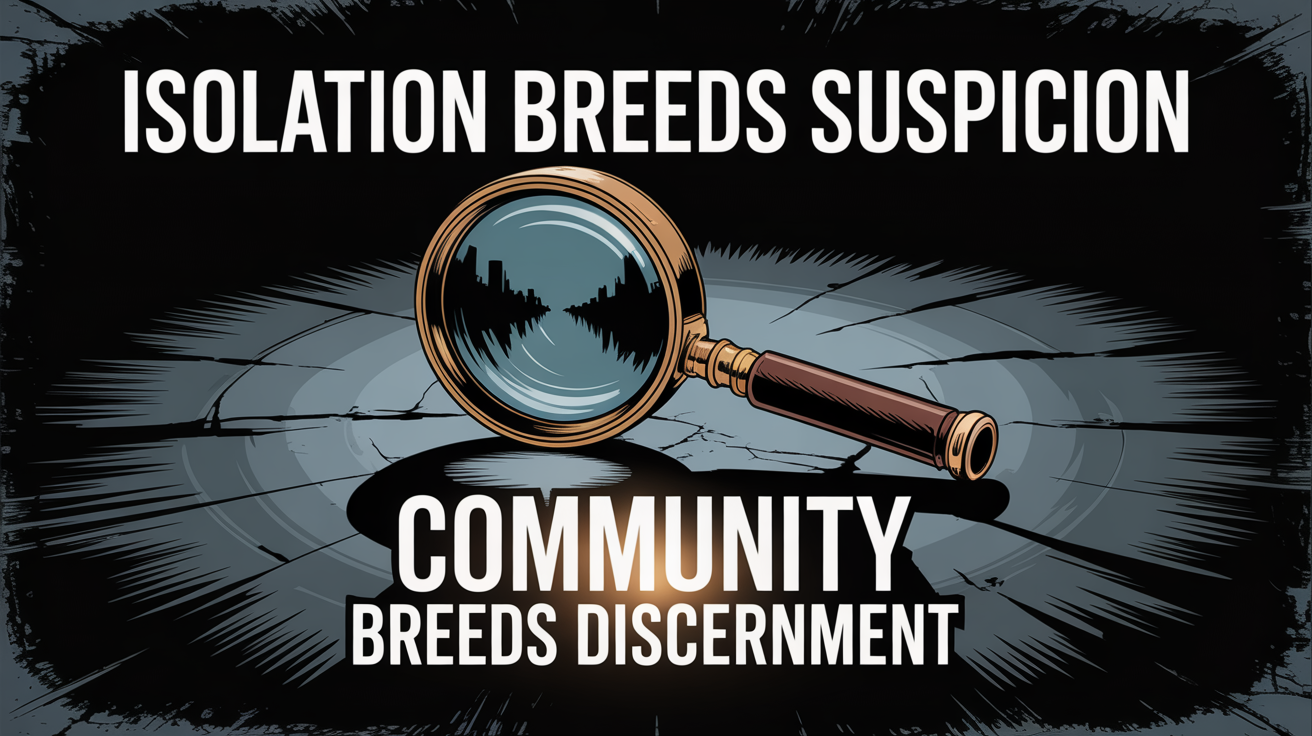
Isolation Breeds Suspicion
Suspicion grows best in the dark.
When we’re hurt, when trust is fractured, when trauma has left its fingerprint on our souls, the temptation is to retreat. To circle the wagons. To pull back from people because people were the problem.
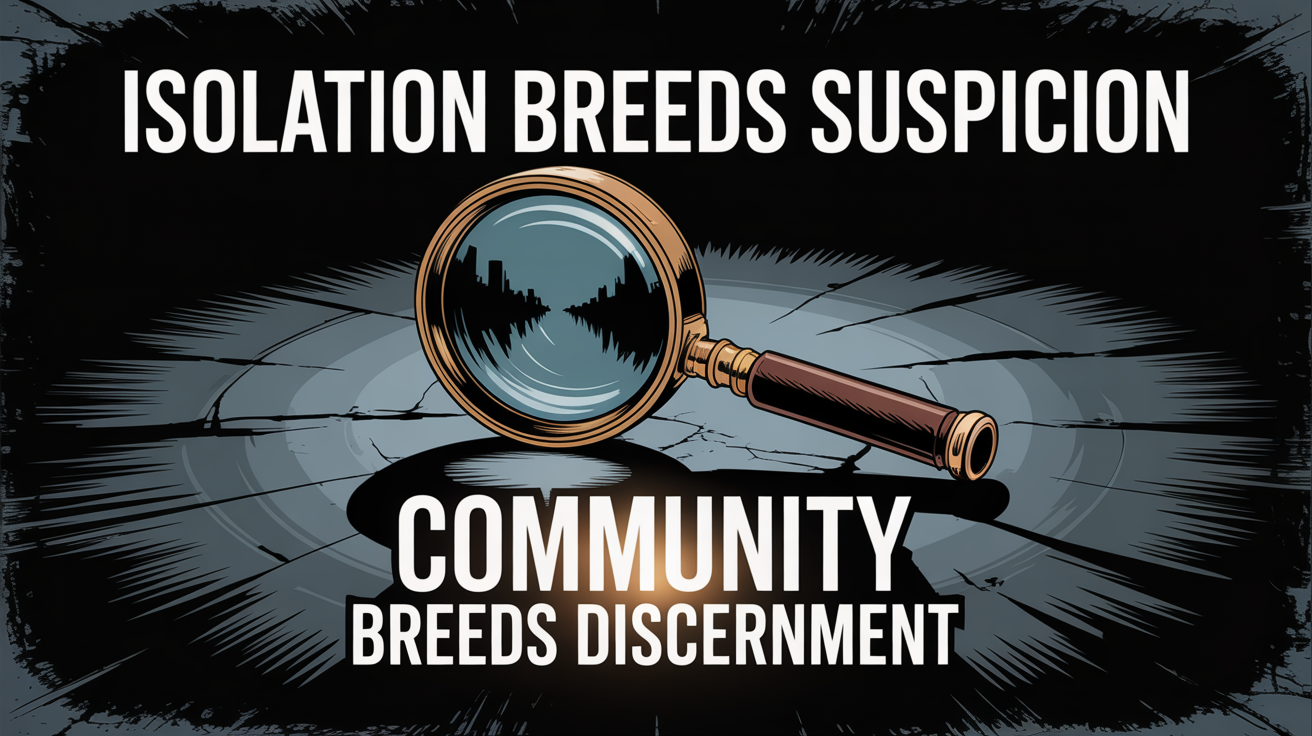
Isolation doesn’t just keep us “safe.” It breeds suspicion.
Suspicion whispers, “You can’t trust them. They’re out to get you. Better watch your back.” And soon, suspicion metastasizes into paranoia. Paranoia convinces us we’re discerning when, in fact, we’re simply afraid.
But the Bible tells a different story.
Suspicion grows best in the dark.
When we’re hurt, when trust is fractured, when trauma has left its fingerprint on our souls, the temptation is to retreat. To circle the wagons. To pull back from people because people were the problem.
Isolation doesn’t just keep us “safe.” It breeds suspicion.
Suspicion whispers, “You can’t trust them. They’re out to get you. Better watch your back.” And soon, suspicion metastasizes into paranoia. Paranoia convinces us we’re discerning when, in fact, we’re simply afraid.
But the Bible tells a different story:
“For God gave us not a spirit of fear, but of power, love, and self-control.”
—2 Timothy 1:7
Fear isolates. Love draws near.
Discernment is not suspicion. Discernment is Spirit-led clarity. And clarity grows best in community.
When we’re in community, we borrow each other’s eyes. We borrow each other’s faith. We lend courage, perspective, and hope.
“Two are better than one, because they have a good reward for their toil. For if they fall, one will lift up his fellow.”
—Ecclesiastes 4:9–10
Suspicion makes us look sideways. Community teaches us to look upward.
When suspicion creeps in, don’t sit in the dark with it. Don’t let the whisper become your worldview. Bring it into the light. Call a trusted friend. Pray with your small group. Share the thought that’s been eating at you—and watch how quickly the power drains from it.
Discernment is a team sport.
And the only way to trade paranoia for peace… is to stop standing alone.

Exposing 7 Lies Facing America
Our country has just walked through a major national tragedy.
The murder of Charlie Kirk was not only heard about—it was seen. Millions watched the footage, a demonic spectacle replayed on screens that seared itself into our collective memory.
Moments like this mark a generation. They don’t just change what we see—they change how we think. If we’re not careful, these moments embed lies into the background code of our soul’s operating system. They hum quietly, but they redirect our choices, limit our identity, and even reroute our destiny.
The work isn’t just to grieve. The work is to debug.
Here are seven lies that surface after tragedy—and the truths that expose them:

Our country has just walked through a major national tragedy.
The murder of Charlie Kirk was not only heard about—it was seen. Millions watched the footage, a demonic spectacle replayed on screens that seared itself into our collective memory.
Moments like this mark a generation. They don’t just change what we see—they change how we think. If we’re not careful, these moments embed lies into the background code of our soul’s operating system. They hum quietly, but they redirect our choices, limit our identity, and even reroute our destiny.
The work isn’t just to grieve. The work is to debug.
Here are seven lies that surface after tragedy—and the truths that expose them:
Lie 1: “If this could happen to Charlie Kirk, no one is safe.”
Fear masquerades as wisdom. But the early church understood something we often forget: safety was never the goal.
After every wave of persecution, they gathered—not to pray for protection, but for boldness. In the first century, safety wasn’t even an option. And it still isn’t today.
Truth: Our calling has never been contingent on guarantees of safety. What we need is supernatural boldness to fulfill our assignments despite the threats. Death doesn’t get the last word—Jesus does.
“The Lord is my light and my salvation; whom shall I fear?” (Psalm 27:1)
Lie 2: “The enemy is winning.”
Every headline seems to agree. But history doesn’t. The cross looked like defeat—until it wasn’t. Martyrdom has never stopped the Church; it has only fueled revival.
Truth: The enemy has already lost. On the cross, Christ “disarmed the rulers and authorities and put them to open shame, by triumphing over them” (Colossians 2:15). We know the end of the story—Jesus wins.
King Jesus is on the throne, and “God raised us up with Christ and seated us with him in the heavenly realms in Christ Jesus” (Ephesians 2:6). Don’t believe the lie. We are not fighting for victory; we are fighting from victory.
Lie 3: “I need to fight fire with fire.”
Revenge feels like justice. But when we’re given to reaction, we can unwittingly partner with the very demons we think we’re defeating. Retaliation only multiplies the darkness.
Truth: We are not called to reaction, but to revelation. Obedience, Spirit-led boldness, and God’s Word are our weapons. We overcome evil not by mirroring it, but by manifesting the Kingdom.
“Do not be overcome by evil, but overcome evil with good.” (Romans 12:21)
Lie 4: “Suspicion will protect me.”
Suspicion is the fruit of isolation. It feels like safety, but it’s really counterfeit discernment. It turns flesh and blood into the enemy, while the real enemy hides in the shadows. Paranoia promises protection but delivers only chains.
Truth: Discernment doesn’t prematurely judge people—it equips us with prophetic ammunition to confront the mind-blinding spirits controlling them. Suspicion is about survival. Discernment is about victory.
“And the peace of God, which surpasses all understanding, will guard your hearts and your minds in Christ Jesus.” (Philippians 4:7)
Lie 5: “We are powerless.”
When the news cycle overwhelms, apathy whispers: You can’t change this.
Truth: The Church is not powerless. We carry resurrection power, Kingdom authority, and the Spirit of the Living God. “But you will receive power when the Holy Spirit has come upon you; and you will be my witnesses” (Acts 1:8). We fight on our knees, we fight together, and we fight with the boldness of Christ.
Lie 6: “It’s safer to stay silent.”
Silence sounds prudent. But it’s actually agreement. Fear and intimidation always aim for the same target: your voice.
Truth: Your voice is your power. Everything that exists—the heavens, the earth, even the Scriptures themselves—was spoken into being. If the voice of the Lord is silenced, creation unravels. But love will never let you go silent. Love liberates you. It compels you to speak, to pray, to declare.
Salt and light only work when exposed. Boldness is what shakes nations. Refuse to be silenced.
“You are the salt of the earth… You are the light of the world.” (Matthew 5:13–16)
Lie 7: “This is the end of something.”
The enemy always whispers: This is the end. Give up. Lose hope. And tragically, many Christians echo him—clinging to “defeater beliefs” about the end times that sound more like despair than hope.
Truth: The Bible never ends with the end. It ends with restoration—the renewal of all things, Eden 2.0, Heaven on Earth. Yes, things come to an end. But this Kingdom? “Of the increase of His government and peace there will be no end” (Isaiah 9:7).
Every ending in God’s hands is a planting, not a burial. The seed goes into the ground so resurrection life can spring forth. This Kingdom has no expiration date.
The challenge:
Lies don’t leave on their own. They must be exposed, confronted, and replaced with truth.
Debugging the soul isn’t optional after tragedy—it’s survival.
And when we choose truth, the background noise changes.
The operating system updates.
And destiny stays intact.

The Compatibility Code
Most of us think of the fruit of the Spirit as a private list.
Love. Joy. Peace. Patience. Kindness. Goodness. Faithfulness. Gentleness. Self-control.
Nine nice words to hang on a wall.
But what if Paul wasn’t handing us a personal development checklist?
What if he was describing a compatibility code?

Most of us think of the fruit of the Spirit as a private list.
Love. Joy. Peace. Patience. Kindness. Goodness. Faithfulness. Gentleness. Self-control.
Nine nice words to hang on a wall.
But what if Paul wasn’t handing us a personal development checklist?
What if he was describing a compatibility code?
The Spirit cuts us into shape.
Left to ourselves, we’re jagged. Sharp corners. Edges that slice instead of join.
Ever tried to jam two puzzle pieces together that don’t fit? You can push, you can bend, you can force… but it doesn’t make a picture. It makes a mess.
The fruit of the Spirit isn’t just about what grows inside of you—it’s about how you’re reshaped for someone else. Each virtue sands down the edges:
Love makes space.
Joy makes you buoyant.
Peace makes you steady.
Patience gives you margin.
Kindness softens the impact.
Goodness makes you trustworthy.
Faithfulness makes you reliable.
Gentleness makes you safe.
Self-control keeps you from snapping.
Together, they make you fit.
The bond of peace is the glue.
Paul calls it “the bond of peace” in Ephesians. That’s not an accident.
Peace isn’t passive. It’s adhesive. It’s the Spirit’s way of locking us together, piece by piece, until a bigger picture emerges.
Alone, you’re just a strange shape. With others, you become part of a masterpiece.
Division breaks the picture.
The enemy knows this. That’s why gossip, suspicion, and bitterness always feel so corrosive—they’re solvents, dissolving the bond of peace.
The culture of hell is division. The culture of heaven is unity.
And unity isn’t sentimental. It’s supernatural.
The challenge.
Don’t just ask, “Am I bearing fruit?”
Ask, “Am I becoming more compatible with others?”
Because heaven shows up not in perfect individuals, but in imperfect people cut to fit, bonded together by peace.

Watch the Mission or Join It
And God is still looking.
Not for tourists.
Not for spiritual nomads, camera in hand, chasing the next holy Instagram post.
Not for ministries trying to pose in front of Antifa graffiti.
Not for spectators.
He’s looking for people.
People who build.
People who move in.
People who stay.

We rebuilt the walls.
We restored the temple.
We wept.
We worshipped.
But the city is still empty.
And God is still looking.
Not for tourists.
Not for spiritual nomads, camera in hand, chasing the next holy Instagram post.
Not for ministries trying to pose in front of Antifa graffiti.
Not for spectators.
He’s looking for people.
People who build.
People who move in.
People who stay.
People who don’t need a perfect picture before they pick up a shovel.
Nehemiah 11 is a peculiar chapter. It doesn’t preach well.
It reads like a census. A roll call.
But it’s the sound of people choosing.
Choosing to dwell in the ruins.
To live in a place everyone else had written off.
This wasn’t glamour. This wasn’t glory.
This was calling.
God’s looking for those who say:
“Here I am. Plant me in the ruins. I will not leave until it looks like Eden again.”
This isn’t judgment.
This is invitation.
There’s a difference between watching revival and becoming it.
Between visiting a city and becoming its root system.
Too many believers are spiritual renters.
They move where the presence is “popping.”
They hop from Sunday to Sunday, live stream to live stream, city to city.
God’s not asking for your attendance.
He’s asking for your residency.
Three Prophetic Movements for Builders
1. Stop Chasing Beauty. Occupy the Ashes.
The Instagram algorithm rewards the beautiful.
So we chase blessing. We move toward ease.
We wait for the open door in the obvious place.
But what if beauty isn’t found—it’s formed?
Isaiah 61:3 doesn’t say God gives beauty to the beautiful.
It says He gives beauty for ashes.
Which means someone has to move into the ashes.
You’ve been praying for an open door.
God’s been pointing at the rubble.
He’s not sending you where the fruit is.
He’s sending you where the roots are missing.
Not to steal someone else’s harvest.
But to dig. Plant. Bleed. Pray.
You’re not chasing Eden.
You’re restoring it.
Question:
Where have you been chasing beauty instead of stewarding brokenness?
2. Stop Spectating. Start Stewarding.
We love good worship.
We crave great messages.
We binge revival content the way others binge Netflix.
But the Kingdom isn’t built by critics or consumers.
It’s built by planted people.
We don’t need more charisma.
We need more commitment.
You are not outside of God’s move.
You are the vessel He wants to move through.
You are not a spectator of the sacred.
You are His sanctuary.
The Lord isn’t hyped by hype.
He’s drawn to homes—people who say, “Come abide in me.”
Hard places are holy ground when we stop asking for comfort and start asking for a commission.
Jesus didn’t livestream heaven.
He moved in to Nazareth.
He didn’t just comment.
He committed.
Question:
Where are you watching what God is doing instead of partnering with Him?
3. Commit Before You Comment.
Social media taught us to react.
Heaven is teaching us to root.
You don’t bring the Kingdom by pointing at problems.
You bring the Kingdom by planting your feet.
God’s not calling you to post about broken places.
He’s calling you to live there.
To stay when it’s awkward.
To dig when it’s dry.
To speak life when no one claps back.
This is the era of refiners.
The age of the occupiers.
The movement of those who remain.
God is saying: “I’m in the dust. I’m in the ruins. I’m in the unimpressive place.”
Stay.
Speak.
Steward.
Watch beauty rise from below your feet.
Question:
Where are you being called to stay, even though it still looks unimpressive?
Final Declaration: Eden, Again.
God is rebuilding cities.
But not through superstars.
Through servants.
Through stayers.
Through people who don’t need to see it all today because they trust the tomorrow He’s building.
“I am looking for a people,” says the Lord.
Not to escape the world.
But to rebuild it.
Not to spectate, but to partner.
Not to run from cursed ground,
but to speak beauty into ashes.
That’s you.
You are not the crowd.
You are the core.
You are not the fan.
You are the family.
You are not waiting for permission.
You already carry the presence.
So dwell.
Build.
Stay.
Restore.
Because Eden isn’t lost.
It’s just waiting for someone to say:
“Here I am. Plant me in the ruins.”
And God is saying:
“I’m doing it through you.”
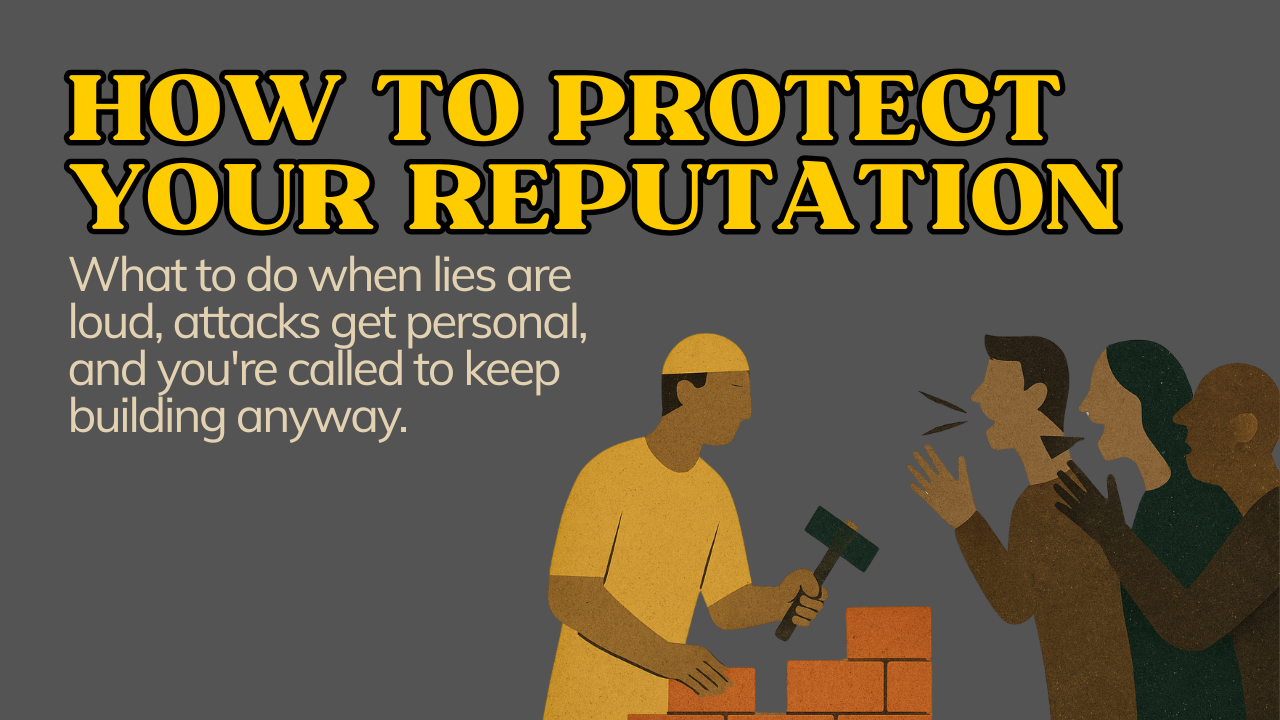
How to Protect Your Reputation
How to protect your reputation when you're under spiritual, personal, or public attack—drawing wisdom from Nehemiah 6. When you're building something meaningful, resistance is inevitable. Rather than reacting to gossip, slander, or false accusations, the biblical approach is to stay grounded in integrity, avoid petty arguments, trust God for vindication, and keep your hands on the work. With a bold, minimalist tone inspired by Seth Godin, this piece challenges readers to remain faithful to their calling in the face of character assassination and distraction. The higher you build, the louder it gets—but your persistence is your protection.

Nehemiah was almost done. The wall was nearly finished. The noise got louder.
That’s the pattern.
Build something that matters, and opposition will follow. Not just criticism — assassination. Of your purpose. Your character. Your authority.
But you don’t have to play their game.
In the Kingdom, the win isn’t applause — it’s obedience.
Staying faithful to your assignment is the victory.
When resistance comes — and it will — don’t panic. Don’t retaliate.
Keep building.
1. Guard Your Private Life Like It’s Sacred (Because It Is)
The enemy doesn’t need much — just a crack in the door. A scrap of gossip. A late-night message that never should’ve been sent.
And if he can’t find anything real? He’ll make it up.
So don’t give him anything.
No fuel. No crumbs. No open windows.
Your integrity is the firewall. Your character is your cloak.
Your private life is the scaffolding of your public influence. Protect it like your calling depends on it — because it does.
2. Don’t Argue with Fools
There’s a difference between being wise and being loud.
Proverbs says, “Do not answer a fool according to his folly.” Translation? Stop arguing with trolls.
The moment you start defending yourself to the wrong crowd, you’ve already lost. Because their goal isn’t truth — it’s distraction.
And the minute you stop to engage, the wall stops rising.
Let them tweet. Let them spin. Let them make YouTube videos about you.
You don’t owe everyone an answer. You owe God your obedience.
3. Let God Be Your PR Team
Psalm 37:6 — “He will make your righteousness shine like the dawn.”
God is better at vindicating you than you are. Way better.
When you walk in obedience, your life becomes undeniable.
And when that fruit starts falling off your tree? Even your enemies will have to admit it’s real.
Time and truth are a team — and they always win in the end.
4. Keep Your Hands on the Bricks
This is where it gets gritty.
Nehemiah didn’t stop. Not for threats. Not for gossip. Not for false accusations.
He stayed on the wall.
He knew what we often forget: the goal of slander is not just to hurt you — it’s to stop you.
But every brick you lay is a middle finger to hell. Every prayer, every step, every act of faithfulness is a declaration: I will not come down.
Because Heaven is watching. And Hell is trembling.
The Higher You Build, the Louder It Gets
This isn’t just about damage control. It’s about destiny.
If they’re trying to pull you down, it’s probably because you’re finally standing up.
So let them talk.
You? Keep your hands dirty with the work.
Don’t let a liar’s words stop a holy assignment.
Don’t trade your hammer for a microphone.
Don’t come down from that wall.
What you’re building is bigger than the backlash.
And what God is doing in you is louder than anything they can say about you.