

Watch the Mission or Join It
And God is still looking.
Not for tourists.
Not for spiritual nomads, camera in hand, chasing the next holy Instagram post.
Not for ministries trying to pose in front of Antifa graffiti.
Not for spectators.
He’s looking for people.
People who build.
People who move in.
People who stay.

We rebuilt the walls.
We restored the temple.
We wept.
We worshipped.
But the city is still empty.
And God is still looking.
Not for tourists.
Not for spiritual nomads, camera in hand, chasing the next holy Instagram post.
Not for ministries trying to pose in front of Antifa graffiti.
Not for spectators.
He’s looking for people.
People who build.
People who move in.
People who stay.
People who don’t need a perfect picture before they pick up a shovel.
Nehemiah 11 is a peculiar chapter. It doesn’t preach well.
It reads like a census. A roll call.
But it’s the sound of people choosing.
Choosing to dwell in the ruins.
To live in a place everyone else had written off.
This wasn’t glamour. This wasn’t glory.
This was calling.
God’s looking for those who say:
“Here I am. Plant me in the ruins. I will not leave until it looks like Eden again.”
This isn’t judgment.
This is invitation.
There’s a difference between watching revival and becoming it.
Between visiting a city and becoming its root system.
Too many believers are spiritual renters.
They move where the presence is “popping.”
They hop from Sunday to Sunday, live stream to live stream, city to city.
God’s not asking for your attendance.
He’s asking for your residency.
Three Prophetic Movements for Builders
1. Stop Chasing Beauty. Occupy the Ashes.
The Instagram algorithm rewards the beautiful.
So we chase blessing. We move toward ease.
We wait for the open door in the obvious place.
But what if beauty isn’t found—it’s formed?
Isaiah 61:3 doesn’t say God gives beauty to the beautiful.
It says He gives beauty for ashes.
Which means someone has to move into the ashes.
You’ve been praying for an open door.
God’s been pointing at the rubble.
He’s not sending you where the fruit is.
He’s sending you where the roots are missing.
Not to steal someone else’s harvest.
But to dig. Plant. Bleed. Pray.
You’re not chasing Eden.
You’re restoring it.
Question:
Where have you been chasing beauty instead of stewarding brokenness?
2. Stop Spectating. Start Stewarding.
We love good worship.
We crave great messages.
We binge revival content the way others binge Netflix.
But the Kingdom isn’t built by critics or consumers.
It’s built by planted people.
We don’t need more charisma.
We need more commitment.
You are not outside of God’s move.
You are the vessel He wants to move through.
You are not a spectator of the sacred.
You are His sanctuary.
The Lord isn’t hyped by hype.
He’s drawn to homes—people who say, “Come abide in me.”
Hard places are holy ground when we stop asking for comfort and start asking for a commission.
Jesus didn’t livestream heaven.
He moved in to Nazareth.
He didn’t just comment.
He committed.
Question:
Where are you watching what God is doing instead of partnering with Him?
3. Commit Before You Comment.
Social media taught us to react.
Heaven is teaching us to root.
You don’t bring the Kingdom by pointing at problems.
You bring the Kingdom by planting your feet.
God’s not calling you to post about broken places.
He’s calling you to live there.
To stay when it’s awkward.
To dig when it’s dry.
To speak life when no one claps back.
This is the era of refiners.
The age of the occupiers.
The movement of those who remain.
God is saying: “I’m in the dust. I’m in the ruins. I’m in the unimpressive place.”
Stay.
Speak.
Steward.
Watch beauty rise from below your feet.
Question:
Where are you being called to stay, even though it still looks unimpressive?
Final Declaration: Eden, Again.
God is rebuilding cities.
But not through superstars.
Through servants.
Through stayers.
Through people who don’t need to see it all today because they trust the tomorrow He’s building.
“I am looking for a people,” says the Lord.
Not to escape the world.
But to rebuild it.
Not to spectate, but to partner.
Not to run from cursed ground,
but to speak beauty into ashes.
That’s you.
You are not the crowd.
You are the core.
You are not the fan.
You are the family.
You are not waiting for permission.
You already carry the presence.
So dwell.
Build.
Stay.
Restore.
Because Eden isn’t lost.
It’s just waiting for someone to say:
“Here I am. Plant me in the ruins.”
And God is saying:
“I’m doing it through you.”

The Power of Covenant
Most of us are great at making commitments.
We commit to eating clean.
To going to the gym.
To being nicer to our spouse.
To getting serious about God.
And then… life happens.
You get tired.
You get offended.
You get distracted.
And just like that, your commitment is out the window.
You know why?
Because commitment isn’t the same as covenant.
Most of us are great at making commitments.
We commit to eating clean.
To going to the gym.
To being nicer to our spouse.
To getting serious about God.
And then… life happens.
You get tired.
You get offended.
You get distracted.
And just like that, your commitment is out the window.
You know why?
Because commitment isn’t the same as covenant.
Covenant isn’t sexy. But it’s powerful.
In the book of Nehemiah, something radical happens.
The people don’t just apologize for messing up.
They go all in.
They write it down.
They sign their names.
They say, “We’re done playing games. This time, we mean it.”
That’s not commitment.
That’s covenant.
Here’s the difference:
Commitment is emotional.
Covenant is intentional.
Commitment says, “As long as this feels right.”
Covenant says, “Even when it doesn’t.”
You’re not tired. You’re unaligned.
You’ve been praying for power, for breakthrough, for purpose.
And you keep wondering why you’re not seeing results.
I’ll tell you why:
Because power follows covenant, not feelings.
You can cry all you want.
You can mean well.
You can post inspirational Bible verses on Instagram all day long.
But if you’re not living in covenant, nothing sticks.
You want results? Make it real.
Here’s how:
1. Make it public.
Stop hiding.
Tell someone what God is doing in your life.
Say it out loud. Write it down. Own it.
You want change? Great. Put it out there.
2. Make it disciplined.
Want to walk in freedom?
It’s not about motivation. It’s about rhythm.
Set the schedule. Show up. No excuses.
Sunday church. Daily prayer. Real accountability.
That’s how grown-ups build a life that lasts.
3. Make it holy.
This isn’t self-help.
This isn’t about being a better person.
This is about surrender.
You don’t need another plan. You need a Savior.
You don’t need to try harder. You need to die to yourself.
Religion says “Do better.”
Covenant says “It’s already done.”
You’re not loved because you perform.
You’re loved because He bled.
You’re not saved because you “meant well.”
You’re saved because Jesus said, “It is finished.”
Listen to me.
You’re not broken beyond repair.
You’re not too far gone.
You’re not the exception.
You are loved.
Right now.
As you are.
And He’s waiting for your yes.
Not your perfect behavior.
Not your spotless record.
Just your yes.
That’s the beginning of covenant.
And that’s where the power is.
Now stop waiting for the feeling.
Stop waiting for the mood.
Step in.
Say yes.
And watch what happens.
You don’t need to be perfect. You just need to be all in.
Let’s go.
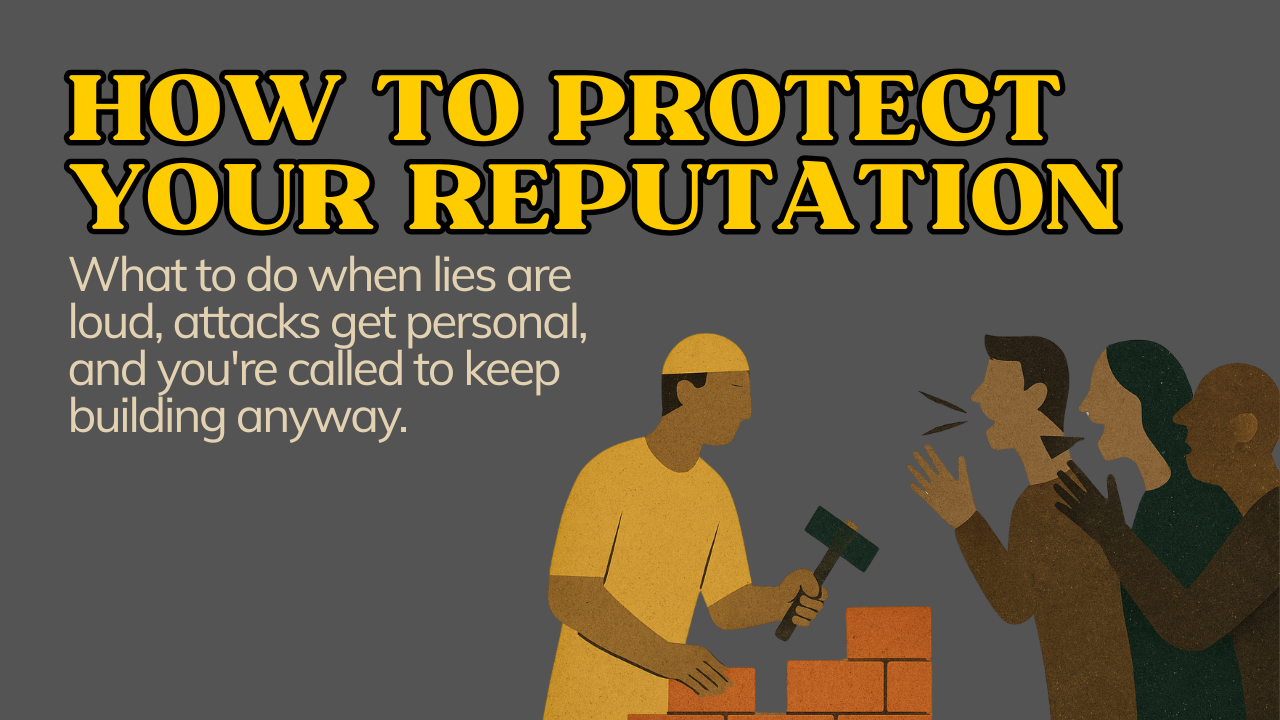
How to Protect Your Reputation
How to protect your reputation when you're under spiritual, personal, or public attack—drawing wisdom from Nehemiah 6. When you're building something meaningful, resistance is inevitable. Rather than reacting to gossip, slander, or false accusations, the biblical approach is to stay grounded in integrity, avoid petty arguments, trust God for vindication, and keep your hands on the work. With a bold, minimalist tone inspired by Seth Godin, this piece challenges readers to remain faithful to their calling in the face of character assassination and distraction. The higher you build, the louder it gets—but your persistence is your protection.

Nehemiah was almost done. The wall was nearly finished. The noise got louder.
That’s the pattern.
Build something that matters, and opposition will follow. Not just criticism — assassination. Of your purpose. Your character. Your authority.
But you don’t have to play their game.
In the Kingdom, the win isn’t applause — it’s obedience.
Staying faithful to your assignment is the victory.
When resistance comes — and it will — don’t panic. Don’t retaliate.
Keep building.
1. Guard Your Private Life Like It’s Sacred (Because It Is)
The enemy doesn’t need much — just a crack in the door. A scrap of gossip. A late-night message that never should’ve been sent.
And if he can’t find anything real? He’ll make it up.
So don’t give him anything.
No fuel. No crumbs. No open windows.
Your integrity is the firewall. Your character is your cloak.
Your private life is the scaffolding of your public influence. Protect it like your calling depends on it — because it does.
2. Don’t Argue with Fools
There’s a difference between being wise and being loud.
Proverbs says, “Do not answer a fool according to his folly.” Translation? Stop arguing with trolls.
The moment you start defending yourself to the wrong crowd, you’ve already lost. Because their goal isn’t truth — it’s distraction.
And the minute you stop to engage, the wall stops rising.
Let them tweet. Let them spin. Let them make YouTube videos about you.
You don’t owe everyone an answer. You owe God your obedience.
3. Let God Be Your PR Team
Psalm 37:6 — “He will make your righteousness shine like the dawn.”
God is better at vindicating you than you are. Way better.
When you walk in obedience, your life becomes undeniable.
And when that fruit starts falling off your tree? Even your enemies will have to admit it’s real.
Time and truth are a team — and they always win in the end.
4. Keep Your Hands on the Bricks
This is where it gets gritty.
Nehemiah didn’t stop. Not for threats. Not for gossip. Not for false accusations.
He stayed on the wall.
He knew what we often forget: the goal of slander is not just to hurt you — it’s to stop you.
But every brick you lay is a middle finger to hell. Every prayer, every step, every act of faithfulness is a declaration: I will not come down.
Because Heaven is watching. And Hell is trembling.
The Higher You Build, the Louder It Gets
This isn’t just about damage control. It’s about destiny.
If they’re trying to pull you down, it’s probably because you’re finally standing up.
So let them talk.
You? Keep your hands dirty with the work.
Don’t let a liar’s words stop a holy assignment.
Don’t trade your hammer for a microphone.
Don’t come down from that wall.
What you’re building is bigger than the backlash.
And what God is doing in you is louder than anything they can say about you.

Influence Without Control
In this article, Darren explores the powerful difference between control and influence through the lens of Nehemiah’s leadership. He challenges the idea that leadership requires a title or authority, showing instead that true influence is built on moral authority, integrity, and consistency.
You can’t make anyone do anything.
Not really.
You can coerce.
You can manipulate.
You can force.
But that’s not leadership. That’s control.
Nehemiah didn’t control people.
He influenced them.
And that’s the invitation:
To lead without control. To influence without a title.
You want to change your world?
Start here.

When the People Cry Out
There’s a moment—
A shift.
A sound too raw, too human, too urgent to ignore.
It doesn’t come from enemies.
It comes from within the walls.
From the people we thought were safe.
From the voices we trained ourselves not to hear.
They weren’t strangers.
They were family.
The very people of God.
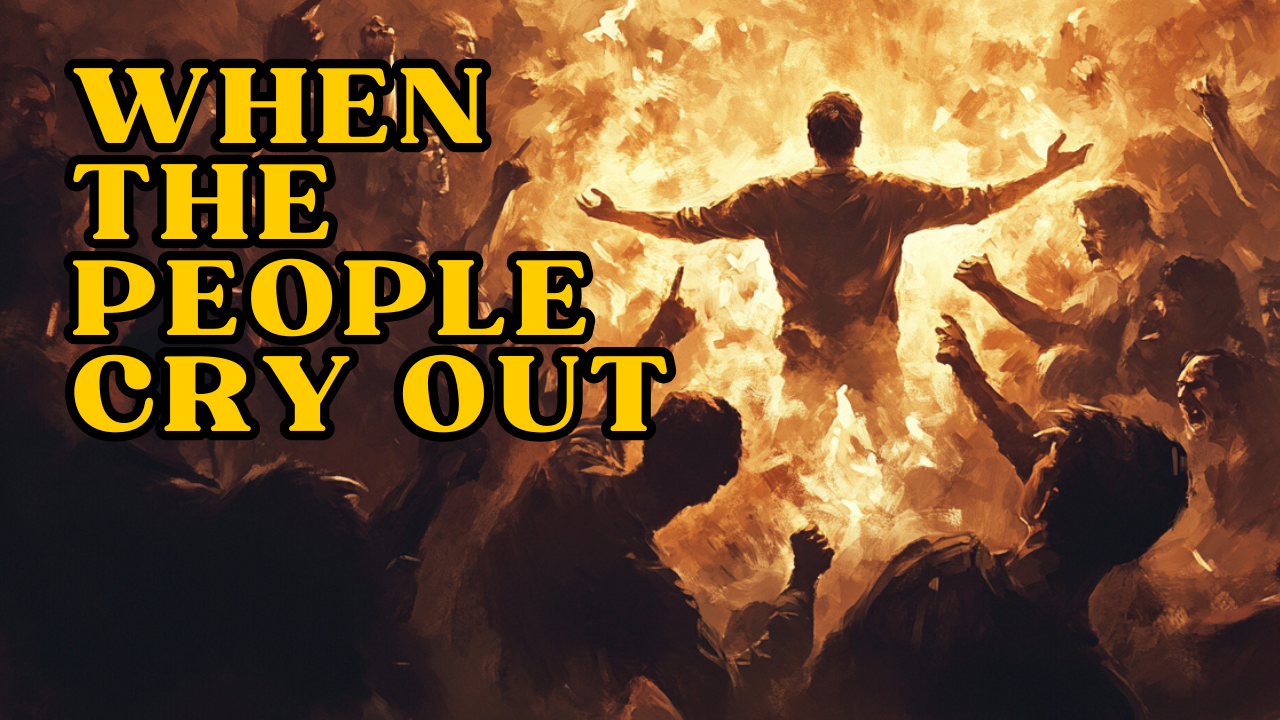
Nehemiah 5:1–13
There’s a moment—
A shift.
A sound too raw, too human, too urgent to ignore.
It doesn’t come from enemies.
It comes from within the walls.
From the people we thought were safe.
From the voices we trained ourselves not to hear.
They weren’t strangers.
They were family.
The very people of God.
And they were being crushed.
The text says,
“There arose a great outcry...”
It wasn’t noise.
It was signal.
The kind that slices through distraction.
The kind that makes a true leader pause—
Not to analyze, but to act.
Nehemiah didn’t manage the crisis.
He embodied it.
He got angry.
But not the kind of anger that burns bridges—
The kind that builds new ones.
Because he knew:
What’s the point of rebuilding walls if the people behind them are enslaved?
What good is a move of God if it doesn’t move us toward justice?
What’s the value of leadership that only asks, “What’s in it for me?”
Leadership isn’t about being in charge.
It’s about being in between.
Between the pain and the promise.
Between the silence and the sound.
1. Hear the Cry. Prophesy the Future.
Don’t dismiss what disturbs you.
Leadership begins with listening—not with the ears, but with the soul.
You can’t solve what you refuse to feel.
“There arose a great outcry of the people…” (Nehemiah 5:1)
Real leaders hear what others ignore.
And when they hear it—they speak.
They name what God is saying.
They create the future by declaring it.
2. Name the Wrong. Don’t Cover It.
Call it. Don’t coat it.
Injustice thrives in ambiguity.
Religious language has a way of making rot look holy.
But Nehemiah didn’t spiritualize sin—he exposed it.
“I was very angry… I brought charges against the nobles and the officials.” (Nehemiah 5:6–7)
Confrontation is compassion in motion.
When you name the wrong, healing can finally begin.
3. Expect Repentance. Build for Breakthrough.
Bold leadership breaks strongholds.
We’ve grown too used to managing dysfunction.
Nehemiah demanded change—and got it.
Not because he was loud, but because he was clear.
“We will restore… we will do as you say.” (Nehemiah 5:12–13)
When leaders speak with integrity, people respond.
Not just with applause—but with action.
You’ve heard something
A whisper. A rumble. A cry.
Maybe it’s not public.
But in your spirit, it’s loud.
This is your cue.
Not to wait.
Not to delegate.
Not to play it safe.
Because Kingdom leadership doesn’t wait for permission.
It answers the cry.
So—will you?
Will you rise?
Will you risk?
Will you lead?
Because heaven is listening.
And the people are crying.
Let it be you.
Let it be now.
Let it be loud.

Build And Defend
We love the idea of building.
The thrill of starting something new. The excitement of vision, calling, purpose. The sense that we’re participating in something bigger than ourselves.
But what happens when opposition shows up?
What happens when the enemy sees what you're building and decides it’s worth tearing down?
Most people hesitate. They assume that if an idea is truly from God, it shouldn’t require a fight.
Nehemiah knew better.

We love the idea of building
The thrill of starting something new. The excitement of vision, calling, purpose. The sense that we’re participating in something bigger than ourselves.
But what happens when opposition shows up?
What happens when the enemy sees what you're building and decides it’s worth tearing down?
Most people hesitate. They assume that if an idea is truly from God, it shouldn’t require a fight.
Nehemiah knew better. His people weren’t just building. They were battling while they built.
They worked with one hand and held a weapon in the other. They didn’t take off their armor. They never let their guard down.
Because if it’s worth building, it’s worth protecting.
We Build, but We Don’t Guard
It happens all the time.
A business launches, but no one builds the systems to sustain it.
A marriage begins, but no effort is made to protect it.
A dream is birthed, but distractions steal it away.
We ask for blessing but don’t build boundaries.
We cry out for breakthrough but don’t establish safeguards.
We get frustrated by attacks but never take steps to prevent them.
Nehemiah’s people understood that anything worth building will be challenged. So, they stayed ready.
If You Don’t Guard It, You’ll Lose It
"Those who carried burdens were loaded in such a way that each labored on the work with one hand and held his weapon with the other." (Nehemiah 4:17)
Imagine building a house with one hand while holding a sword in the other.
It’s not convenient. But it’s necessary.
Because if you aren’t holding a sword, the enemy assumes you’re easy to take down.
Want to protect your marriage? Guard your words, your time, your priorities.
Want to keep your calling alive? Guard your focus.
Want to build a lasting legacy? Guard your habits.
Loose grips sink ships.
The solution is simple.
Guard it and grip it!
Stay Ready So You Don’t Have to Get Ready
"None of us took off our clothes; each kept his weapon at his right hand." (Nehemiah 4:23)
Most people think they’ll get battle-ready when the fight comes.
They assume they’ll develop discipline when life demands it.
They hope they’ll build resilience when hardship shows up.
It doesn’t work that way.
Nehemiah’s men slept in their armor. They were always ready.
You don’t wait until the attack to pray.
You don’t wait until the crisis to strengthen your marriage.
You don’t wait until the enemy starts taking ground to fight back.
Prepare now, so when the moment comes, you don’t have to scramble.
Find Your People and Fight Together
"In the place where you hear the sound of the trumpet, rally to us there. Our God will fight for us!" (Nehemiah 4:20)
You can’t win this fight alone.
You need people who will rally when you’re under attack.
You need voices that will remind you of the vision when you’re ready to quit.
You need a team that doesn’t scatter when the enemy shows up.
Nehemiah’s men didn’t run from the fight. They ran toward it.
When your marriage is struggling, don’t isolate—get help.
When your business is under attack, don’t retreat—find support.
When you feel spiritually drained, don’t disengage—press into your community.
The enemy wants you alone. The wise know better.
What Are You Building and Are You Protecting It?
Most people don’t fail because they lacked vision.
They fail because they weren’t ready for resistance.
The difference between those who finish and those who quit isn’t calling, talent, or gifting.
It’s vigilance.
Are you guarding what God gave you?
Are you staying battle-ready?
Are you surrounding yourself with people who will fight with you?
Building is only half the job.
Protecting is the other half.

Fighting for What Matters
You are where you are because of the fights you were willing to have—or the ones you avoided. It’s that simple.
Somewhere along the way, we bought into the lie that keeping the peace is the goal. But Jesus didn’t call us to be peacekeepers. He called us to be peacemakers. And there’s a big difference. Peacekeepers avoid conflict. Peacemakers step into it, take ownership, and build something better in its place.

You are where you are because of the fights you were willing to have—or the ones you avoided. It’s that simple.
Somewhere along the way, we bought into the lie that keeping the peace is the goal. But Jesus didn’t call us to be peacekeepers. He called us to be peacemakers. And there’s a big difference. Peacekeepers avoid conflict. Peacemakers step into it, take ownership, and build something better in its place.
Why Christians Struggle with Conflict
Let’s be honest—Christians are notoriously bad at handling conflict. We avoid it. We fear it. And when we do engage, we often do it terribly. Why?
We confuse kindness with passivity. We think that being nice means never rocking the boat. That avoiding confrontation is a virtue. But in reality, avoiding necessary conflict isn’t kindness—it’s cowardice. I know how strong your fight life is by how strong your prayer life is. If you don’t know how to contend in the secret place, you’ll never know how to contend in the public space. We think that being nice means never rocking the boat. That avoiding confrontation is a virtue. But in reality, avoiding necessary conflict isn’t kindness—it’s cowardice.
We’ve been conditioned to keep the peace. Many of us were raised in church cultures that emphasized harmony over honesty. We were told to "forgive and forget" instead of addressing real issues. And so we became people-pleasers rather than truth-tellers.
We don’t like discomfort. Fighting for what matters is uncomfortable. Calling out sin is awkward. Confronting toxicity is painful. It’s easier to pretend everything’s fine than to do the hard work of real reconciliation and real leadership.
We’re afraid of losing relationships. The fear of rejection keeps us silent. We’d rather let a friendship or a marriage slowly deteriorate than risk a conversation that might change everything.
But avoiding conflict doesn’t make it go away—it makes it worse. And when we refuse to fight for what matters, we give the enemy free rein in our lives, our families, and our communities.
Fighting Isn’t the Problem. Avoiding the Fight Is.
Most people in the church don’t know how to fight. We’ve been taught to back down. To let it go. To let the enemy run rampant in our marriages, our families, our careers, and our calling because we think that avoiding conflict is a sign of maturity.
It’s not.
Nehemiah understood this. In Nehemiah 4, the opposition showed up as soon as the work started. Samballat and Tobiah mocked and ridiculed them, trying to get in their heads. That’s how the enemy works. The moment you move from talking about something to building something, the opposition shows up.
So what did Nehemiah do? He prayed—and then he acted. He set guards. He armed his people. He made sure they were ready to fight. And then he told them something crucial:
Do not be afraid of them. Remember the Lord, who is great and awesome, and fight for your brothers, your sons, your daughters, your wives, and your homes. (Nehemiah 4:14)
He didn’t tell them to run. He told them to remember.
Remember who God is. Remember what’s at stake. Remember what you’re building—and why it’s worth fighting for.
The Cost of Avoiding the Fight
Some of you are stuck. You’ve been circling the same mountain for years because, at some point, God called you to something, and you didn’t step in. Fear crept in. The enemy got in your head. And instead of fighting, you backed down.
Good news: You can get back in the fight. God restores the years the enemy has stolen.
The enemy wants to get in your head. He wants to discourage you, depress you, and convince you that you’ve lost your appointment. But here’s the truth:
You are anointed.
You are appointed.
And the enemy can’t take that from you.
So What Do You Do?
Pray like a warrior. Stop praying passive prayers. Stop asking God to do what He’s given you the authority to do. Pray boldly. Pray militantly. I know how strong your fight life is by how strong your prayer life is. If you don’t know how to contend in the secret place, you’ll never know how to contend in the public space. Stop praying passive prayers. Stop asking God to do what He’s given you the authority to do. Pray boldly. Pray militantly. Pray publicly.
Fight for your faith. If your faith is weak, everything else will be. Get filled with the Holy Spirit. Pray in tongues. Build yourself up in the most holy faith.
Fight for your family. Revival begins at home. Love your spouse. Date your spouse. Fight for your kids.
Fight for your future. God has a plan for you, but you have to fight for it. Declare His promises. Take action. Stop waiting for the perfect moment—it doesn’t exist.
The Bottom Line
The enemy has a strategy to take you out. To keep you stuck. To keep you scared. But you weren’t called to be passive. You weren’t called to sit on the sidelines.
You were called to fight.
And fight we will.
Because we serve a warrior King.
Revival Begins at Home
In Nehemiah 3, as the walls of Jerusalem were being rebuilt, the workers weren’t assigned random sections of the city. They built opposite their own homes.
Their own neighborhoods.
Their own streets.
Their own front doors.
Why?
Because before you build anything significant, before you restore what’s broken in the world, you have to secure what’s happening in your own home.
Nehemiah’s people understood something we often forget: a city isn’t strong if its families are weak.

In Nehemiah 3, as the walls of Jerusalem were being rebuilt, the workers weren’t assigned random sections of the city. They built opposite their own homes.
Their own neighborhoods.
Their own streets.
Their own front doors.
Why?
Because before you build anything significant, before you restore what’s broken in the world, you have to secure what’s happening in your own home.
Nehemiah’s people understood something we often forget: a city isn’t strong if its families are weak.
Your Home Is Your First Ministry
It’s easy to want big change.
To focus on the world’s problems.
To look out at what’s broken and think, "Somebody needs to fix that."
But you can’t build a strong city with broken households.
Too many people try to be heroes in the streets while being strangers at home.
They’re fixing their communities but neglecting their families.
They’re trying to rebuild the world but ignoring the brokenness under their own roof.
But real revival starts at home.
Before you fix the world, build your home.
Before you lead others, lead your own family.
Before you defend the city, make sure your walls are strong.
The Hidden Gaps Where the Enemy Gets In
A wall without a gate keeps everything out.
But a home without walls lets everything in.
Nehemiah’s people understood something fundamental: without walls, their homes were vulnerable. They weren’t just rebuilding houses—they were reinforcing their lives against intrusion, compromise, and invasion.
Today, those walls don’t look like stone and mortar. But they’re just as critical.
Walls are practical boundaries that protect what matters most.
🛑 A wall is deciding that husband and wife go to bed at the same time—so there’s no room for distance, distraction, or temptation to creep in.
🛑 A wall is unplugging the WiFi at bedtime—so kids aren’t mindlessly scrolling YouTube or wandering into dangerous content when no one is watching.
🛑 A wall is keeping work emails out of family dinner—so your children know they come before your job.
🛑 A wall is intentional family prayer—so your household isn’t just coexisting under one roof but thriving under God’s covering.
🛑 A wall is teaching discernment—so your home isn’t infiltrated by influences that erode your values.
What are the practical things your family can do to prevent snakes from getting into your garden?
The enemy doesn’t always come through the front door—sometimes, he sneaks in through compromise. Through screens left unchecked. Through relationships left unguarded. Through exhaustion that leaves you too tired to fight for what matters.
A home without boundaries is like a city without walls—completely exposed.
Nehemiah’s people didn’t just build homes—they fortified them. They made sure their families were protected, covered, and aligned.
So before you focus on building big things out there, take a moment to secure what’s happening inside your home.
Where are the gaps?
What needs to be reinforced?
What practical walls need to be built to protect what God has entrusted to you?
Because if the enemy can infiltrate your home, it doesn’t matter how strong your city looks.
🔥 Build the wall.
🔥 Rebuild where you live.
🔥 Then—and only then—change the world.