

Exposing 7 Lies Facing America
Our country has just walked through a major national tragedy.
The murder of Charlie Kirk was not only heard about—it was seen. Millions watched the footage, a demonic spectacle replayed on screens that seared itself into our collective memory.
Moments like this mark a generation. They don’t just change what we see—they change how we think. If we’re not careful, these moments embed lies into the background code of our soul’s operating system. They hum quietly, but they redirect our choices, limit our identity, and even reroute our destiny.
The work isn’t just to grieve. The work is to debug.
Here are seven lies that surface after tragedy—and the truths that expose them:

Our country has just walked through a major national tragedy.
The murder of Charlie Kirk was not only heard about—it was seen. Millions watched the footage, a demonic spectacle replayed on screens that seared itself into our collective memory.
Moments like this mark a generation. They don’t just change what we see—they change how we think. If we’re not careful, these moments embed lies into the background code of our soul’s operating system. They hum quietly, but they redirect our choices, limit our identity, and even reroute our destiny.
The work isn’t just to grieve. The work is to debug.
Here are seven lies that surface after tragedy—and the truths that expose them:
Lie 1: “If this could happen to Charlie Kirk, no one is safe.”
Fear masquerades as wisdom. But the early church understood something we often forget: safety was never the goal.
After every wave of persecution, they gathered—not to pray for protection, but for boldness. In the first century, safety wasn’t even an option. And it still isn’t today.
Truth: Our calling has never been contingent on guarantees of safety. What we need is supernatural boldness to fulfill our assignments despite the threats. Death doesn’t get the last word—Jesus does.
“The Lord is my light and my salvation; whom shall I fear?” (Psalm 27:1)
Lie 2: “The enemy is winning.”
Every headline seems to agree. But history doesn’t. The cross looked like defeat—until it wasn’t. Martyrdom has never stopped the Church; it has only fueled revival.
Truth: The enemy has already lost. On the cross, Christ “disarmed the rulers and authorities and put them to open shame, by triumphing over them” (Colossians 2:15). We know the end of the story—Jesus wins.
King Jesus is on the throne, and “God raised us up with Christ and seated us with him in the heavenly realms in Christ Jesus” (Ephesians 2:6). Don’t believe the lie. We are not fighting for victory; we are fighting from victory.
Lie 3: “I need to fight fire with fire.”
Revenge feels like justice. But when we’re given to reaction, we can unwittingly partner with the very demons we think we’re defeating. Retaliation only multiplies the darkness.
Truth: We are not called to reaction, but to revelation. Obedience, Spirit-led boldness, and God’s Word are our weapons. We overcome evil not by mirroring it, but by manifesting the Kingdom.
“Do not be overcome by evil, but overcome evil with good.” (Romans 12:21)
Lie 4: “Suspicion will protect me.”
Suspicion is the fruit of isolation. It feels like safety, but it’s really counterfeit discernment. It turns flesh and blood into the enemy, while the real enemy hides in the shadows. Paranoia promises protection but delivers only chains.
Truth: Discernment doesn’t prematurely judge people—it equips us with prophetic ammunition to confront the mind-blinding spirits controlling them. Suspicion is about survival. Discernment is about victory.
“And the peace of God, which surpasses all understanding, will guard your hearts and your minds in Christ Jesus.” (Philippians 4:7)
Lie 5: “We are powerless.”
When the news cycle overwhelms, apathy whispers: You can’t change this.
Truth: The Church is not powerless. We carry resurrection power, Kingdom authority, and the Spirit of the Living God. “But you will receive power when the Holy Spirit has come upon you; and you will be my witnesses” (Acts 1:8). We fight on our knees, we fight together, and we fight with the boldness of Christ.
Lie 6: “It’s safer to stay silent.”
Silence sounds prudent. But it’s actually agreement. Fear and intimidation always aim for the same target: your voice.
Truth: Your voice is your power. Everything that exists—the heavens, the earth, even the Scriptures themselves—was spoken into being. If the voice of the Lord is silenced, creation unravels. But love will never let you go silent. Love liberates you. It compels you to speak, to pray, to declare.
Salt and light only work when exposed. Boldness is what shakes nations. Refuse to be silenced.
“You are the salt of the earth… You are the light of the world.” (Matthew 5:13–16)
Lie 7: “This is the end of something.”
The enemy always whispers: This is the end. Give up. Lose hope. And tragically, many Christians echo him—clinging to “defeater beliefs” about the end times that sound more like despair than hope.
Truth: The Bible never ends with the end. It ends with restoration—the renewal of all things, Eden 2.0, Heaven on Earth. Yes, things come to an end. But this Kingdom? “Of the increase of His government and peace there will be no end” (Isaiah 9:7).
Every ending in God’s hands is a planting, not a burial. The seed goes into the ground so resurrection life can spring forth. This Kingdom has no expiration date.
The challenge:
Lies don’t leave on their own. They must be exposed, confronted, and replaced with truth.
Debugging the soul isn’t optional after tragedy—it’s survival.
And when we choose truth, the background noise changes.
The operating system updates.
And destiny stays intact.

The Compatibility Code
Most of us think of the fruit of the Spirit as a private list.
Love. Joy. Peace. Patience. Kindness. Goodness. Faithfulness. Gentleness. Self-control.
Nine nice words to hang on a wall.
But what if Paul wasn’t handing us a personal development checklist?
What if he was describing a compatibility code?

Most of us think of the fruit of the Spirit as a private list.
Love. Joy. Peace. Patience. Kindness. Goodness. Faithfulness. Gentleness. Self-control.
Nine nice words to hang on a wall.
But what if Paul wasn’t handing us a personal development checklist?
What if he was describing a compatibility code?
The Spirit cuts us into shape.
Left to ourselves, we’re jagged. Sharp corners. Edges that slice instead of join.
Ever tried to jam two puzzle pieces together that don’t fit? You can push, you can bend, you can force… but it doesn’t make a picture. It makes a mess.
The fruit of the Spirit isn’t just about what grows inside of you—it’s about how you’re reshaped for someone else. Each virtue sands down the edges:
Love makes space.
Joy makes you buoyant.
Peace makes you steady.
Patience gives you margin.
Kindness softens the impact.
Goodness makes you trustworthy.
Faithfulness makes you reliable.
Gentleness makes you safe.
Self-control keeps you from snapping.
Together, they make you fit.
The bond of peace is the glue.
Paul calls it “the bond of peace” in Ephesians. That’s not an accident.
Peace isn’t passive. It’s adhesive. It’s the Spirit’s way of locking us together, piece by piece, until a bigger picture emerges.
Alone, you’re just a strange shape. With others, you become part of a masterpiece.
Division breaks the picture.
The enemy knows this. That’s why gossip, suspicion, and bitterness always feel so corrosive—they’re solvents, dissolving the bond of peace.
The culture of hell is division. The culture of heaven is unity.
And unity isn’t sentimental. It’s supernatural.
The challenge.
Don’t just ask, “Am I bearing fruit?”
Ask, “Am I becoming more compatible with others?”
Because heaven shows up not in perfect individuals, but in imperfect people cut to fit, bonded together by peace.

Watch the Mission or Join It
And God is still looking.
Not for tourists.
Not for spiritual nomads, camera in hand, chasing the next holy Instagram post.
Not for ministries trying to pose in front of Antifa graffiti.
Not for spectators.
He’s looking for people.
People who build.
People who move in.
People who stay.

We rebuilt the walls.
We restored the temple.
We wept.
We worshipped.
But the city is still empty.
And God is still looking.
Not for tourists.
Not for spiritual nomads, camera in hand, chasing the next holy Instagram post.
Not for ministries trying to pose in front of Antifa graffiti.
Not for spectators.
He’s looking for people.
People who build.
People who move in.
People who stay.
People who don’t need a perfect picture before they pick up a shovel.
Nehemiah 11 is a peculiar chapter. It doesn’t preach well.
It reads like a census. A roll call.
But it’s the sound of people choosing.
Choosing to dwell in the ruins.
To live in a place everyone else had written off.
This wasn’t glamour. This wasn’t glory.
This was calling.
God’s looking for those who say:
“Here I am. Plant me in the ruins. I will not leave until it looks like Eden again.”
This isn’t judgment.
This is invitation.
There’s a difference between watching revival and becoming it.
Between visiting a city and becoming its root system.
Too many believers are spiritual renters.
They move where the presence is “popping.”
They hop from Sunday to Sunday, live stream to live stream, city to city.
God’s not asking for your attendance.
He’s asking for your residency.
Three Prophetic Movements for Builders
1. Stop Chasing Beauty. Occupy the Ashes.
The Instagram algorithm rewards the beautiful.
So we chase blessing. We move toward ease.
We wait for the open door in the obvious place.
But what if beauty isn’t found—it’s formed?
Isaiah 61:3 doesn’t say God gives beauty to the beautiful.
It says He gives beauty for ashes.
Which means someone has to move into the ashes.
You’ve been praying for an open door.
God’s been pointing at the rubble.
He’s not sending you where the fruit is.
He’s sending you where the roots are missing.
Not to steal someone else’s harvest.
But to dig. Plant. Bleed. Pray.
You’re not chasing Eden.
You’re restoring it.
Question:
Where have you been chasing beauty instead of stewarding brokenness?
2. Stop Spectating. Start Stewarding.
We love good worship.
We crave great messages.
We binge revival content the way others binge Netflix.
But the Kingdom isn’t built by critics or consumers.
It’s built by planted people.
We don’t need more charisma.
We need more commitment.
You are not outside of God’s move.
You are the vessel He wants to move through.
You are not a spectator of the sacred.
You are His sanctuary.
The Lord isn’t hyped by hype.
He’s drawn to homes—people who say, “Come abide in me.”
Hard places are holy ground when we stop asking for comfort and start asking for a commission.
Jesus didn’t livestream heaven.
He moved in to Nazareth.
He didn’t just comment.
He committed.
Question:
Where are you watching what God is doing instead of partnering with Him?
3. Commit Before You Comment.
Social media taught us to react.
Heaven is teaching us to root.
You don’t bring the Kingdom by pointing at problems.
You bring the Kingdom by planting your feet.
God’s not calling you to post about broken places.
He’s calling you to live there.
To stay when it’s awkward.
To dig when it’s dry.
To speak life when no one claps back.
This is the era of refiners.
The age of the occupiers.
The movement of those who remain.
God is saying: “I’m in the dust. I’m in the ruins. I’m in the unimpressive place.”
Stay.
Speak.
Steward.
Watch beauty rise from below your feet.
Question:
Where are you being called to stay, even though it still looks unimpressive?
Final Declaration: Eden, Again.
God is rebuilding cities.
But not through superstars.
Through servants.
Through stayers.
Through people who don’t need to see it all today because they trust the tomorrow He’s building.
“I am looking for a people,” says the Lord.
Not to escape the world.
But to rebuild it.
Not to spectate, but to partner.
Not to run from cursed ground,
but to speak beauty into ashes.
That’s you.
You are not the crowd.
You are the core.
You are not the fan.
You are the family.
You are not waiting for permission.
You already carry the presence.
So dwell.
Build.
Stay.
Restore.
Because Eden isn’t lost.
It’s just waiting for someone to say:
“Here I am. Plant me in the ruins.”
And God is saying:
“I’m doing it through you.”

The Power of Covenant
Most of us are great at making commitments.
We commit to eating clean.
To going to the gym.
To being nicer to our spouse.
To getting serious about God.
And then… life happens.
You get tired.
You get offended.
You get distracted.
And just like that, your commitment is out the window.
You know why?
Because commitment isn’t the same as covenant.
Most of us are great at making commitments.
We commit to eating clean.
To going to the gym.
To being nicer to our spouse.
To getting serious about God.
And then… life happens.
You get tired.
You get offended.
You get distracted.
And just like that, your commitment is out the window.
You know why?
Because commitment isn’t the same as covenant.
Covenant isn’t sexy. But it’s powerful.
In the book of Nehemiah, something radical happens.
The people don’t just apologize for messing up.
They go all in.
They write it down.
They sign their names.
They say, “We’re done playing games. This time, we mean it.”
That’s not commitment.
That’s covenant.
Here’s the difference:
Commitment is emotional.
Covenant is intentional.
Commitment says, “As long as this feels right.”
Covenant says, “Even when it doesn’t.”
You’re not tired. You’re unaligned.
You’ve been praying for power, for breakthrough, for purpose.
And you keep wondering why you’re not seeing results.
I’ll tell you why:
Because power follows covenant, not feelings.
You can cry all you want.
You can mean well.
You can post inspirational Bible verses on Instagram all day long.
But if you’re not living in covenant, nothing sticks.
You want results? Make it real.
Here’s how:
1. Make it public.
Stop hiding.
Tell someone what God is doing in your life.
Say it out loud. Write it down. Own it.
You want change? Great. Put it out there.
2. Make it disciplined.
Want to walk in freedom?
It’s not about motivation. It’s about rhythm.
Set the schedule. Show up. No excuses.
Sunday church. Daily prayer. Real accountability.
That’s how grown-ups build a life that lasts.
3. Make it holy.
This isn’t self-help.
This isn’t about being a better person.
This is about surrender.
You don’t need another plan. You need a Savior.
You don’t need to try harder. You need to die to yourself.
Religion says “Do better.”
Covenant says “It’s already done.”
You’re not loved because you perform.
You’re loved because He bled.
You’re not saved because you “meant well.”
You’re saved because Jesus said, “It is finished.”
Listen to me.
You’re not broken beyond repair.
You’re not too far gone.
You’re not the exception.
You are loved.
Right now.
As you are.
And He’s waiting for your yes.
Not your perfect behavior.
Not your spotless record.
Just your yes.
That’s the beginning of covenant.
And that’s where the power is.
Now stop waiting for the feeling.
Stop waiting for the mood.
Step in.
Say yes.
And watch what happens.
You don’t need to be perfect. You just need to be all in.
Let’s go.
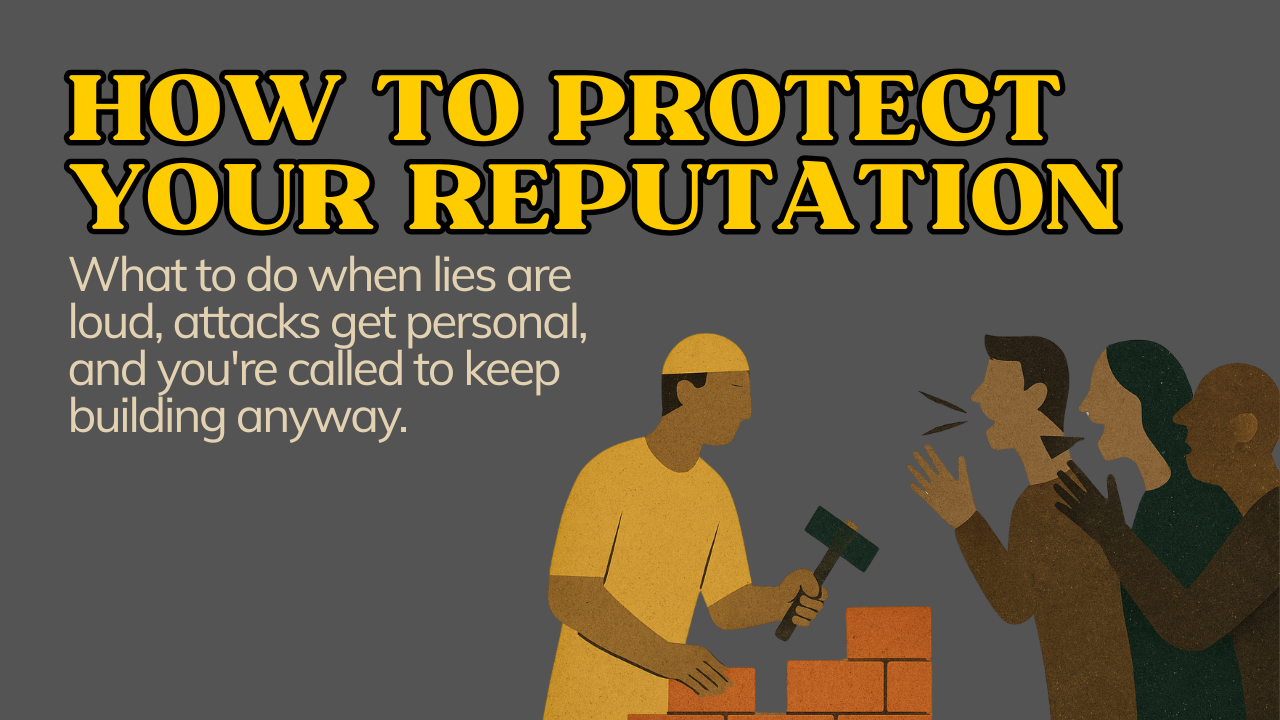
How to Protect Your Reputation
How to protect your reputation when you're under spiritual, personal, or public attack—drawing wisdom from Nehemiah 6. When you're building something meaningful, resistance is inevitable. Rather than reacting to gossip, slander, or false accusations, the biblical approach is to stay grounded in integrity, avoid petty arguments, trust God for vindication, and keep your hands on the work. With a bold, minimalist tone inspired by Seth Godin, this piece challenges readers to remain faithful to their calling in the face of character assassination and distraction. The higher you build, the louder it gets—but your persistence is your protection.

Nehemiah was almost done. The wall was nearly finished. The noise got louder.
That’s the pattern.
Build something that matters, and opposition will follow. Not just criticism — assassination. Of your purpose. Your character. Your authority.
But you don’t have to play their game.
In the Kingdom, the win isn’t applause — it’s obedience.
Staying faithful to your assignment is the victory.
When resistance comes — and it will — don’t panic. Don’t retaliate.
Keep building.
1. Guard Your Private Life Like It’s Sacred (Because It Is)
The enemy doesn’t need much — just a crack in the door. A scrap of gossip. A late-night message that never should’ve been sent.
And if he can’t find anything real? He’ll make it up.
So don’t give him anything.
No fuel. No crumbs. No open windows.
Your integrity is the firewall. Your character is your cloak.
Your private life is the scaffolding of your public influence. Protect it like your calling depends on it — because it does.
2. Don’t Argue with Fools
There’s a difference between being wise and being loud.
Proverbs says, “Do not answer a fool according to his folly.” Translation? Stop arguing with trolls.
The moment you start defending yourself to the wrong crowd, you’ve already lost. Because their goal isn’t truth — it’s distraction.
And the minute you stop to engage, the wall stops rising.
Let them tweet. Let them spin. Let them make YouTube videos about you.
You don’t owe everyone an answer. You owe God your obedience.
3. Let God Be Your PR Team
Psalm 37:6 — “He will make your righteousness shine like the dawn.”
God is better at vindicating you than you are. Way better.
When you walk in obedience, your life becomes undeniable.
And when that fruit starts falling off your tree? Even your enemies will have to admit it’s real.
Time and truth are a team — and they always win in the end.
4. Keep Your Hands on the Bricks
This is where it gets gritty.
Nehemiah didn’t stop. Not for threats. Not for gossip. Not for false accusations.
He stayed on the wall.
He knew what we often forget: the goal of slander is not just to hurt you — it’s to stop you.
But every brick you lay is a middle finger to hell. Every prayer, every step, every act of faithfulness is a declaration: I will not come down.
Because Heaven is watching. And Hell is trembling.
The Higher You Build, the Louder It Gets
This isn’t just about damage control. It’s about destiny.
If they’re trying to pull you down, it’s probably because you’re finally standing up.
So let them talk.
You? Keep your hands dirty with the work.
Don’t let a liar’s words stop a holy assignment.
Don’t trade your hammer for a microphone.
Don’t come down from that wall.
What you’re building is bigger than the backlash.
And what God is doing in you is louder than anything they can say about you.

Influence Without Control
In this article, Darren explores the powerful difference between control and influence through the lens of Nehemiah’s leadership. He challenges the idea that leadership requires a title or authority, showing instead that true influence is built on moral authority, integrity, and consistency.
You can’t make anyone do anything.
Not really.
You can coerce.
You can manipulate.
You can force.
But that’s not leadership. That’s control.
Nehemiah didn’t control people.
He influenced them.
And that’s the invitation:
To lead without control. To influence without a title.
You want to change your world?
Start here.

When the People Cry Out
There’s a moment—
A shift.
A sound too raw, too human, too urgent to ignore.
It doesn’t come from enemies.
It comes from within the walls.
From the people we thought were safe.
From the voices we trained ourselves not to hear.
They weren’t strangers.
They were family.
The very people of God.
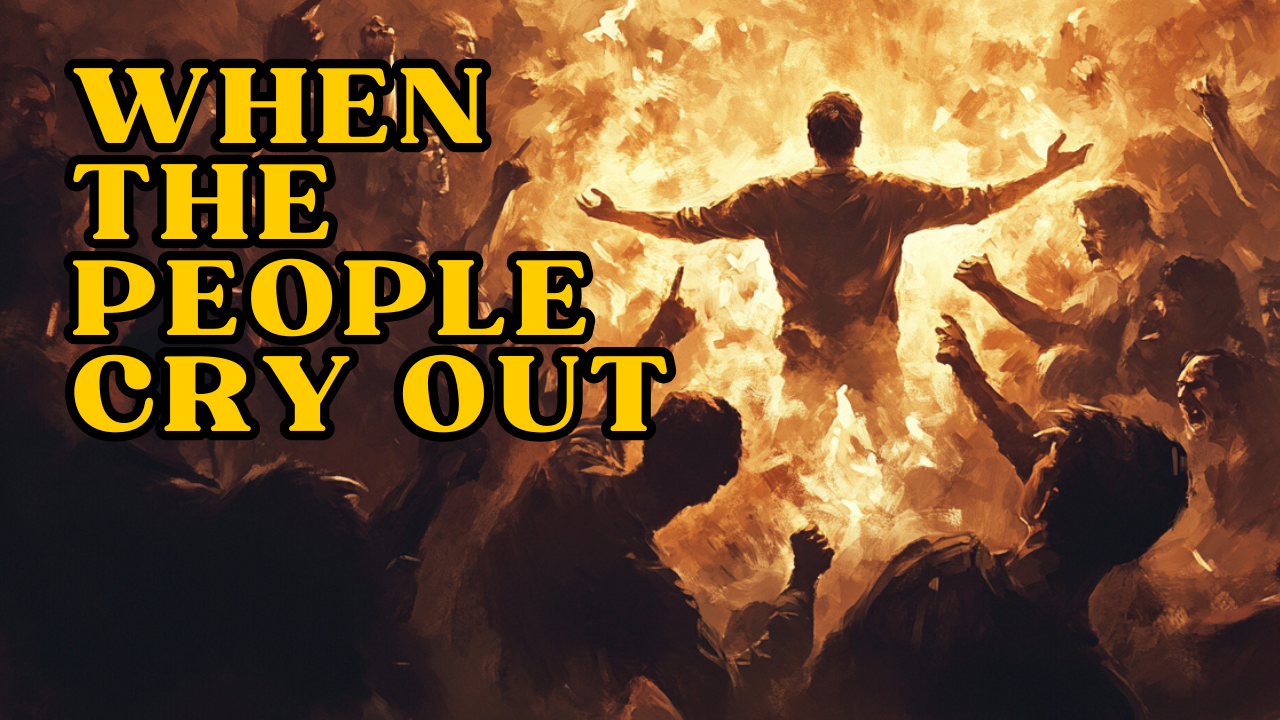
Nehemiah 5:1–13
There’s a moment—
A shift.
A sound too raw, too human, too urgent to ignore.
It doesn’t come from enemies.
It comes from within the walls.
From the people we thought were safe.
From the voices we trained ourselves not to hear.
They weren’t strangers.
They were family.
The very people of God.
And they were being crushed.
The text says,
“There arose a great outcry...”
It wasn’t noise.
It was signal.
The kind that slices through distraction.
The kind that makes a true leader pause—
Not to analyze, but to act.
Nehemiah didn’t manage the crisis.
He embodied it.
He got angry.
But not the kind of anger that burns bridges—
The kind that builds new ones.
Because he knew:
What’s the point of rebuilding walls if the people behind them are enslaved?
What good is a move of God if it doesn’t move us toward justice?
What’s the value of leadership that only asks, “What’s in it for me?”
Leadership isn’t about being in charge.
It’s about being in between.
Between the pain and the promise.
Between the silence and the sound.
1. Hear the Cry. Prophesy the Future.
Don’t dismiss what disturbs you.
Leadership begins with listening—not with the ears, but with the soul.
You can’t solve what you refuse to feel.
“There arose a great outcry of the people…” (Nehemiah 5:1)
Real leaders hear what others ignore.
And when they hear it—they speak.
They name what God is saying.
They create the future by declaring it.
2. Name the Wrong. Don’t Cover It.
Call it. Don’t coat it.
Injustice thrives in ambiguity.
Religious language has a way of making rot look holy.
But Nehemiah didn’t spiritualize sin—he exposed it.
“I was very angry… I brought charges against the nobles and the officials.” (Nehemiah 5:6–7)
Confrontation is compassion in motion.
When you name the wrong, healing can finally begin.
3. Expect Repentance. Build for Breakthrough.
Bold leadership breaks strongholds.
We’ve grown too used to managing dysfunction.
Nehemiah demanded change—and got it.
Not because he was loud, but because he was clear.
“We will restore… we will do as you say.” (Nehemiah 5:12–13)
When leaders speak with integrity, people respond.
Not just with applause—but with action.
You’ve heard something
A whisper. A rumble. A cry.
Maybe it’s not public.
But in your spirit, it’s loud.
This is your cue.
Not to wait.
Not to delegate.
Not to play it safe.
Because Kingdom leadership doesn’t wait for permission.
It answers the cry.
So—will you?
Will you rise?
Will you risk?
Will you lead?
Because heaven is listening.
And the people are crying.
Let it be you.
Let it be now.
Let it be loud.

Build And Defend
We love the idea of building.
The thrill of starting something new. The excitement of vision, calling, purpose. The sense that we’re participating in something bigger than ourselves.
But what happens when opposition shows up?
What happens when the enemy sees what you're building and decides it’s worth tearing down?
Most people hesitate. They assume that if an idea is truly from God, it shouldn’t require a fight.
Nehemiah knew better.

We love the idea of building
The thrill of starting something new. The excitement of vision, calling, purpose. The sense that we’re participating in something bigger than ourselves.
But what happens when opposition shows up?
What happens when the enemy sees what you're building and decides it’s worth tearing down?
Most people hesitate. They assume that if an idea is truly from God, it shouldn’t require a fight.
Nehemiah knew better. His people weren’t just building. They were battling while they built.
They worked with one hand and held a weapon in the other. They didn’t take off their armor. They never let their guard down.
Because if it’s worth building, it’s worth protecting.
We Build, but We Don’t Guard
It happens all the time.
A business launches, but no one builds the systems to sustain it.
A marriage begins, but no effort is made to protect it.
A dream is birthed, but distractions steal it away.
We ask for blessing but don’t build boundaries.
We cry out for breakthrough but don’t establish safeguards.
We get frustrated by attacks but never take steps to prevent them.
Nehemiah’s people understood that anything worth building will be challenged. So, they stayed ready.
If You Don’t Guard It, You’ll Lose It
"Those who carried burdens were loaded in such a way that each labored on the work with one hand and held his weapon with the other." (Nehemiah 4:17)
Imagine building a house with one hand while holding a sword in the other.
It’s not convenient. But it’s necessary.
Because if you aren’t holding a sword, the enemy assumes you’re easy to take down.
Want to protect your marriage? Guard your words, your time, your priorities.
Want to keep your calling alive? Guard your focus.
Want to build a lasting legacy? Guard your habits.
Loose grips sink ships.
The solution is simple.
Guard it and grip it!
Stay Ready So You Don’t Have to Get Ready
"None of us took off our clothes; each kept his weapon at his right hand." (Nehemiah 4:23)
Most people think they’ll get battle-ready when the fight comes.
They assume they’ll develop discipline when life demands it.
They hope they’ll build resilience when hardship shows up.
It doesn’t work that way.
Nehemiah’s men slept in their armor. They were always ready.
You don’t wait until the attack to pray.
You don’t wait until the crisis to strengthen your marriage.
You don’t wait until the enemy starts taking ground to fight back.
Prepare now, so when the moment comes, you don’t have to scramble.
Find Your People and Fight Together
"In the place where you hear the sound of the trumpet, rally to us there. Our God will fight for us!" (Nehemiah 4:20)
You can’t win this fight alone.
You need people who will rally when you’re under attack.
You need voices that will remind you of the vision when you’re ready to quit.
You need a team that doesn’t scatter when the enemy shows up.
Nehemiah’s men didn’t run from the fight. They ran toward it.
When your marriage is struggling, don’t isolate—get help.
When your business is under attack, don’t retreat—find support.
When you feel spiritually drained, don’t disengage—press into your community.
The enemy wants you alone. The wise know better.
What Are You Building and Are You Protecting It?
Most people don’t fail because they lacked vision.
They fail because they weren’t ready for resistance.
The difference between those who finish and those who quit isn’t calling, talent, or gifting.
It’s vigilance.
Are you guarding what God gave you?
Are you staying battle-ready?
Are you surrounding yourself with people who will fight with you?
Building is only half the job.
Protecting is the other half.