

Trusting God in Troubled Times
When your marriage is hanging by a thread, every moment feels heavy. There's this weight—a kind of silent panic—that rests on your shoulders, not knowing if everything you've built is about to come crashing down. And that panic? It can consume you. This is why we need to address something profound, something foundational. Because before you even begin to think about fixing your marriage, before the late-night talks, the therapy sessions, and the apologies, there’s a more urgent issue at hand: Can you trust God regardless of the outcome?

We’re continuing our blog series on What to Do When Your Marriage is in Trouble. If you haven’t caught the previous entries yet, do yourself a favor and go back to the beginning. Trust me—it’s worth it for the full picture, because all of these ideas build on each other.
Today, we’re tackling one of the most foundational, yet most difficult, steps in the process: trusting God, no matter the outcome. Now, if you’re here looking for the quick fix to mend your marriage or a guaranteed path to happily ever after, this may not be what you want to hear—but it’s exactly what you need. Trust is the bedrock of any relationship, not just with your spouse, but with God. And before you can move forward, you need to settle in your heart that your trust in God isn’t tied to the outcome of your situation. It’s deeper than that.
So, let's get real. Trusting God when things are falling apart around you isn’t just an option—it’s the only way forward if you want true peace, no matter what happens next.
When your marriage is hanging by a thread, every moment feels heavy.
There's this weight—a kind of silent panic—that rests on your shoulders, not knowing if everything you've built is about to come crashing down. And that panic? It can consume you. This is why we need to address something profound, something foundational. Because before you even begin to think about fixing your marriage, before the late-night talks, the therapy sessions, and the apologies, there’s a more urgent issue at hand: Can you trust God regardless of the outcome?
This is important because it gets to the heart of where your hope really lies. If you’re placing all your hope in your spouse, in the restoration of your relationship, or in a specific resolution, then you’re setting yourself up for a potentially devastating fall. But if you place your trust in something greater, in someone greater, then no matter what happens, you will be okay. That's the promise we cling to. In a world where we scramble for guarantees, the most important guarantee is the one no one seems to talk about—trusting God without knowing how things will turn out. And yes, it’s uncomfortable. But it’s necessary.
A Commitment Without Conditions
So here’s the deal—you’ve got to make a decision. Now. Not after your spouse apologizes. Not after things magically improve. But right now, while things are still unresolved and chaotic, you need to decide: Will you trust God no matter what happens?
This isn’t some motivational pep talk. This is life-altering stuff. Trusting God without conditions is hard. It's counterintuitive. We’re used to trusting as long as we have control over the outcome, right? But true trust means letting go, surrendering your need to control the narrative. It’s about handing over the reigns, even when you’re terrified about where this ride is going.
You’ve got to draw that line in the sand today. You have to declare, "No matter what happens, I will trust the Lord." Because if you wait until you know how things will end, then it’s not really trust—it’s just delayed anxiety. Trust means committing yourself to God before you see how things will play out. It means anchoring yourself in the only thing that will never change, the only one who is truly in control.
What If Things Don’t Go the Way You Want?
And let’s be honest here—things might not turn out the way you want them to. You could be praying for a miracle, hoping for reconciliation, believing for healing—and it still might not happen. I’m not saying that to discourage you, but to prepare you. You need to know that trusting God isn’t about getting the results you want. It’s about knowing that He is good, even when the situation isn’t.
Imagine standing on the edge of a cliff, looking down at uncertainty. You’ve been told to jump, to trust that God will catch you. But what if you’re thinking, “What if He doesn’t catch me? What if I fall? What if I get hurt?” That’s the real fear, isn’t it? That God will let you down. That you’ll trust, and things still won’t turn out. But here’s the thing—trusting God isn’t about being safe from pain. It’s about knowing that even if you fall, He’s there with you in the fall. That is faith. That is trust.
Think about Job’s prayer in the Bible: “Even if you slay me, I will trust you.” Job had lost everything—his family, his wealth, his health—everything. And yet, he still trusted God. That’s the kind of faith we’re talking about. Not the kind that depends on things going well, but the kind that endures through the worst of it.
Conditional Faith is No Faith at All
Too often, we approach God with conditional faith. We say things like, “God, if you fix this, I’ll trust you more,” or “If you answer this prayer, then I’ll know you’re real.” But here’s the hard truth—that’s not trust. That’s a transaction. And God doesn’t operate in the realm of bargains. His faithfulness isn’t dependent on whether things go the way you want them to. And your faith shouldn’t be, either.
True trust in God means letting go of the bargaining chips. It’s releasing your need for guarantees and outcomes, and simply saying, “No matter what happens, I will trust You.” It’s not easy. In fact, it’s terrifying. But if you don’t make that commitment now, then when the tough times come—and they will—you’ll crumble under the weight of your own expectations.
It’s like planting a tree. You don’t see the fruit overnight. You don’t know how long it will take to grow, or if it will even grow the way you expect. But you plant it anyway, you water it, you care for it, trusting that in time, it will bear fruit. That’s what trust in God looks like. You plant your faith in Him, without knowing how things will turn out, and you trust that He will bring forth something good—even if it’s not what you originally expected.
The Danger of Blaming God
Let’s get real for a second—when things don’t go the way we want, we tend to blame God. We say things like, “God, where were You? Why didn’t You fix this? Why did You let this happen?” But here’s the reality: God is not to blame for the mess we’re in. We live in a broken world, filled with broken people, and sometimes, life just goes sideways. But blaming God is the quickest way to distance yourself from the very One who can help you through it.
You see, we’re often quick to shake our fists at the heavens when things go wrong, but slow to examine our own hearts. And that’s the root of the problem, isn’t it? It’s easier to point fingers than it is to look inward. But trust me when I say that the healing process starts when you stop blaming God and start trusting Him, regardless of the outcome.
Taking Ownership of Your Own Chaos
Here’s another hard truth—before you can even think about fixing your marriage, you need to take ownership of your own chaos. You can’t sweep things under the rug forever. Eventually, the mess will spill out, and you’ll have to face it. So, own the mess. Own the fear, the shame, the control issues that are wreaking havoc on your heart. Acknowledge the chaos before you, and bring it before God.
It’s easy to point out the flaws in your spouse, but healing begins when you address the issues in your own heart. And that starts with trusting God enough to say, “No matter what happens, I will serve You. I will love You. I will trust You.”
Trust is a Process, Not a Quick Fix
Let’s be clear—trusting God is a process. It’s not a one-time decision that makes everything magically better. It’s a daily choice, a continuous surrender. Every day, you’ll have to remind yourself, “I trust You, Lord, no matter what.” Some days, it will be easy. Other days, it will feel like the hardest thing you’ve ever done. But here’s the good news: God is with you in the process.
It’s like working out. You don’t see the results right away, but you keep going, because you know that over time, things will change. You may not see it, but God is at work in your life, even when the circumstances around you seem unchanged. Trust the process, even when you don’t see immediate results.
The Final Call: Trusting in the Unknown
So, here’s where we land. Can you trust God before you see the outcome? Can you trust Him enough to let go of the need for guarantees, to release control over how things turn out? This is the moment where you decide, not just for your marriage, but for your life—will you trust God, no matter what happens?
Because that’s the key. Not the outcome, but the trust. It’s the kind of trust that sets you free from the anxiety of not knowing what’s coming next. It’s the trust that brings peace in the middle of uncertainty. It’s the trust that says, “Even if things don’t go my way, I know that God is still good.”
And that trust? It’s not just powerful. It’s life-changing.

Releasing Control
Welcome back! We’re continuing our blog series on What to Do When Your Marriage is in Trouble. If you haven’t caught the previous entries yet, do yourself a favor and go back to the beginning. Trust me—it’s worth it for the full picture, because all of these ideas build on each other.
Today, we’re tackling a big one: control.
(Insert dramatic soundtrack here: BUM BUM BUMMMMMMMM!)
Welcome back!
We’re continuing our blog series on What to Do When Your Marriage is in Trouble. If you haven’t caught the previous entries yet, do yourself a favor and go back to the beginning.
Trust me—it’s worth it for the full picture, because all of these ideas build on each other.
Today, we’re tackling a big one: control.
[Insert dramatic soundtrack here: BUM BUM BUMMMMMMMM!]
If you’re like most of us, you’ve probably tried to control a situation or two—or maybe you’ve tried to control everything, from the way the towels are folded to your spouse’s behavior. And, surprise surprise, it hasn’t worked out so well. That’s because control is a sneaky thing. It makes you think you’re fixing something, when in reality, you’re just tightening the leash on a relationship that should be about love, trust, and freedom.
It’s important to note that this issue of control isn’t gender-specific. Both men and women can struggle with this, and often for different reasons.
Maybe you think you’re helping by organizing your partner’s schedule, or perhaps you step in when you feel like you’re more “capable.” Either way, the result is the same—an imbalance that leaves both partners feeling drained.
So, how do we let go of control? How do we trust instead of trying to manipulate every little detail in our marriages? We’re going to break this down step by step.
Step 1: Accept the Fact That You’re Not Actually in Control
This is where it all begins—admitting you’re not actually in control.
That might sound simple, but it’s one of the hardest things to do. You might think you’re just “organizing” or “helping things go smoother,” but if we’re being real, those are often just fancy ways of saying, “I’m making sure things go my way.”
For men, this might look like over-managing finances or dictating how certain tasks are done around the house.
For women, it could be rearranging the dishwasher after it’s loaded or frequently offering “helpful” reminders. Whatever form it takes, control can creep into a marriage like an uninvited houseguest, slowly taking over.
Proverbs 16:9 tells us, “The heart of man plans his way, but the Lord establishes his steps.”
Here’s the truth: we’re never really in control, not in the big sense. Sure, we can make plans, fold laundry a certain way, or send out reminders, but at the end of the day, only God can direct the true course of our lives. And guess what? That includes your spouse.
Control is Exhausting—For Both of You
The problem with trying to control everything is that it’s downright exhausting. It’s like being a one-person orchestra where you’re expected to play all the instruments simultaneously. You think you’re managing everything, but in reality, you’re out of tune and out of energy.
Here’s a scenario. You want everything to go smoothly, so you plan every last detail of your week. You create color-coded schedules for the family, you remind your spouse multiple times about dinner plans, and you get frustrated when things don’t go according to your master plan. Then, instead of helping, your spouse gets distant. They stop engaging because, frankly, who wants to feel micromanaged in their own home?
This can happen regardless of whether you’re a husband or a wife. Over-managing details can cause your spouse to pull away, feeling less engaged or even resentful, and in turn, you both end up feeling worn out.
Matthew 11:28 says, “Come to me, all who labor and are heavy laden, and I will give you rest.” Control adds weight, both to your relationship and to your own heart. Letting go of that need to manage every detail is the first step towards finding real rest.
Step 2: Letting Go of the Outcome
Here’s where things get tricky. Letting go of control means letting go of the outcome. This is the part that freaks most people out.
If you’re not pulling the strings, who is?
What if things go wrong?
What if your spouse makes a decision you don’t agree with?
What if—gasp—they mess up?
And now comes the uncomfortable truth: that’s okay!
Part of being in a relationship, especially a marriage, is trusting your spouse enough to let them make mistakes. It’s trusting them enough to let them take responsibility for their own actions without you stepping in to “fix” everything. It’s realizing that love and control don’t go hand in hand.
1 Corinthians 13:7 says, “Love bears all things, believes all things, hopes all things, endures all things.”
Notice what’s not on that list?
Love doesn’t control all things.
Love gives freedom, even when it’s uncomfortable, even when it means things don’t go perfectly according to plan.
Whether you're a husband or a wife, trying to control every outcome in your marriage is like holding your partner’s arm behind their back instead of gently holding their hand. One is a partnership. The other is force, and force isn’t love.
Step 3: Trust is Not Passive—It’s Active
Now, some of you might be thinking, But if I let go of control, won’t everything fall apart?
I get it. Letting go feels risky. It feels passive. But trust me, it’s not. Trust isn’t sitting back and doing nothing.
Trust is actively choosing to let God and your spouse step up without you orchestrating every move.
Psalm 37:5 says, “Commit your way to the Lord; trust in him, and he will act.” Trust is active because it involves a decision.
And you know what’s funny? When you stop trying to control everything, you might find that your spouse rises to the occasion. Whether you're a man or a woman, giving your partner space allows them to step up. Maybe they load the dishwasher “wrong,” but they start taking on more responsibility in areas you never even asked for. Maybe they don’t handle a situation the way you would have, but they figure it out on their own—and your marriage grows stronger because of it.
Why Letting Go of Control Leads to Real Freedom
Here’s the bottom line: letting go of control leads to real freedom, not just for your spouse but for you.
When you stop micromanaging every aspect of your relationship, you give both of you space to grow, to learn, and to love without the constant pressure of perfection.
Galatians 5:1 says, “For freedom Christ has set us free; stand firm therefore, and do not submit again to a yoke of slavery.”
Control is a yoke—it’s heavy, restrictive, and it keeps you and your spouse from experiencing the true freedom God intended for your marriage.
The Freedom in Letting Go
So, where does this leave us?
Letting go of control isn’t about doing nothing—it’s about trusting God, trusting your spouse, and trusting that things will work out, even when they don’t go exactly according to your plan.
It’s about releasing that tight grip you have on the outcome and letting real love—trusting, freeing, and imperfect love—take its place.
As you move forward, ask yourself, “Where am I holding too tightly? Where can I give my spouse more freedom, and myself more peace?” It won’t happen overnight, but as you start to release control, you’ll find that what comes in its place is so much more fulfilling.
Stay tuned for more insights in this series, and if you’re looking for additional resources or support, check out darrenstott.com.

IT’S NOT ABOUT THE DIRTY DISHES (BUT LET’S BE HONEST, IT KINDA IS)
What Causes Marriage Problems? Understanding the Root Issues
Welcome back! This is part of our blog series on What to Do When Your Marriage is in Trouble. If you haven’t had a chance to read the previous posts, be sure to go back and read the entire series for maximum effectiveness. Each blog builds on the last, giving you the tools and insights to bring healing and restoration to your relationship.
Today, we’re diving into a critical topic—what actually causes marriage problems.
Spoiler alert: it’s usually not just one thing. But the good news is, by identifying the root issues, you can start addressing them head-on and work towards building a stronger, healthier marriage.
What Causes Marriage Problems? Understanding the Root Issues
Welcome back! This is part of our blog series on What to Do When Your Marriage is in Trouble. If you haven’t had a chance to read the previous posts, be sure to go back and read the entire series for maximum effectiveness. Each blog builds on the last, giving you the tools and insights to bring healing and restoration to your relationship.
Today, we’re diving into a critical topic—what actually causes marriage problems.
Spoiler alert: it’s usually not just one thing. But the good news is, by identifying the root issues, you can start addressing them head-on and work towards building a stronger, healthier marriage.
Plates are plates. They’ll be fine.
Have you ever found yourself in a heated argument over something as ridiculous as the way the dishwasher was loaded? You know, one of those moments where you start off talking about something small—like plates—and before you know it, you’re debating existential life questions like, “Does my spouse even love me?” and “Why are we still living like this?”
It always starts out simple. You walk into the kitchen, humming to yourself, and then... boom. The dishwasher looks like a blind man failed at a game of kitchen Tetris. Plates are on the top rack, the cups are stuffed in there sideways, and you’re pretty sure the forks are organized by chaos theory.
You stare at it for a second, taking it in like you're at some abstract art exhibit—or maybe just staring at solid evidence of genetic stupidity. And before you can stop yourself, the words tumble out.
“Why are the plates on the top rack?” You try to keep it casual, but inside you’re thinking, Who does this? Who raised you? Is this a cry for help?
Your spouse looks up from their phone, inconvenienced by your question. “What’s wrong with the top rack?”
Now, this is where things get dicey. You take a deep breath, like you're about to give a TED Talk no one asked for. “The water doesn’t even reach the plates up there.”
They shrug, completely unfazed. “Plates are plates. They’ll be fine.”
And now, here it comes—the storm building inside you. Plates are plates? That’s like saying cats are dogs. You can’t just throw things anywhere and expect it to work! That’s how you end up with dirty plates and a messy marriage! But, you’re cool. You can stay calm. After all, it’s just the dishwasher, right?
“That’s not how it works. Plates go on the bottom, where the water can actually hit them. You don’t just—" And then it hits you. This isn’t about the plates anymore. This is about something deeper, darker—like the time they forgot your birthday, or the fact they’ve been using your good towels as gym rags.
But instead of going down the rabbit hole, you pause, giving them the chance to make this right. A little acknowledgment, a little ownership of their crimes. Maybe even an apology.
What do you get instead? An eye roll so big, it’s like they’re trying to check out the back of their own small, thick, empty skull.
“Well, maybe if you actually loaded the dishwasher once in a while, we wouldn’t have this problem,” they say, leaning back in their chair like they just delivered a wisdom nugget straight from the mouth of Confucius.
Now, this is where things go off the rails. I load the dishwasher! I do! But they said it so confidently that now you’re starting to doubt yourself. Like, Do I load the dishwasher? Have I ever? Am I the problem?
You shake it off. No. Not today, Satan. You’re not falling for it. “I load the dishwasher correctly when I do it, though. You know, with logic and reason. Not... whatever this is.”
They smirk, and you’re pretty sure you can hear angels weeping in the background. “Logic and reason? Oh, wow, I didn’t realize we were turning this into a Socratic dialogue. What’s next, you gonna start quoting Plato on the cutlery? Clearly, your parents’ investment in that Classical Education is finally paying off.” And just like that, the dishwasher has officially become a metaphor for your entire marriage.
You cross your arms, leaning against the counter like you’re gearing up for the showdown at high noon. “It’s not just the dishwasher. You never listen to me.”
Their eyebrows shoot up like you just accused them of a federal crime. “Never listen to you? Babe, you act like you’re out here dropping secret codes to the universe. You’re mad about the plates. Get a life!”
You want to laugh, but it’s too late. The dam has broken, and here comes the flood. “Oh, it’s about more than the plates. It’s about the fact that I asked you last week to fix the garage door and you said you’d do it, but here we are, still ducking under it like we’re freakin’ Indiana Jones!”
“Oh, here we go. You’re gonna bring up the garage door now? Next thing you know, you’ll be throwing 2014 in my face like I didn’t forget our anniversary because I was at work, keeping the lights on in this place!”
More shots fired! You’re not just talking about dishes or doors anymore. You’re unraveling seven years of pent-up frustrations in front of the dishwasher, all because some plates are taking a joyride on the top rack.
It’s always the small stuff that cracks the dam, isn’t it?
It’s almost never about the dishwasher. These small conflicts usually point to something deeper that’s been bubbling under the surface. Maybe it’s a lack of communication, unmet expectations, or feeling unappreciated. The dirty dishes are just the spark that ignites the real issue.
Ephesians 4:26 (ESV) gives us this wisdom: "Be angry and do not sin; do not let the sun go down on your anger."
It’s a reminder that small issues, when left unresolved, can snowball into something much bigger. Just like that warning light on your car dashboard, these minor arguments are signals that something deeper needs attention. Ignoring them doesn’t make the issue go away—it just means you’ll be stranded on the side of the road sooner or later.

While the small things can set off arguments, the real culprits behind most marriage problems are disconnection and unmet expectations.
Disconnection: Over time, life happens. You get busy with work, kids, and responsibilities. What used to be long conversations over dinner turns into quick exchanges about the kids’ schedule or who’s picking up groceries. It’s not that you’ve stopped loving each other, but the emotional connection starts to weaken.
Proverbs 18:21 tells us, "Death and life are in the power of the tongue." This highlights how important your words and communication are. When communication breaks down, the emotional bond begins to fray.
This is why you might feel like you’re living more like roommates than partners. You’re sharing a life, but not really sharing life. When the emotional connection is lost, everything else—intimacy, trust, patience—starts to deteriorate.
Unmet Expectations: Unmet expectations are the silent marriage killer. Often, they’re not even spoken out loud, but they’re there. You expected marriage to look a certain way. Maybe you thought your spouse would do more around the house or you envisioned a more exciting, adventurous life together. Over time, these expectations can morph into disappointments, and if left unchecked, they turn into resentment.
James 4:1-2 says, "What causes quarrels and what causes fights among you? Is it not this, that your passions are at war within you?"
Unmet desires can quickly lead to conflict if we’re not open about them. Sometimes we don’t even realize what our expectations are until they go unmet.

Communication is one of the first things to suffer when marriages are in trouble.
And not just any communication—meaningful communication. We’re not talking about the "Can you grab milk on your way home?" type of talk. We’re talking about the heart-to-heart conversations that used to come naturally.
When communication breaks down, it creates a space for misunderstandings, assumptions, and worst of all—distance. You stop sharing your thoughts and feelings, and the distance grows. Eventually, you’re living with someone you barely recognize emotionally.
Proverbs 13:17 tells us, “A wicked messenger falls into trouble, but a faithful envoy brings healing.”
When we communicate faithfully and openly with our spouses, we open the door for healing and reconciliation. But when we hide, avoid, or simply shut down, we fall into the trap of distance and isolation.

Another major cause of marriage problems that can’t be ignored is unforgiveness.
Whether it’s a small offense or a significant betrayal, holding onto hurt creates a barrier that’s hard to overcome. Unforgiveness is like a heavy chain around your relationship, keeping you stuck in the past instead of moving forward.
Matthew 6:14 says, "For if you forgive others their trespasses, your heavenly Father will also forgive you."
It’s not easy to forgive, but it’s essential for a healthy marriage. When we don’t forgive, we leave room for bitterness to grow. And once bitterness takes root, it can choke out the love and trust that once held your marriage together.
It’s not just about saying, “I forgive you.” Real forgiveness requires vulnerability, humility, and the willingness to let go of the hurt—whether or not your spouse fully acknowledges the pain they caused. It’s about freeing yourself and opening the door for healing.
Once you’ve identified some of the root causes of your marriage problems—whether it’s disconnection, unmet expectations, communication breakdown, or unforgiveness—the next step is to bring these issues into the light.
Ephesians 5:13 reminds us, "But when anything is exposed by the light, it becomes visible."
In other words, healing begins when you’re honest about what’s really going on.
This means having an open, honest, and humble conversation with your spouse about what you’re feeling and experiencing. It’s not about blaming them or pointing fingers—it’s about expressing your heart and being vulnerable. Vulnerability is hard, especially if there’s been hurt, but it’s the only way to start rebuilding trust and connection.
Marriage problems are complex, and they don’t stem from just one issue. Whether it’s disconnection, unmet expectations, or unforgiveness, the key is to address these root issues with open, honest, and humble communication.
Don’t let small conflicts snowball into something bigger by ignoring them. Instead, have the hard conversations now, before it’s too late.
Remember, marriage is a journey, not a destination. There will be bumps along the way, but with God’s grace and a commitment to facing issues head-on, healing is possible.
About the Author:
Darren Stott is a powerhouse revivalist known for walking in signs-and-wonders, miracles, and salvations. His Portals University has equipped thousands with the practices needed to engage the heavenly windows of opportunity. Darren is a joy guy—whether he's leading people to Jesus or equipping a room of businessmen, Darren is known for the sort of joy that is able to drive a point home and see dramatic life change. Darren Stott is a Pastor, Author, Podcaster, Radio Host, and Founder of Supernaturalist Ministries.
For more information and resources, visit darrenstott.com.

Do You Have a Moldy Marriage?
If you’re reading this, and you are, it’s likely that either you or someone you know is facing some turbulence in their marriage.
Maybe it’s more than just the usual squabbles over whose turn it is to take out the trash, or perhaps you’ve been stuck in an unending loop of silent treatments, each one colder than the last.
Whatever the case, you're in the right place, because today, we’re diving into what to do when your marriage is in trouble, and how you can start turning things around.
Now, I know what you might be thinking: "Why should I listen to this guy? My situation is different." And you’re right—every marriage is as unique as the people in it. But here’s the kicker: the foundational issues that cause marital strife are often strikingly similar across the board. And if we can pinpoint those, we can begin to heal them.
If you’re reading this, and you are, it’s likely that either you or someone you know is facing some turbulence in their marriage.
Maybe it’s more than just the usual squabbles over whose turn it is to take out the trash, or perhaps you’ve been stuck in an unending loop of silent treatments, each one colder than the last.
Whatever the case, you're in the right place, because today, we’re diving into what to do when your marriage is in trouble, and how you can start turning things around.
Now, I know what you might be thinking: "Why should I listen to this guy? My situation is different." And you’re right—every marriage is as unique as the people in it. But here’s the kicker: the foundational issues that cause marital strife are often strikingly similar across the board. And if we can pinpoint those, we can begin to heal them.
The Problem With Keeping Things in the Dark
In Ephesians 5:13, Paul says, “But when anything is exposed by the light, it becomes visible.” Now, Paul wasn’t just talking about the suspicious-looking leftovers in your fridge. He was getting at something much deeper—the fact that problems only get worse when they’re hidden in the dark.
And speaking of suspicious-looking leftovers, let’s say they’re starting to grow a nice fuzzy coat—yup, that’s mold! It might be funny in your fridge, but it’s no joke in your marriage. Just like those leftovers, problems in your marriage can start to grow when they’re left unattended. The thing about mold is, it can grow anywhere, but it really thrives in those neglected, hidden corners where the light doesn’t reach—just like the issues in your relationship. When problems are left in the dark, they fester and spread, often unnoticed until they’ve caused serious damage.
When you’re too afraid to bring your issues into the light, they start to fester.
You might think you’re keeping the peace by not addressing the elephant in the room, but in reality, you’re just letting it grow fatter and more destructive.
Here’s the first hard truth: you need to bring your marital issues into the light. This doesn’t mean airing your dirty laundry on social media or telling your nosy neighbor all about your spouse's quirks. No, it means being honest with yourself, your spouse, and God. You can’t fix what you refuse to face.
Why Marriages Fail
Now, let’s get into the nitty-gritty of why marriages fail. It’s not like you wake up one day and decide, “You know what? Divorce sounds like a fun new adventure.” No, it’s a gradual process—a slow burn that starts with a spark of unresolved conflict and ends in a wildfire of resentment.
One of the biggest culprits?
Fear.
Yep, fear.
The Bible talks about fear in a way that’s almost paradoxical. On one hand, we’re told, “The fear of the Lord is the beginning of wisdom” (Proverbs 9:10, ESV). But on the other, we’re also told, “There is no fear in love, but perfect love casts out fear” (1 John 4:18, ESV). So, what gives?
Here’s the thing: healthy fear—the kind that leads to wisdom—guides us towards making better choices. But the fear that creeps into a marriage isn’t the healthy kind. It’s the fear of rejection, the fear of vulnerability, the fear of being truly seen by the person who’s supposed to love you the most. And that fear? It’s a relationship killer.
Fear drives us to hide, to pretend everything’s fine when it’s not. It’s like trying to keep a beach ball underwater—it takes a lot of effort, and eventually, it’s going to pop up and hit you right in the face.
The Usual Suspects
If we’re going to talk about what’s really going wrong in your marriage, we need to discuss the unholy trinity of relationship destruction: fear, shame, and control.

These three amigos have been around since the dawn of time—literally. They made their debut in the Garden of Eden, and they’ve been wreaking havoc ever since.
Remember Genesis 3? Adam and Eve, the first couple, had it all. Paradise, an intimate relationship with God, and not a care in the world. That is, until they decided to snack on the one fruit God told them to avoid.
What happened next?
They realized they were naked (cue the shame), hid from God (hello, fear), and tried to cover themselves up with fig leaves (classic control move).
This same cycle plays out in marriages today. You make a mistake, feel ashamed, and instead of coming clean, you hide it.
You control the narrative, trying to maintain an image, but all the while, the relationship is deteriorating.
Fear leads to shame, shame leads to control, and control leads to—you guessed it—more fear.
Step 1: Conquering Fear
Alright, now that we’ve diagnosed the problem, let’s talk about solutions.
Step one: stop partnering with fear. Fear is like that friend who always borrows money but never pays it back—it takes and takes and leaves you worse off than before.
2 Timothy 1:7 says, “For God gave us a spirit not of fear but of power and love and self-control.” Notice the contrast here? Fear is the opposite of power, love, and self-control. If you’re operating in fear, you’re missing out on the very tools you need to fix your marriage.
So how do you conquer fear? By acknowledging it. Call it out. Tell your spouse, “Hey, I’m scared. I’m scared of where this is heading, and I don’t want to lose you.”
Vulnerability is scary, but it’s also powerful. It’s the first step towards real healing.
Step 2: Shame Off You
Next up, we need to deal with shame. Shame is that little voice in your head that says, “You’re not good enough. If they really knew you, they wouldn’t love you.” But here’s the truth: shame is a liar.
Romans 8:1 reminds us, “There is therefore now no condemnation for those who are in Christ Jesus.” If you’re walking around with shame on your shoulders, it’s time to shake it off.
Shame doesn’t come from God; it comes from the enemy who wants to keep you trapped in a cycle of self-doubt and self-loathing.
Here’s a little secret: no one’s marriage is perfect. Everyone has issues. The key is not to let those issues define you. Instead of letting shame control your actions, let grace lead the way. Extend grace to yourself and your spouse. After all, you’re both human, and humans are notoriously imperfect.
Step 3: Letting Go of Control
Finally, let’s talk about control. We all like to think we’re in control, but the truth is, control is an illusion. It’s like trying to herd cats—no matter how hard you try, things are going to go their own way.
Proverbs 3:5-6 tells us, “Trust in the Lord with all your heart, and do not lean on your own understanding. In all your ways acknowledge him, and he will make straight your paths.” Control is rooted in pride, the belief that you can handle everything on your own. But spoiler alert: you can’t.
Letting go of control means trusting God with your marriage. It means admitting that you don’t have all the answers and that you can’t fix this on your own. And that’s okay. It’s not about giving up; it’s about giving over—handing your marriage over to the One who created it in the first place.
The Road to Healing
So, where do we go from here?
Well, if you’ve made it this far, congratulations—you’ve taken the first step towards healing. You’ve acknowledged that fear, shame, and control have been running the show, and you’re ready to change that.
The road to healing won’t be easy. It’s going to require vulnerability, humility, and a whole lot of grace. But here’s the good news: you’re not in this alone. God is with you, and He’s more invested in your marriage than you can imagine.
Jeremiah 29:11 reminds us, “For I know the plans I have for you, declares the Lord, plans for welfare and not for evil, to give you a future and a hope.”
So, let’s step into that hope!! Let’s bring everything into the light and start the journey towards healing and restoration. Your marriage is worth fighting for, and with God on your side, there’s no battle you can’t win.
And remember, if you need some encouragement along the way, come back to this blog. We’ll be here, walking this journey with you, one step at a time.
I look forward to sharing more with you in the weeks ahead. Remember, what God has joined together, let no man separate. Don’t give up on God, don’t give up on your spouse, and don’t give up on yourself. God’s grace is sufficient. Stay tuned!

Walking in Healing
In this blog, we will explore the vital importance of understanding and establishing your beliefs about healing before sickness strikes.
We will cover the necessity of proactive faith, the role of professional prayer, the assurance that God desires your healing, and the significance of building a supportive faith community.
By preparing in advance and cultivating a deep understanding of healing, you will be better equipped to face challenges and support others in their healing journeys.
This preparation is crucial for standing strong in faith and experiencing the miraculous power of God in your life.
Understanding Who You Are and the Operation of Signs, Wonders, and Miracles
In this blog, we will explore the vital importance of understanding and establishing your beliefs about healing before sickness strikes.
We will cover the necessity of proactive faith, the role of professional prayer, the assurance that God desires your healing, and the significance of building a supportive faith community.
By preparing in advance and cultivating a deep understanding of healing, you will be better equipped to face challenges and support others in their healing journeys.
This preparation is crucial for standing strong in faith and experiencing the miraculous power of God in your life.
Discover Your Beliefs NOW!
First and foremost, don’t wait until you’re sick or diagnosed with a disease to figure out what you believe about healing.
Imagine being diagnosed with a sickness and then deciding to become your own doctor or surgeon without any prior experience.
It sounds absurd, right?
Yet, many people in the church do exactly that with their faith. They wait until they or their loved ones are sick before they start figuring out their theology of healing.
Why is it important to establish your belief about healing before you face sickness?
The answer lies in preparation and understanding. When you are healthy, you have the clarity and mental fortitude to delve deeply into scripture and build a solid foundation of faith. This preparation is crucial because, when sickness strikes, emotions run high, fear can set in, and your soul will want its feelings validated verses operating from faith.
Think of it this way: if you were to take up a new skill, like playing a musical instrument or learning a new language, you wouldn’t wait until you are scheduled to perform at a concert in front of thousands of people to learn your instrument. You would start learning and practicing well in advance, building your skills over time. The same applies to your beliefs about healing. Establishing a firm foundation when you are well-prepared allows you to stand strong in God’s word and your faith in His promises during challenging times.
Moreover, understanding God’s promises and the power of healing when you are healthy equips you to help others. When you see someone suffering, you can step in with confidence and offer prayers that are rooted in strong and growing faith. This proactive approach not only benefits you but also empowers you to be a vessel of God’s healing power to others.
The Importance of “Professional” Prayer
This use of the word professional might make some of you cringe, but I’m going to use it anyway. When you, yourself are sick, consider humbling yourself and seek “professional” prayer.
People who consistently operate with faith for signs, wonders, and miracles didn’t just wake up one day and start performing miracles.
People who consistently operate with faith for signs, wonders, and miracles didn’t just wake up one day and start performing miracles. They’ve carved out a miraculous realm over time and have a faith that makes it easier for them to believe.
If you don’t have a track record of healing, don’t try to be your own faith healer!
The time to figure this stuff out is when you’re healthy.
Pray for strangers first; it’s easier to believe for a miracle for someone you don’t know than for someone you love deeply.
Seeking the help of those who have a proven track record in healing, is essential.
Seeking the help of those who have a proven track record in healing, is essential. These individuals have dedicated significant time and effort to build their faith and understand the dynamics of God’s healing power. Their faith and experience can bridge the gap for you when your faith is not yet strong enough.
Humility is key here!! Acknowledge that you might not have all the answers and that others can help you in your journey. Seeking special prayer is not a sign of weakness but a demonstration of wisdom. Just as you would consult a specialist for a serious medical condition, consulting those with a deep understanding of spiritual healing is equally important.
Furthermore, those who have cultivated a miraculous realm have insights and experiences that can guide you through your healing process. They can offer practical advice, share testimonies that boost your faith, and pray with an authority that comes from years of experience. This support can be invaluable, especially during times of crisis when your own faith might be wavering.
God Wants to Heal You
If you’re sick, know that God wants to heal you!
He desires to set you free from illness and suffering. The Bible consistently reveals God's will to heal. Jesus’ ministry on earth was filled with acts of healing, casting out demons, and performing miracles, demonstrating God’s heart towards us:
Matthew 8:16-17 (NIV): "When evening came, many who were demon-possessed were brought to him, and he drove out the spirits with a word and healed all the sick. This was to fulfill what was spoken through the prophet Isaiah: 'He took up our infirmities and bore our diseases.'"
Psalm 103:2-3 (NIV): "Praise the Lord, my soul, and forget not all his benefits—who forgives all your sins and heals all your diseases."
Understanding that God desires your healing is fundamental. It’s easy to fall into the trap of believing that sickness is a punishment or that it’s not God’s will to heal you. However, the Bible consistently shows us that God is a healer. Jesus spent a significant part of His ministry healing the sick, casting out demons, and performing miracles. This is a clear indication of God’s heart towards us.
Healing can come in various forms. Sometimes it is immediate and miraculous; other times, it may be a process involving medical intervention, lifestyle changes, and ongoing prayer. Regardless of the method, the source of healing is always God. Recognizing this truth helps us to remain open to the different ways God might choose to bring healing into our lives.
God Uses His Body to Heal
While God can sovereignly show up and heal you, He often uses the church, the body of Christ, to do so. This community aspect is crucial. When you read through 1 Corinthians 12, you’ll see that different spiritual gifts, including miracles, are given to the church:
1 Corinthians 12:9-10 (NIV): "...to another faith by the same Spirit, to another gifts of healing by that one Spirit, to another miraculous powers..."
James 5:14-16 (NIV): "Is anyone among you sick? Let them call the elders of the church to pray over them and anoint them with oil in the name of the Lord. And the prayer offered in faith will make the sick person well; the Lord will raise them up. If they have sinned, they will be forgiven. Therefore confess your sins to each other and pray for each other so that you may be healed. The prayer of a righteous person is powerful and effective."
The church is a place where we can find support, encouragement, and prayer. When we reach out for help, we are allowing others to fulfill their God-given roles and use their spiritual gifts for our benefit. In my own family,
I don’t always post on Facebook when we’re going through a challenging time, but I have reached out for prayer on our church’s closed Facebook group when things were especially intense, and God has shown up in radical ways!!
In my own experience, asking for prayer within our church community has led to incredible breakthroughs.
In my own experience, asking for prayer within our church community has led to incredible breakthroughs. There is power in collective prayer and the unity of believers coming together with a common purpose. Don’t hesitate to reach out and ask for prayer, whether it’s through a church group, a close circle of friends, or a dedicated prayer team.
Go, Get Away, And Receive!!!
One powerful way to receive what God wants to release is to go, get away, and receive at a conference or at revival meetings or from a specific healing evangelists.
Sometimes, we must actively seek out what the Lord wants to release.
The power of revival lies in its ability to bring people together in a shared pursuit of outpouring and healing. These gatherings are opportunities to experience God's presence in profound ways. It's about being obedient, getting away from your comfort zone, your friends and peers and stepping into the presence of the Lord and asking for prayer.
Figures like Charlie Shamp and Alex Parkinson have dedicated their lives to cultivating a deep faith and understanding of God’s healing power. Their journeys were not instantaneous but were marked by years of dedication, study, prayer, and practice. Instead of comparing yourself to other ministers, sow into the lives of ministers and ministries, and sow into your own life and ministry by going, getting away, and receiving ministry and impartation.
Receiving from the Lord, witnessing God’s power in action, hearing testimonies of healing, and receive prayer from those who have carved out a realm of healing will actually help build your expectation, fill you with impartation, and teach you how to walk in miracles yourself.
Begin Releasing Healing Even Now
I want to share a quick, real-life testimony that illustrates the power of prayer and the importance of being prepared. My family and I were at a Vietnamese restaurant when a woman walked in with her family. She was blind, and the Lord highlighted her to me. I felt a strong prompting to pray for her.
I approached her and introduced myself, saying, "Hey, my name is Darren. I'm a pastor. Can I pray for you real quick?" She agreed, and as I invited the Holy Spirit and began to pray, the glory of God encountered her powerfully right then and there. She was obviously a Christian because she immediately began to worship the Lord, crying out "Woo, glory!" right there in the restaurant. She had her own intimate revival meeting. It was awesome!!
Although I didn’t see her eyes open immediately, the encounter was powerful. The presence of God was tangible, and her faith was visibly strengthened. This experience serves as a reminder that when we are obedient to God’s promptings, miraculous things can happen.
If you want to see healings and miracles, just start praying for as many people as you can. You can begin today!
Join a church that works miracles and do it not while you are healthy, and begin carving out your own realm of signs, wonders, and miracles.
Don’t wait until you are sick to figure out what you believe.
Seek prayer from those who are walking in miracles when needed, and understand that God desires your healing.
Remember, God uses the body of Christ to bring healing.
Don’t try to be your own hero.
Reach out for help, ask for prayer, and watch what Jesus can do.
We are all called to heal the sick and cast out demons, but the time to prepare for these acts of faith is now.
Let’s be proactive in our faith, support one another, and step into the miraculous realm that God has for us.

How to Overcome Loneliness
Finding Clarity and Faith
Hello, my friends! As I head into work today, I am compelled to share some thoughts on a topic that has come up in many recent conversations: processing through loneliness. Loneliness can be a pervasive and challenging emotion, whether surrounded by family or alone. Let's explore how to address and overcome these feelings.
Finding Clarity and Faith
Hello, my friends! As I head into work today, I am compelled to share some thoughts on a topic that has come up in many recent conversations: processing through loneliness. Loneliness can be a pervasive and challenging emotion, whether surrounded by family or alone. Let's explore how to address and overcome these feelings:
The Reality of Loneliness
Despite being in a bustling household with my wife, four children, a dog, and chickens, I understand it's possible to feel lonely even amid constant social interaction. Many of you may be experiencing loneliness due to various life changes—divorce, kids moving out, relocating to a new city, or not yet finding a new community or church. These transitions can leave us feeling isolated and disconnected.
Loneliness is a common issue that affects many people, regardless of their living situation. According to a survey conducted by the American Psychological Association, about 27% of Americans report feeling lonely, with individuals in their 40s and 50s being particularly vulnerable. This age group often faces significant life changes, such as the empty nest syndrome, career transitions, or changes in personal relationships, which can contribute to feelings of isolation.
A study by the AARP Foundation found that 46% of adults age 45 and older reported feeling lonely, a significant increase from previous years. For men, societal expectations to be stoic and self-reliant can exacerbate loneliness, making it harder for them to seek help or express their feelings.
Women in their 40s and 50s also experience high levels of loneliness. A study published in the journal Menopause found that midlife women often face unique challenges such as Menopause, caregiving responsibilities, and changing family dynamics, all of which can contribute to feelings of isolation. According to the National Institute on Aging, around 30% of women aged 45 to 65 report feeling lonely frequently, with the prevalence increasing with age.
The Harvard Study of Adult Development, one of the longest-running studies on adult life, has shown that meaningful relationships are crucial for our well-being and that social connections are as necessary for our health as diet and exercise. Yet, maintaining these connections can be challenging as we age and our social circles naturally evolve.
The COVID-19 pandemic has also intensified feelings of loneliness and isolation. A 2020 report by the Kaiser Family Foundation found that 36% of men and 43% of women reported feeling lonely frequently or all the time during the pandemic, highlighting the pervasive nature of this issue.
Recognizing the Enemy's Exploitation of Negative Emotions
Our enemy, Satan, is known for exploiting our weaknesses and negative emotions to draw us away from God. One of the most potent emotions he manipulates is loneliness. Loneliness can create a perceived chasm between us and our sense of belonging, making us feel isolated and vulnerable.
Satan's strategy involves taking minor, manageable issues and magnifying them until they seem insurmountable. This is often described as turning molehills into mountains.
A minor setback or a fleeting feeling of isolation can inflate into deep despair and hopelessness. In John 10:10, Jesus explains the enemy's nature: "The thief comes only to steal and kill and destroy; I have come that they may have life, and have it to the full."
Gaining Prophetic Perspective
I do not mean receiving a specific prophetic word when I mention prophetic perspective. Instead, I'm talking about seeing the future through the lens of faith and clarity provided by the Holy Spirit. This clarity doesn't necessarily give us certainty about every detail of our future, but it does help us see beyond our present circumstances. Jesus modeled a lifestyle of faith, trusting in the Father without knowing every detail of His future. Similarly, our walk with God requires faith because it is the substance of things hoped for and not yet seen. If we had absolute certainty about everything, we wouldn't need faith.
Developing a prophetic perspective of your life and future involves seeing your past, present, and future through the big lenses of God's plans and purposes. A prophetic perspective invites us to view challenges from 30,000 feet, aligning our vision with His eternal purposes. It's about recognizing that what may appear daunting or overwhelming in the present is just a tiny part of a larger, Heavenly plan. This perspective shifts our focus from temporary struggles to eternal truths. Instead of seeing obstacles as insurmountable, we see them as opportunities for God to reveal His power and faithfulness.
This shift doesn't negate the reality of difficulties but transforms how we perceive and respond to them. It's rooted in deep faith and trust in God's sovereignty and goodness. By embracing a prophetic perspective, we learn to patiently await God's timing and guidance, knowing He is working all things together for our ultimate good and His glory.
In practical terms, this perspective enables us to endure hardships with hope, to pray with expectation, and to live with a sense of purpose even amidst uncertainty. It empowers us to speak life and truth into challenging situations, knowing that God's perspective is higher and His plans are perfect. Ultimately, embracing a prophetic perspective brings clarity, peace, and a deeper intimacy with God as we journey through life's ups and downs.
Embracing God's Promises: Turning The Mountains Back into Molehills
Practical Strategy:
Anchor Yourself in God's word: Begin daily by meditating on Isaiah 41:10 and other promises that speak to your situation. Write them down, memorize them, and declare them aloud to reinforce their truth in your mind and spirit.
Prayer: Set aside dedicated time for prayer and meditation. Use this time to surrender your fears and concerns to God, affirming His presence and faithfulness. Invite the Holy Spirit to fill you with peace and wisdom.
Combat Negative Thoughts: Whenever negative thoughts or overwhelming emotions arise, counteract them with Scripture. Replace thoughts of fear and doubt with truths from God's Word that affirm His sovereignty, love, and provision.
Community and Support: Seek encouragement and support from fellow believers. Share your burdens with trusted friends or mentors who can pray for you and speak the truth about your situation. Attend church services or join small groups for spiritual fellowship.
Practical Steps and Action: Break down overwhelming tasks into smaller, manageable steps. Prioritize and tackle each task individually, trusting that God will provide strength and guidance as you move forward. Celebrate small victories along the way.
Thanksgiving: Cultivate a spirit of gratitude by reflecting on past instances where God has been faithful and has brought you through challenges. Keep a gratitude journal to record blessings and answered prayers, reinforcing your faith.
Continuous Learning and Growth: Invest in spiritual growth through reading and studying the Bible, attending teachings or seminars that strengthen your faith, and applying biblical principles to your daily life. Allow God's Word to transform your perspective and strengthen your resilience.
By consistently applying these practical steps and anchoring yourself in God's promises, you can experience a shift from feeling overwhelmed by mountains to confidently seeing them as molehills in the light of God's presence and power.
Using Your Authority in Christ
One crucial step in overcoming loneliness is recognizing and utilizing your authority in Christ. As believers, we are equipped to command negative spirits, including the spirit of loneliness, to leave. This authority comes from our identity in Christ and His victory on the cross. When feelings of loneliness creep in, it's essential to remember that spiritual forces can influence these emotions. The enemy seeks to exploit our vulnerabilities, but we have the power to stand firm and resist his tactics.
Commanding the Spirit of Loneliness
Start by verbally asserting your authority in Christ to combat the spirit of loneliness. Speak out loud and command the spirit of loneliness to leave in the name of Jesus. Remember, demons are not solitary; they often operate in groups. Therefore, addressing any accompanying spirits, such as hopelessness, despair, and lies, is essential. Declare that they have no power over you and must go. By doing this, you actively resist the enemy's attempts to exploit your emotional state and reclaim your mental and spiritual peace.
Reaffirming Your Identity in Christ
After commanding the spirits to leave, reaffirm your identity and the truth of God's Word. Remember that you are never alone; the Father, Son and Holy Spirit are always with you. A great cloud of witnesses surrounds you, and you have a spiritual family that supports you. Engage in prayer and worship, immersing yourself in God's presence. This strengthens your faith and reinforces your authority over negative emotions and spiritual attacks. By continuously exercising your authority in Christ, you create an environment where loneliness and its accompanying spirits cannot thrive.
Conclusion
Loneliness is a natural and challenging emotion, but it doesn't have to define your life. By recognizing the enemy's tactics, gaining a prophetic perspective, and using your authority in Christ, you can navigate this season with faith and clarity. Remember, you are never truly alone!!
Next Steps
Are you discerning an intensified season of spiritual warfare? This might indicate that you're on the brink of revelation, breakthrough, and acceleration. We are here to support you in discovering your identity and destiny and reclaiming everything stolen from you.
Please take a moment to join our mailing list when the pop-up appears on our website. Explore our offerings:
Supernatural School: Our dynamic program runs each Spring and Summer, equipping you for a transformative journey.
Portals University: This comprehensive 7-month school launches every Fall, guiding you through an immersive experience in spiritual growth.
For urgent and personalized executive coaching, please email our team at darren@supernaturalistministries.com. We are here to serve you every step of the way.

WITCH DOCTOR NO MORE!!!
Our weekend conference took place in Maluana, a village in Maputo Province, Mozambique, just 30 miles north of the capital.
We were met with a picturesque scene as we departed from the paved highway onto a sandy path that would soon morph into a maze of roads. Spread out before us were patchworks of cultivated fields extending to the horizon. Vibrant green maize swayed gently in the breeze, intermixed with plots of cassava, sweet potatoes, and occasional cashew orchards. Unlike the smooth asphalt of urban roads, the pathways here were narrow tracks of loosely compacted sand carved into the earth by years of steady foot traffic, meandering snake trails, and sporadic motor vehicles. While charming in their natural simplicity, these sandy roads posed a challenge for our larger vehicle, the bus.
Our weekend conference took place in Maluana, a village in Maputo Province, Mozambique, just 30 miles north of the capital.
We were met with a picturesque scene as we departed from the paved highway onto a sandy path that would soon morph into a maze of roads. Spread out before us were patchworks of cultivated fields extending to the horizon. Vibrant green maize swayed gently in the breeze, intermixed with plots of cassava, sweet potatoes, and occasional cashew orchards. Unlike the smooth asphalt of urban roads, the pathways here were narrow tracks of loosely compacted sand carved into the earth by years of steady foot traffic, meandering snake trails, and sporadic motor vehicles. While charming in their natural simplicity, these sandy roads posed a challenge for our larger vehicle, the bus.
Navigating these sandy tracks demanded skill and patience. With each turn, the bus's wheels struggled for traction, sinking slightly into the soft sand. The driver maneuvered cautiously, steering clear of deep ruts and sandy patches threatening to immobilize the vehicle. It was a slow, exceedingly bumpy journey, marked by the rhythmic lurching of the bus as it traversed the uneven terrain.
As we ventured deeper into the grasslands, we encountered a serene and seemingly secluded landscape. An expansive field of green grass dotted with young trees and shrubs unfolded beneath the clear sky. Amidst this backdrop stood several traditional structures, each bearing distinct architectural features typical of rural African settings.
These buildings comprised a mix of block structures and round huts crowned with conical thatched roofs. Notably, the huts were unique; they had no windows! This served a specific function, likely tailored to the inhabitants' activities and privacy needs.
Contrary to appearances, this wasn't a village; it was a school for aspiring witch doctors!
Hogwarts School of Witchcraft and Wizardry of Mozambique. LOL!!
Finally, we reached the site of Pastor Joel's new church plant. Situated on a striking plot of land, the project encompassed housing, a playground, rolling manicured grassy fields, and an impressive new church building. The church's sand floor was meticulously watered down and raked to minimize dust during worship.
When we arrived, the pastor suggested we meet the neighbors, so we walked from hut to hut. These homes were spread out on sizable plots of farmland, not stacked together like in America. This meant a decent trek through tall grass from one house to the next. And let me tell you, this is snake territory! The locals warned us that snake bites were pretty common around here. All I could think of was Pastor Suprise's story of being chased 50 yards by a black mamba. I found myself pondering whether I'd opt for a quick leg amputation if bitten or risk an hour-long drive to the nearest hospital. These are the things I think about. LOL.
Eventually, we reached a cleared area, someone's home. This person's homestead was well-maintained, probably to keep a clean environment for their domestic animals. And what do you know, the ground was sandy! Ducks and chickens were roaming around. The house was made from natural materials like grass or maybe bamboo, which is typical of the region. Not only are these materials abundant, but they also offer excellent insulation against the daytime heat and retain warmth at night. And guess whose home it was? Antonio the Witch Doctor!
Pastor Joel has been building a solid rapport with him, earning his trust and sharing the message of Jesus. As we approached, Pastor Eric McCoy sought the Lord for a word of knowledge, and he was shown a picture of the man casting spells onto a fire. During our conversation, Eric felt prompted to share what he had seen, and to our amazement, the man confirmed its truth. Eric then asked him if he was ready to leave his past behind, to which the man expressed he was in the process of doing so.
Sensing an opportunity, I asked if we could offer a blessing, to which he agreed. But before proceeding, I took a moment to explain the gospel to him: that it's forgiveness, not goodness, that grants entry to heaven; that sin leads to death, but God's gift is eternal life. As we prayed for him, the presence of the Lord descended upon us like a gentle wind. We invited the love of God to envelop him and asked what he was experiencing. He responded that he felt the love and peace of God washing over him.
Taking this as a sign, I asked if he would like to receive Jesus into his life, to which he agreed. And so, with hearts full of hope, we led him in the sinner's prayer, welcoming him into the family of believers.
After leading him in the sinner's prayer, I asked if he desired to be filled with the Holy Spirit. I explained that this would require him to relinquish all other spirits and solely embrace the Holy Spirit. Initially hesitant, he expressed his unreadiness for such a commitment. I likened his spirits to ants, small and powerless compared to the Holy Spirit's might. He eventually agreed after illustrating the stark contrast between his demons and the Holy Spirit.
He renounced the witchcraft and evil spirits. I then turned to Eric, requesting him to guide the man through receiving the Holy Spirit. As Eric prayed, the man began to cough. In response, I gave him a reassuring slap, declaring, "Yep, every one of you guys come out!" I noticed that several of his family members coughed simultaneously at that very moment.
As Eric prayed, the man began to speak in what appeared to be tongues, the initial evidence of Holy Spirit baptism.
Feeling the urgency, I sensed the importance of declaring Antonio's allegiance to Jesus to the demonic forces assigned to that area. With authority, I commanded every unclean spirit to vacate the property lines and commissioned four angels to stand guard at the four corners of his land.
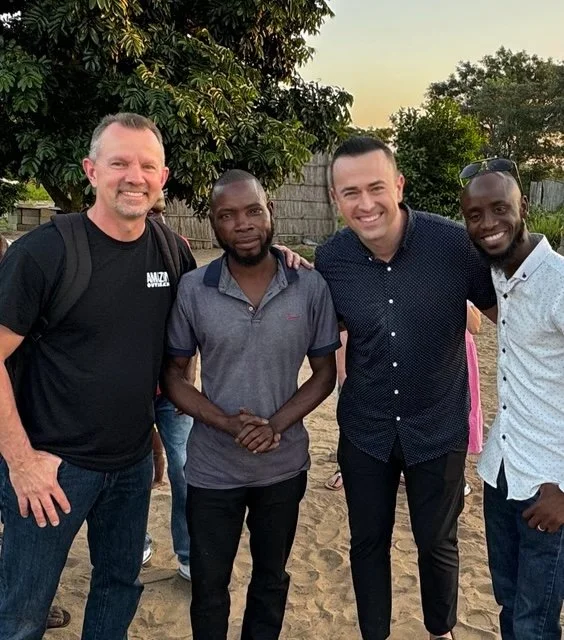
Antonio Stands Second from the Left.
The following day, after the service concluded, Abigail rushed up to me excitedly, exclaiming, "Dad, Antonio is here!"
Spotting him as he exited the meeting, dressed casually in blue jeans and a white button-up shirt, I called out to him. "Antonio!" He turned and gave me a big hug. He then introduced me to his wife.
This was Antonio's first time setting foot inside a church!
Addressing him, I declared, "Antonio, you are no longer a witch doctor; you are now a man of God!"
Looking him in the eye, I added, "When I return, I expect to see you as a leader in this church."
He chuckled at the prospect and nodded in agreement, signaling a new chapter in his life's journey.

With Antonio outside the church, embracing his newfound identity on his first day as a new creation!!!

JUST DANCE!
We had the incredible privilege of spending the weekend with Pastor Supressa (aka Pastor Surprise) and his remarkable wife, Tryphina: these two walk in humility, grace, and crazy supernatural power!! Pastor Surprise has such an incredible testimony!! He was raised amidst a family tradition of witch doctors. Despite being groomed for the same path, his life took a dramatic turn at age 15 when the audible voice of God called out to him in the dead of night, addressing him by name, "Surprise!" Urged by the voice in the night, he and his closest friend, Gafar, fled their village into the depths of the jungle.
We had the incredible privilege of spending the weekend with Pastor Supressa (aka Pastor Surprise) and his remarkable wife, Tryphina: these two walk in humility, grace, and crazy supernatural power!! Pastor Surprise has such an incredible testimony!! He was raised amidst a family tradition of witch doctors. Despite being groomed for the same path, his life took a dramatic turn at age 15 when the audible voice of God called out to him in the dead of night, addressing him by name, "Surprise!" Urged by the voice in the night, he and his closest friend, Gafar, fled their village into the depths of the jungle. After two weeks of supernatural survival, they found their way out of the dangerous jungle and emerged into a town where a compassionate man awaited them. Guided by a dream from God, this man had been instructed to welcome and care for the two boys upon their arrival. This is just scratching the surface of Pastor Surpise's story. Those familiar with our ministry or my book "Carve" know his and his wife's impact on my life. Their story is one of divine intervention and unwavering faith, inspiring all who hear it. I’ll be sure to include a link to Pastor Surprise’s book and my podcast with him at the end of this email.
This past weekend, my family had the honor of ministering at two of Pastor Surprise's churches on Pentecost Sunday. The first service began at 8 am in a beautiful chapel nestled within the serene grounds of La Villa Vita, a beautiful resort with Tuscan-inspired architecture. Picture sun-kissed terracotta walls adorned with creeping ivy, cobblestone pathways leading to lush gardens, and the gentle splashing of fountains filling the air. Inside the chapel, the rustic Tuscan theme continued, with sturdy wooden pews arranged neatly before a magnificent altar. Stained glass windows depicting crosses cast a soft, colorful light, creating an atmosphere of reverence and anticipation.
Sophia received a powerful revelation during the service—a word of knowledge about a perpetual waterfall cascading over the church. She explained that this waterfall symbolized the never-ending power of God, a boundless source where individuals could be continuously replenished and revitalized. She prophesied that a river would extend beyond the church's walls, saturating neighboring villages and towns with the life-giving waters of God's love and grace.

In a prophetic picture, Abigail also saw this waterfall pouring onto people's heads, into their minds and hearts of people, streaming down into their very beings and overflowing from their innermost depths and out of their bellies. This imagery represented a divine exchange: blessings pouring in and blessings pouring out, joy entering and joy overflowing outward.
After sharing this picture, Abigail led an activation exercise, guiding everyone to place their hands upon their heads. She invited the presence of the Holy Spirit, declaring that individuals be filled to overflowing from their heads, becoming vessels through which blessings and joy could flow into the world around them.
Andrea and Pastor Gail received the same prophetic word for the church—a powerful message about the peace of God surpassing all understanding and the longing of the Prince of Peace to encounter His Church. Andrea then released a declaration and blessing of God's peace into the atmosphere.
Then I preached, and while the specifics escaped me, I'm sure it was a fantastic message.
As the service concluded, the power of God was tangible. Our family and Pastor Gail began laying hands on people throughout the congregation. One young man, the keyboardist, was overcome by the power of God and fell to the ground. When he rose, he shared an incredible testimony—after suffering from chronic back pain for 6 ½ years, he was completely healed by Jesus.
After the service, we embarked on a thirty-five-minute journey to the White River Campus, a village outreach serving local families and children. Upon our arrival, we were greeted by Pastor Tryphina, who led the worship. The atmosphere was charged with the presence of God, and her voice echoed through the space, carving out a realm of breakthrough.
Suddenly, an older woman from the congregation made her way to the front and began to dance. Pastor Surprise leaned over to me and chuckled, "She's 105 years old!" It was filled with laughter and awe as this woman danced with strength and passion, drawing others to join her. Soon, a diverse group of congregants spanning generations formed a lively circle, swaying and rejoicing in the presence of the Lord.

Dancing is woven deeply into African culture's social fabric and cultural expression. Across the continent, dance is a form of celebration, communication, and worship. It transcends language barriers, allowing individuals to express their deepest emotions and connect with others profoundly. In African societies, all generations participate in dancing, fostering a sense of unity and community cohesion. Elders pass down traditional dances to younger generations, preserving cultural heritage and reinforcing bonds within families and communities.
Dancing holds special significance in the Bible and within our Judaic roots, as seen throughout the Scriptures. The Bible is overflowing with references to dance as a form of worship and expression of joy. In Psalms, for example, King David danced before the Lord with all his might, celebrating God's faithfulness and deliverance. In the New Testament, the Apostle Paul encourages believers to "praise Him with timbrel and dance" (Psalm 150:4), emphasizing the role of dance in glorifying God.
As Pastor Surprise took the stage, he spoke about the significance of it being Pentecost Sunday. He shared how he had requested the presence of all five of his sons for this particular service, desiring to bless them on this day. At the end of my message, I, too, sensed that I should extend a blessing to his boys. The Lord had given me a prophetic word regarding the symbolism of five sons, representing grace and the manifold graces that would be bestowed upon them. Drawing from Ephesians 4 and the five-fold ministry concept, I articulated how distinct and diverse operations of grace would empower each of them.
As the service ended, I sensed the prompting of the Holy Spirit to deliver a word to the congregation regarding the significance of their purpose, drawing from Revelation 5 and the imagery of the sealed scroll of the Lamb. I expounded upon the symbolism of the scroll as the Lamb's book, encapsulating their lives, callings, and purposes. Urging them to embrace a prophetic and revelatory perspective, I emphasized the importance of fighting for clarity and insight lest they lose sight of their destiny in Christ. Encouraging them to yield to the leading of the Holy Spirit courageously, I imparted a declaration of empowerment and purpose, inviting them to step boldly into the fullness of God's plan for their lives.
Throughout both services, a prophetic thread began to tie everything together. God was highlighting the institution of family as a primary means of revealing Himself to His people. We recognize God as the Father, Jesus as the Son, and ourselves as children of God, even referred to as the bride of Christ. In the Kingdom, family is central!!
This concept is further underscored by the significance of the scroll of the Lamb, an ancient genealogy that predates even Abraham and Adam. Genealogies hold immense importance in the Word of God as they represent prophetic identity and inheritance. They serve as a highway of sorts, creating a grid of compounding momentum through which the sovereignty of God is revealed. Whether emphasizing the importance of our natural or spiritual family, we must understand that we have been woven into a Kainos family—a new creation family, the living body of Christ.
This sacred and profound truth is the revelation of the Gospel of the Kingdom and should inspire, yup, you guessed it, joyful dancing!!
Thank you all for your prayers. Please keep them coming, and I'll keep you updated on our African adventure.
With love and blessings,
Darren, Family, and the Eden Team
P.S. - Exciting news! Pastor Surprise and Tryphina will join us for the Declaration Conference in March 2025.
Pastor Surprise Book: https://amzn.to/4bt8yI5
Podcast with Pastor Surprise: https://www.youtube.com/watch?v=zLAIhhPz9qw&t=5s