

Influence Without Control
In this article, Darren explores the powerful difference between control and influence through the lens of Nehemiah’s leadership. He challenges the idea that leadership requires a title or authority, showing instead that true influence is built on moral authority, integrity, and consistency.
You can’t make anyone do anything.
Not really.
You can coerce.
You can manipulate.
You can force.
But that’s not leadership. That’s control.
Nehemiah didn’t control people.
He influenced them.
And that’s the invitation:
To lead without control. To influence without a title.
You want to change your world?
Start here.

When the People Cry Out
There’s a moment—
A shift.
A sound too raw, too human, too urgent to ignore.
It doesn’t come from enemies.
It comes from within the walls.
From the people we thought were safe.
From the voices we trained ourselves not to hear.
They weren’t strangers.
They were family.
The very people of God.
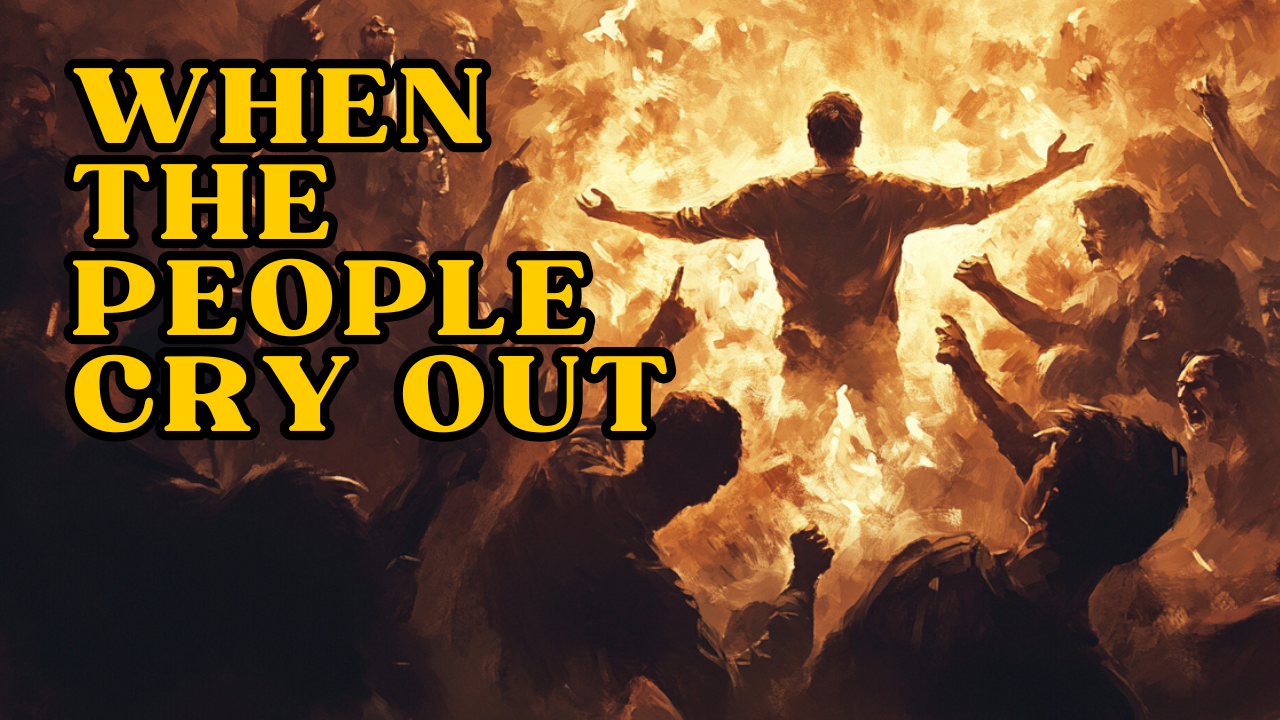
Nehemiah 5:1–13
There’s a moment—
A shift.
A sound too raw, too human, too urgent to ignore.
It doesn’t come from enemies.
It comes from within the walls.
From the people we thought were safe.
From the voices we trained ourselves not to hear.
They weren’t strangers.
They were family.
The very people of God.
And they were being crushed.
The text says,
“There arose a great outcry...”
It wasn’t noise.
It was signal.
The kind that slices through distraction.
The kind that makes a true leader pause—
Not to analyze, but to act.
Nehemiah didn’t manage the crisis.
He embodied it.
He got angry.
But not the kind of anger that burns bridges—
The kind that builds new ones.
Because he knew:
What’s the point of rebuilding walls if the people behind them are enslaved?
What good is a move of God if it doesn’t move us toward justice?
What’s the value of leadership that only asks, “What’s in it for me?”
Leadership isn’t about being in charge.
It’s about being in between.
Between the pain and the promise.
Between the silence and the sound.
1. Hear the Cry. Prophesy the Future.
Don’t dismiss what disturbs you.
Leadership begins with listening—not with the ears, but with the soul.
You can’t solve what you refuse to feel.
“There arose a great outcry of the people…” (Nehemiah 5:1)
Real leaders hear what others ignore.
And when they hear it—they speak.
They name what God is saying.
They create the future by declaring it.
2. Name the Wrong. Don’t Cover It.
Call it. Don’t coat it.
Injustice thrives in ambiguity.
Religious language has a way of making rot look holy.
But Nehemiah didn’t spiritualize sin—he exposed it.
“I was very angry… I brought charges against the nobles and the officials.” (Nehemiah 5:6–7)
Confrontation is compassion in motion.
When you name the wrong, healing can finally begin.
3. Expect Repentance. Build for Breakthrough.
Bold leadership breaks strongholds.
We’ve grown too used to managing dysfunction.
Nehemiah demanded change—and got it.
Not because he was loud, but because he was clear.
“We will restore… we will do as you say.” (Nehemiah 5:12–13)
When leaders speak with integrity, people respond.
Not just with applause—but with action.
You’ve heard something
A whisper. A rumble. A cry.
Maybe it’s not public.
But in your spirit, it’s loud.
This is your cue.
Not to wait.
Not to delegate.
Not to play it safe.
Because Kingdom leadership doesn’t wait for permission.
It answers the cry.
So—will you?
Will you rise?
Will you risk?
Will you lead?
Because heaven is listening.
And the people are crying.
Let it be you.
Let it be now.
Let it be loud.

Build And Defend
We love the idea of building.
The thrill of starting something new. The excitement of vision, calling, purpose. The sense that we’re participating in something bigger than ourselves.
But what happens when opposition shows up?
What happens when the enemy sees what you're building and decides it’s worth tearing down?
Most people hesitate. They assume that if an idea is truly from God, it shouldn’t require a fight.
Nehemiah knew better.

We love the idea of building
The thrill of starting something new. The excitement of vision, calling, purpose. The sense that we’re participating in something bigger than ourselves.
But what happens when opposition shows up?
What happens when the enemy sees what you're building and decides it’s worth tearing down?
Most people hesitate. They assume that if an idea is truly from God, it shouldn’t require a fight.
Nehemiah knew better. His people weren’t just building. They were battling while they built.
They worked with one hand and held a weapon in the other. They didn’t take off their armor. They never let their guard down.
Because if it’s worth building, it’s worth protecting.
We Build, but We Don’t Guard
It happens all the time.
A business launches, but no one builds the systems to sustain it.
A marriage begins, but no effort is made to protect it.
A dream is birthed, but distractions steal it away.
We ask for blessing but don’t build boundaries.
We cry out for breakthrough but don’t establish safeguards.
We get frustrated by attacks but never take steps to prevent them.
Nehemiah’s people understood that anything worth building will be challenged. So, they stayed ready.
If You Don’t Guard It, You’ll Lose It
"Those who carried burdens were loaded in such a way that each labored on the work with one hand and held his weapon with the other." (Nehemiah 4:17)
Imagine building a house with one hand while holding a sword in the other.
It’s not convenient. But it’s necessary.
Because if you aren’t holding a sword, the enemy assumes you’re easy to take down.
Want to protect your marriage? Guard your words, your time, your priorities.
Want to keep your calling alive? Guard your focus.
Want to build a lasting legacy? Guard your habits.
Loose grips sink ships.
The solution is simple.
Guard it and grip it!
Stay Ready So You Don’t Have to Get Ready
"None of us took off our clothes; each kept his weapon at his right hand." (Nehemiah 4:23)
Most people think they’ll get battle-ready when the fight comes.
They assume they’ll develop discipline when life demands it.
They hope they’ll build resilience when hardship shows up.
It doesn’t work that way.
Nehemiah’s men slept in their armor. They were always ready.
You don’t wait until the attack to pray.
You don’t wait until the crisis to strengthen your marriage.
You don’t wait until the enemy starts taking ground to fight back.
Prepare now, so when the moment comes, you don’t have to scramble.
Find Your People and Fight Together
"In the place where you hear the sound of the trumpet, rally to us there. Our God will fight for us!" (Nehemiah 4:20)
You can’t win this fight alone.
You need people who will rally when you’re under attack.
You need voices that will remind you of the vision when you’re ready to quit.
You need a team that doesn’t scatter when the enemy shows up.
Nehemiah’s men didn’t run from the fight. They ran toward it.
When your marriage is struggling, don’t isolate—get help.
When your business is under attack, don’t retreat—find support.
When you feel spiritually drained, don’t disengage—press into your community.
The enemy wants you alone. The wise know better.
What Are You Building and Are You Protecting It?
Most people don’t fail because they lacked vision.
They fail because they weren’t ready for resistance.
The difference between those who finish and those who quit isn’t calling, talent, or gifting.
It’s vigilance.
Are you guarding what God gave you?
Are you staying battle-ready?
Are you surrounding yourself with people who will fight with you?
Building is only half the job.
Protecting is the other half.
Understanding the True Potential of Rejection
Let’s be honest—rejection is tough. That gut-punch of “No thanks, we’re good without you” can leave you questioning your worth, your efforts, and sometimes even your purpose. But what if rejection isn’t a full stop? What if it’s a divine opportunity? What if being canceled, overlooked, or unappreciated is actually positioning you for something greater?
Let’s be honest—rejection is tough. That gut-punch of “No thanks, we’re good without you” can leave you questioning your worth, your efforts, and sometimes even your purpose. But what if rejection isn’t a full stop? What if it’s a divine opportunity? What if being canceled, overlooked, or unappreciated is actually positioning you for something greater?
One reason rejection stings so deeply is our culture's obsession with acceptance and applause.
The Trap of Approval
Today’s culture thrives on crowd applause. Success is often measured by how much the world celebrates you. One day, you’re the star; the next, you’re canceled with a single hashtag.
But in the Kingdom of God, popularity doesn’t equal success. The metrics are different. Even Jesus—God in human form—was rejected by the very people He came to save. Yet, His rejection wasn’t failure. In fact, rejection was the pathway to His ultimate victory.
Rejection Won’t Order My Steps
Isaiah 53:3 reminds us:
“He was despised and rejected by mankind, a man of suffering, and familiar with pain.”
John 1:11 echoes:
“He came to that which was His own, but His own did not receive Him.”
Jesus faced rejection at every turn—by His people, His disciples, and His hometown. Yet, rejection never re-routed Him.
So here’s the question: if rejection didn’t control Jesus, why does it have so much power over us?
The answer lies in fear. Fear gives rejection its power. Because Jesus didn’t fear rejection, it never controlled Him. He stayed on course, unfazed by others’ opinions.
Let’s be real—most of us aren’t naturally that resilient.
We allow rejection to steer us off course.
We hold back on dreams, fearing ridicule.
We avoid risks because we’re afraid of a “no.”
We guard our hearts because vulnerability invites rejection.
When we fear rejection, we let it dictate our direction. But here’s the truth: rejection doesn’t have to define you; through God’s grace, it can refine you.
Rejected, Yet Still Connected
Picture this: Jesus is hanging on the cross. The crowd mocks Him. His closest friends abandon Him. It’s the ultimate rejection. Yet, in that moment, He prays:
“Father, forgive them, for they do not know what they are doing” (Luke 23:34).
Even in rejection, Jesus stayed connected—to His Father and His purpose. He didn’t let bitterness take root. Instead, He turned rejection into an opportunity to reflect God’s love.
When rejection comes your way, where do you turn?
Do you let bitterness fester?
Or do you run to the One who heals and restores?
Rejection reveals where we place our trust. Is your functional savior the approval of people, or is it the unshakable presence of God?
Staying connected to God empowers you to rise above rejection.
Rejected but Infinitely Loved
Psalm 118:22 declares:
“The stone the builders rejected has become the cornerstone.”
Jesus, rejected by humanity, became the foundation of salvation for all. His rejection didn’t derail God’s plan—it fulfilled it.
Here’s the gospel truth: Jesus was rejected in His perfection so we, in our imperfection, could be infinitely accepted.
When rejection tempts you to despair, remember:
Jesus was rejected by His people, yet He became their Savior.
He was mocked by the crowd, yet He died for their sins.
He was cast out, yet He became the cornerstone of eternity.
If God turned Jesus’ rejection into redemption, imagine what He can do with your story.
Was the Mission of Love a Failure?
At first glance, Jesus’ life might seem like a failure. He wasn’t popular. He died a criminal’s death. He was rejected by the very people He came to save.
But in God’s Kingdom, rejection isn’t failure—it’s the pathway to victory.
Jesus’ rejection was the ultimate display of God’s love. So if you’ve faced rejection, take heart:
God still has a purpose for you.
Rejection isn’t the end—it’s a bend in the road toward something greater.
With Jesus, rejection can lead to resurrection.
Rejection doesn’t get the final say. God does. So let go of the sting of rejection. Stay connected to God’s presence. Trust Him to direct and resurrect your story.
Prayer:
Father, thank You that rejection has no power to define or defeat me. Just as You turned Jesus’ rejection into victory, turn my pain into purpose. Help me trust You in the midst of life’s painful processes. In Jesus’ name, Amen.
Declaration:
I may get rejected, but my steps are still being directed. I am not defined by rejection—by God’s grace, I am refined by it. When I am rejected, I am reminded of my connection with the Father. Rejection is not punishment from God; it’s an opportunity for Him to show His fatherly love in my trial.
Harvard University’s new chief chaplain is … an atheist

Greg Epstein was recently unanimously elected by his fellow university “chaplains” to be the chief chaplain at Harvard University.
The only problem is, Greg Epstein doesn’t believe in the existence of God.
This all makes PERFECT sense right?!!
Let’s rewind.
Harvard University was founded in 1636, making it the oldest institution in higher learning in the United States. The school was started by John Harvard, a Congregational minister, who gave half his estate and books to the school. It was pastor John Harvard’s dream to educate clergymen unto the glory of God for the excellence and expansion of the Christian faith.

Now, the new lead pastor of the school does not believe in the expansion of the Christian faith nor the promotion of any religion whatsoever. Greg Epstein’s religion is non-religion. His practical savior is self, and he believes that the absence of a higher power points to the significance of humanity being its own practical and functional savior.
Ridiculous or wildly unreasonable is the definition of absurdity.
Enter the age of pseudo modernism, the erratic cultural response to logic.
This is like making an Amish dude the CEO of Google or a Desert-Dwelling Lizard the captain of the swim team.
Here are some questions for you:
Can a nation be saved in a day?
Your answer: ___________________________.
How long will it take for Jesus to save the institution of higher learning in America?
Your answer: ___________________________.
Do you believe it is redeemable?
Your answer: ___________________________.
Is there a remnant at Harvard University?
Please comment below.