

Fighting for What Matters
You are where you are because of the fights you were willing to have—or the ones you avoided. It’s that simple.
Somewhere along the way, we bought into the lie that keeping the peace is the goal. But Jesus didn’t call us to be peacekeepers. He called us to be peacemakers. And there’s a big difference. Peacekeepers avoid conflict. Peacemakers step into it, take ownership, and build something better in its place.

You are where you are because of the fights you were willing to have—or the ones you avoided. It’s that simple.
Somewhere along the way, we bought into the lie that keeping the peace is the goal. But Jesus didn’t call us to be peacekeepers. He called us to be peacemakers. And there’s a big difference. Peacekeepers avoid conflict. Peacemakers step into it, take ownership, and build something better in its place.
Why Christians Struggle with Conflict
Let’s be honest—Christians are notoriously bad at handling conflict. We avoid it. We fear it. And when we do engage, we often do it terribly. Why?
We confuse kindness with passivity. We think that being nice means never rocking the boat. That avoiding confrontation is a virtue. But in reality, avoiding necessary conflict isn’t kindness—it’s cowardice. I know how strong your fight life is by how strong your prayer life is. If you don’t know how to contend in the secret place, you’ll never know how to contend in the public space. We think that being nice means never rocking the boat. That avoiding confrontation is a virtue. But in reality, avoiding necessary conflict isn’t kindness—it’s cowardice.
We’ve been conditioned to keep the peace. Many of us were raised in church cultures that emphasized harmony over honesty. We were told to "forgive and forget" instead of addressing real issues. And so we became people-pleasers rather than truth-tellers.
We don’t like discomfort. Fighting for what matters is uncomfortable. Calling out sin is awkward. Confronting toxicity is painful. It’s easier to pretend everything’s fine than to do the hard work of real reconciliation and real leadership.
We’re afraid of losing relationships. The fear of rejection keeps us silent. We’d rather let a friendship or a marriage slowly deteriorate than risk a conversation that might change everything.
But avoiding conflict doesn’t make it go away—it makes it worse. And when we refuse to fight for what matters, we give the enemy free rein in our lives, our families, and our communities.
Fighting Isn’t the Problem. Avoiding the Fight Is.
Most people in the church don’t know how to fight. We’ve been taught to back down. To let it go. To let the enemy run rampant in our marriages, our families, our careers, and our calling because we think that avoiding conflict is a sign of maturity.
It’s not.
Nehemiah understood this. In Nehemiah 4, the opposition showed up as soon as the work started. Samballat and Tobiah mocked and ridiculed them, trying to get in their heads. That’s how the enemy works. The moment you move from talking about something to building something, the opposition shows up.
So what did Nehemiah do? He prayed—and then he acted. He set guards. He armed his people. He made sure they were ready to fight. And then he told them something crucial:
Do not be afraid of them. Remember the Lord, who is great and awesome, and fight for your brothers, your sons, your daughters, your wives, and your homes. (Nehemiah 4:14)
He didn’t tell them to run. He told them to remember.
Remember who God is. Remember what’s at stake. Remember what you’re building—and why it’s worth fighting for.
The Cost of Avoiding the Fight
Some of you are stuck. You’ve been circling the same mountain for years because, at some point, God called you to something, and you didn’t step in. Fear crept in. The enemy got in your head. And instead of fighting, you backed down.
Good news: You can get back in the fight. God restores the years the enemy has stolen.
The enemy wants to get in your head. He wants to discourage you, depress you, and convince you that you’ve lost your appointment. But here’s the truth:
You are anointed.
You are appointed.
And the enemy can’t take that from you.
So What Do You Do?
Pray like a warrior. Stop praying passive prayers. Stop asking God to do what He’s given you the authority to do. Pray boldly. Pray militantly. I know how strong your fight life is by how strong your prayer life is. If you don’t know how to contend in the secret place, you’ll never know how to contend in the public space. Stop praying passive prayers. Stop asking God to do what He’s given you the authority to do. Pray boldly. Pray militantly. Pray publicly.
Fight for your faith. If your faith is weak, everything else will be. Get filled with the Holy Spirit. Pray in tongues. Build yourself up in the most holy faith.
Fight for your family. Revival begins at home. Love your spouse. Date your spouse. Fight for your kids.
Fight for your future. God has a plan for you, but you have to fight for it. Declare His promises. Take action. Stop waiting for the perfect moment—it doesn’t exist.
The Bottom Line
The enemy has a strategy to take you out. To keep you stuck. To keep you scared. But you weren’t called to be passive. You weren’t called to sit on the sidelines.
You were called to fight.
And fight we will.
Because we serve a warrior King.
Revival Begins at Home
In Nehemiah 3, as the walls of Jerusalem were being rebuilt, the workers weren’t assigned random sections of the city. They built opposite their own homes.
Their own neighborhoods.
Their own streets.
Their own front doors.
Why?
Because before you build anything significant, before you restore what’s broken in the world, you have to secure what’s happening in your own home.
Nehemiah’s people understood something we often forget: a city isn’t strong if its families are weak.

In Nehemiah 3, as the walls of Jerusalem were being rebuilt, the workers weren’t assigned random sections of the city. They built opposite their own homes.
Their own neighborhoods.
Their own streets.
Their own front doors.
Why?
Because before you build anything significant, before you restore what’s broken in the world, you have to secure what’s happening in your own home.
Nehemiah’s people understood something we often forget: a city isn’t strong if its families are weak.
Your Home Is Your First Ministry
It’s easy to want big change.
To focus on the world’s problems.
To look out at what’s broken and think, "Somebody needs to fix that."
But you can’t build a strong city with broken households.
Too many people try to be heroes in the streets while being strangers at home.
They’re fixing their communities but neglecting their families.
They’re trying to rebuild the world but ignoring the brokenness under their own roof.
But real revival starts at home.
Before you fix the world, build your home.
Before you lead others, lead your own family.
Before you defend the city, make sure your walls are strong.
The Hidden Gaps Where the Enemy Gets In
A wall without a gate keeps everything out.
But a home without walls lets everything in.
Nehemiah’s people understood something fundamental: without walls, their homes were vulnerable. They weren’t just rebuilding houses—they were reinforcing their lives against intrusion, compromise, and invasion.
Today, those walls don’t look like stone and mortar. But they’re just as critical.
Walls are practical boundaries that protect what matters most.
🛑 A wall is deciding that husband and wife go to bed at the same time—so there’s no room for distance, distraction, or temptation to creep in.
🛑 A wall is unplugging the WiFi at bedtime—so kids aren’t mindlessly scrolling YouTube or wandering into dangerous content when no one is watching.
🛑 A wall is keeping work emails out of family dinner—so your children know they come before your job.
🛑 A wall is intentional family prayer—so your household isn’t just coexisting under one roof but thriving under God’s covering.
🛑 A wall is teaching discernment—so your home isn’t infiltrated by influences that erode your values.
What are the practical things your family can do to prevent snakes from getting into your garden?
The enemy doesn’t always come through the front door—sometimes, he sneaks in through compromise. Through screens left unchecked. Through relationships left unguarded. Through exhaustion that leaves you too tired to fight for what matters.
A home without boundaries is like a city without walls—completely exposed.
Nehemiah’s people didn’t just build homes—they fortified them. They made sure their families were protected, covered, and aligned.
So before you focus on building big things out there, take a moment to secure what’s happening inside your home.
Where are the gaps?
What needs to be reinforced?
What practical walls need to be built to protect what God has entrusted to you?
Because if the enemy can infiltrate your home, it doesn’t matter how strong your city looks.
🔥 Build the wall.
🔥 Rebuild where you live.
🔥 Then—and only then—change the world.

Altars Before Walls
If you walked into Home Depot today, you’d expect to see contractors, electricians, weekend DIYers. You wouldn’t expect to see a high priest in the tool aisle, picking out lumber, asking about the best fasteners, buying a tool belt.
But in the book of Nehemiah, that’s exactly what happens.
When the city was in ruins, when the walls were crumbled, when the people were vulnerable—the first person to step up and rebuild wasn’t a military leader, a politician, or a businessman.
It was Eliashib, the high priest.
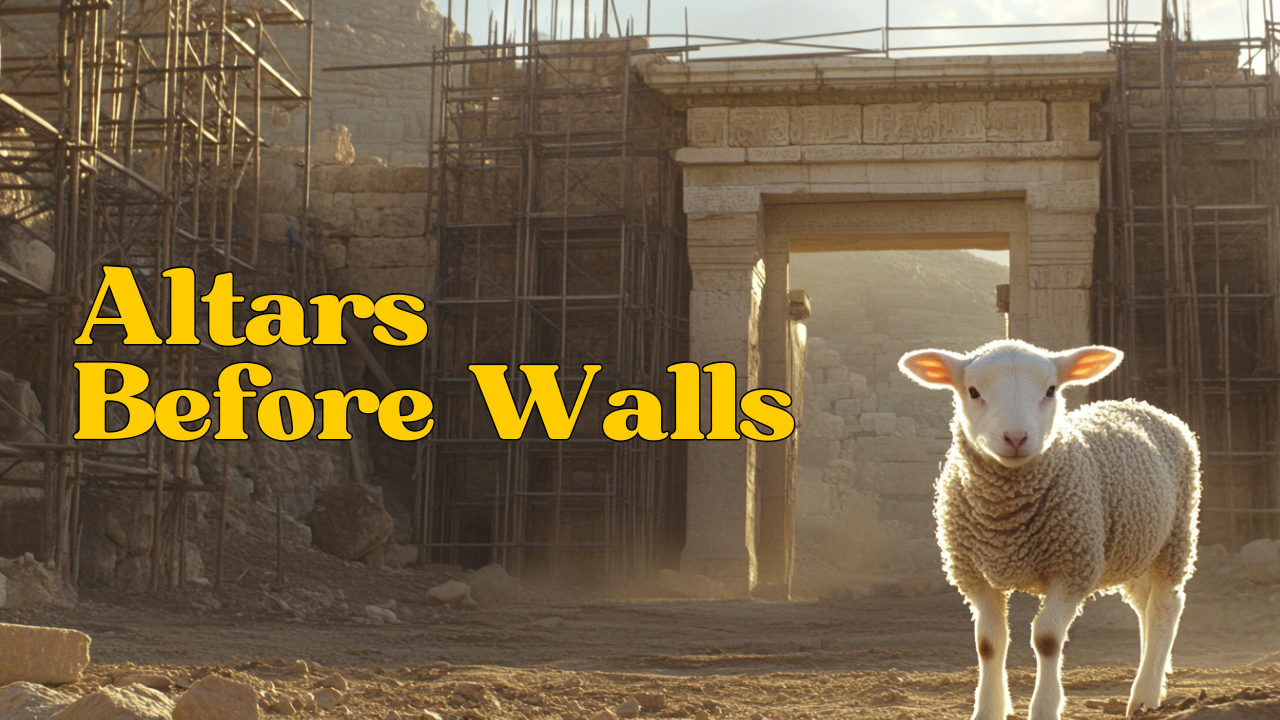
If you walked into Home Depot today, you’d expect to see contractors, electricians, weekend DIYers. You wouldn’t expect to see a high priest in the tool aisle, picking out lumber, asking about the best fasteners, buying a tool belt.
But in the book of Nehemiah, that’s exactly what happens.
When the city was in ruins, when the walls were crumbled, when the people were vulnerable—the first person to step up and rebuild wasn’t a military leader, a politician, or a businessman.
It was Eliashib, the high priest.
Priests are builders.
Priests don’t just preach and pray—they build, restore, and rebuild.
They build altars. They build spaces for worship.
And in Nehemiah 3, they aren’t sitting in the temple. They’re out in the dust, rolling up their sleeves, rebuilding something deeply significant:
The Sheep Gate.
Not the main city gate.
Not the strongest part of the wall.
Not the marketplace or the palace.
The Sheep Gate.
Why does this matter?
Because before you build a wall, before you secure a city, before you protect anything that matters—you must restore the altar first.
The Sheep Gate was the entryway for the sacrificial lambs, the animals that would be brought into the temple for worship and atonement. This wasn’t just about fortifying Jerusalem. This was about making space for God again.
It was the only gate in the entire city that was consecrated—set apart for holiness. Because worship comes before strategy. The altar comes before the wall.
A Gate is About Access.
It’s not just a wall that keeps things out. It’s an entryway that allows something in.
So what do you think of when you hear the phrase sacrificial lamb?
You think of Jesus.
The One who gave everything. The One whose blood atones, whose sacrifice restores, whose presence transforms hearts.
And so, before you focus on building your career, before you strengthen your finances, before you restore your marriage or your ministry—ask yourself:
Is my heart open to the sacrificial lamb?
Building an altar doesn’t mean building a ministry. It doesn’t mean running out to serve, to fix, to make things happen. It means building a place of intimacy with God.
Before you work for Him, be with Him. Before you fix the wall, restore your worship.
Make sure your heart is in alignment with God. That your worship life is right. Because if the altar isn’t in place, anything you build will crumble.
If you try to build without this, your city might look strong, but it will be empty. The foundation will be off. The purpose will be lost.
But if the first gate you restore is the one that welcomes Jesus in—everything else will take shape the way it was meant to.
Start at the Sheep Gate.
Rebuild the altar before the walls.
Let the sacrificial lamb in.
Everything else follows.

The "Just Declare It" Myth
If words alone could change the world, Nehemiah could have stood at the edge of Jerusalem, stretched out his hands, and declared the walls rebuilt.
But that’s not what he did.
Instead, in Nehemiah 2, he rode through the city at night, inspecting the damage for himself. He didn’t just listen to reports. He didn’t assume he already knew what was wrong. He put boots on the ground.
Because you will never transform a city you don’t take a step in.
If words alone could change the world, Nehemiah could have stood at the edge of Jerusalem, stretched out his hands, and declared the walls rebuilt.
But that’s not what he did.
Instead, in Nehemiah 2, he rode through the city at night, inspecting the damage for himself. He didn’t just listen to reports. He didn’t assume he already knew what was wrong. He put boots on the ground.
Because you will never transform a city you don’t take a step in.
And yet, modern Christianity has become obsessed with the idea that we can shape reality just by speaking. That we can declare prosperity without working, declare restoration without repentance, declare revival without actually stepping into broken places.
We’ve confused faith with sorcery. And it’s keeping us weak.
Authority Requires Commitment
Nehemiah had authority to rebuild the city because he was willing to enter it.
He didn’t stay comfortable in Persia, sending out prophetic decrees about Jerusalem’s future. He left his position, put himself at risk, and moved toward the ruins.
Authority is for those who make a commitment. And commitment requires action.
You cannot expect authority over a marriage you won’t invest in.
You cannot expect financial breakthrough while you continue to mismanage money.
You cannot expect a calling to grow if you won’t take even the smallest step toward it.
The kingdom doesn’t reward spectators. It rewards builders.
"Do you see a man diligent in his work? He will stand before kings; he will not stand before obscure men." (Proverbs 22:29)
The "Just Declare It" MYTH
The idea that you can speak things into existence comes from a misunderstanding of Scripture.
People love to quote Job 22:28—"You shall decree a thing, and it shall be established." But they never mention that these words were spoken by Eliphaz, a man God later rebuked for false theology.
God does not obey our words. We obey His.
Nehemiah didn’t decree a rebuilt city—he stepped into a broken one.
Declarations without action are just spiritual noise.
Boots on the Ground: Real Faith Steps In
Look at every major moment of faith in Scripture:
Moses didn’t just declare the Red Sea open—he stepped forward with his staff.
David didn’t just declare victory over Goliath—he ran toward him with a sling.
Peter didn’t just declare his faith—he stepped out of the boat.
Jesus didn’t just declare salvation—He walked to the cross.
Faith is not just spoken—it is demonstrated.
"Faith without works is dead." (James 2:26)
You Can’t Rebuild From a Distance
Imagine if Nehemiah had stayed in Persia, sending letters, posting inspiring words about how “Jerusalem will rise again.”
That’s what many Christians do today. They talk about change but never step into the ruins themselves.
If you want to change something—your life, your marriage, your city—you must enter into it.
Don’t just declare revival—walk the streets, meet the people, pray on location.
Don’t just declare success—do the work, show up, build something.
Don’t just declare breakthrough—identify the broken places, repent where needed, and step forward.
Spiritual authority belongs to those who commit.
And commitment isn’t verbal—it’s visible.
The Law of Kingdom Transformation
Nehemiah didn’t just talk about rebuilding. He walked through the ruins.
And when the enemy mocked him? He didn’t argue—he kept building.
Transformation always follows this pattern:
Step into the ruins (See reality for what it is—Nehemiah 2:12)
Make a plan (Strategize before acting—Nehemiah 2:17)
Start rebuilding (Put in the work—Nehemiah 3)
Push through resistance (Expect opposition—Nehemiah 4:1-3)
Stay until it’s finished (Don’t stop halfway—Nehemiah 6:15)
You cannot transform what you will not commit to.
Nehemiah had authority because he had skin in the game.
Do you?

The 4 Questions Builders Ask
Most people prefer a comfortable lie over an inconvenient truth.
They sugarcoat reality. They downplay their problems. They avoid the hard questions because hard questions demand hard answers.
But Nehemiah? He wasn’t afraid to look at the ruins.
He wasn’t a pessimist—he didn’t drown in despair. He wasn’t a naïve optimist—he didn’t pretend things were fine. He was a realist.
And reality is the foundation of every successful rebuilding effort.
Most people prefer a comfortable lie over an inconvenient truth.
They sugarcoat reality. They downplay their problems. They avoid the hard questions because hard questions demand hard answers.
But Nehemiah? He wasn’t afraid to look at the ruins.
He wasn’t a pessimist—he didn’t drown in despair. He wasn’t a naïve optimist—he didn’t pretend things were fine. He was a realist.
And reality is the foundation of every successful rebuilding effort.
The Brutal Honesty of Rebuilding
Before you can rebuild anything—a business, a marriage, a church, a reputation—you have to start by seeing things clearly. That means asking four hard questions.
1. What’s broken? Stop sugarcoating it.
If your marriage is in trouble, say it. If your business is failing, admit it. If your faith feels dead, acknowledge it. Pretending things are fine doesn’t make them fine. Clarity is the first step toward change.
2. What’s possible? Stop making excuses.
Yes, things are bad. But are they unfixable? Is there a way forward? A path to restoration? Nehemiah didn’t just see the ruins—he saw what could be rebuilt. He saw the future inside the destruction. That’s what leaders do. They don’t just see the problem; they see the potential.
3. Who’s with you? Not everyone near you is for you.
Some people will help. Others will watch. Some will believe in the vision. Others will quietly hope you fail. Nehemiah didn’t assume everyone was on his side. He identified his allies and strengthened his inner circle. Rebuilding is not a solo mission. Choose your team wisely.
4. Who’s against you? The enemy is watching you assess the ruins.
Not everyone wants you to succeed. Some people profit from brokenness. Some are threatened by your restoration. Nehemiah didn’t just inspect the walls; he was aware of the opposition. The moment you decide to rebuild, there will be resistance. Prepare for it.
The Hardest Step is the First One
The biggest barrier to change isn’t lack of resources. It isn’t opposition. It isn’t even failure.
It’s refusing to acknowledge reality.
You can’t fix a marriage if you won’t admit it’s broken. You can’t rebuild a business if you ignore the financial cracks. You can’t step into your calling if you refuse to assess where you actually are.
Nehemiah knew that seeing is the first battle. And so do you.
Before You Build, Face the Brutal Facts
This is where most people quit before they even start. It’s easier to talk about rebuilding than actually do it. It’s easier to hope things change than take responsibility for them. It’s easier to delay the hard conversations than face the truth.
But if you want to move forward, you have to see clearly. See the damage. See the possibilities. See the threats.
And most importantly—see it before your enemies see it.
Because the people who rebuild aren’t the ones who wait for things to magically improve. They’re the ones who face reality and move forward anyway.
You cannot fix what you refuse to face.
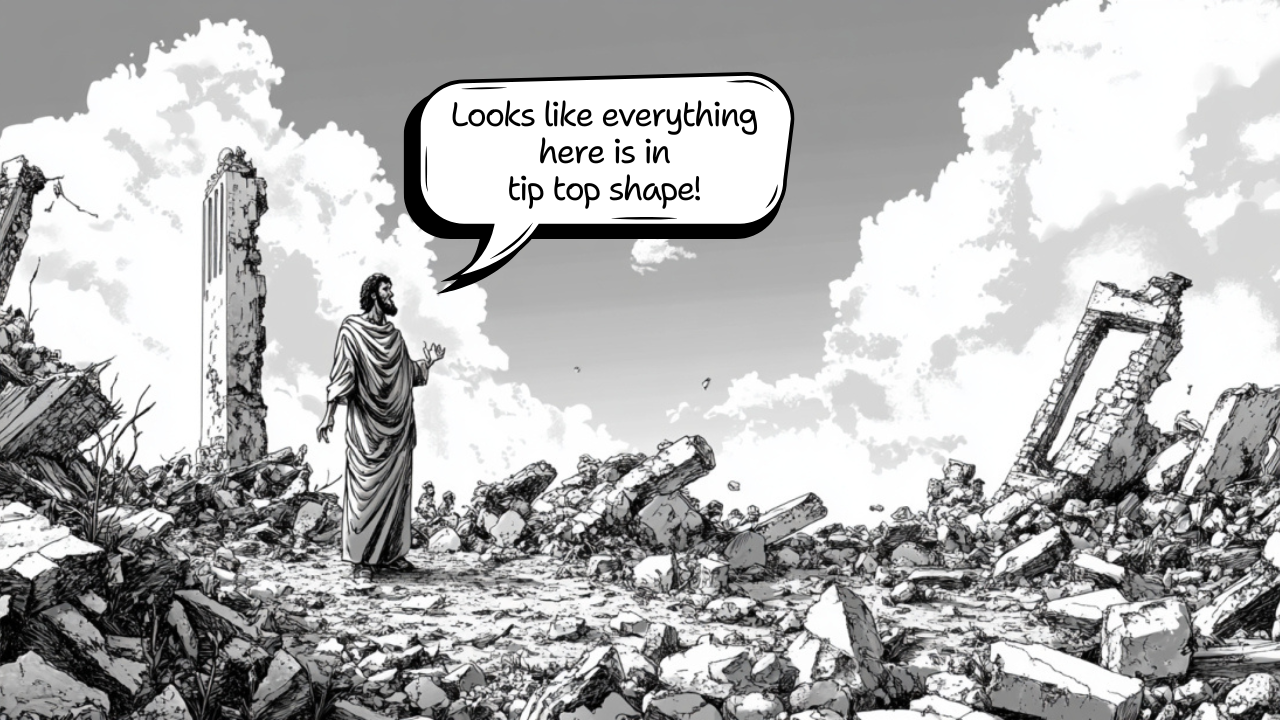
The Three Kinds of People Who Never Rebuild
Some people never rebuild. Not because they can’t. Not because the opportunity isn’t there. Not because they don’t have what it takes.
They never rebuild because they never get past themselves.
When the walls of their life collapse—whether it’s their marriage, their business, their spiritual life, or their confidence—they don’t respond like Nehemiah. They don’t inspect the damage and strategize a way forward.
Instead, they fall into one of three patterns that guarantee failure.

Some people never rebuild. Not because they can’t. Not because the opportunity isn’t there. Not because they don’t have what it takes.
They never rebuild because they never get past themselves.
When the walls of their life collapse—whether it’s their marriage, their business, their spiritual life, or their confidence—they don’t respond like Nehemiah. They don’t inspect the damage and strategize a way forward.
Instead, they fall into one of three patterns that guarantee failure.
1. The Denial Dude: "Nothing to See Here"
Denial is comfortable. It lets you pretend that the cracks in the foundation don’t exist. It convinces you that if you ignore the problem long enough, it will go away on its own.
It never does.
The Denial Dude says things like:
"It’s just a rough patch." (Even though it’s been years.)
"Things will get better soon." (But they never do.)
"I’m fine." (Even though everyone around them knows they aren’t.)
Denial isn’t just avoidance—it’s an act of self-sabotage. It lets problems fester until they become impossible to ignore. By the time reality finally forces its way in, the damage is catastrophic.
Nehemiah could have chosen denial. He could have convinced himself that Jerusalem’s walls weren’t that bad. That the rumors were exaggerated. That someone else would fix it.
Instead, he inspected the ruins himself. He faced the truth before the truth crushed him.
2. The Overwhelmed Observer: "It’s Too Late"
On the opposite end of the spectrum is the Overwhelmed Observer—the person who sees the ruins but is paralyzed by them.
"This is impossible."
"There’s no way forward."
"It’s too far gone."
They don’t ignore reality. In fact, they stare at it so intently that it consumes them.
Instead of denial, they drown in despair. Instead of refusing to see the problem, they fixate on it until it crushes them. They become convinced that because they can’t fix everything, they shouldn’t fix anything.
The truth? Every great rebuild started with one brick.
Nehemiah saw the devastation firsthand. He knew exactly how bad it was. But he didn’t spiral into hopelessness—he made a plan. He took one step. And then another.
Rebuilders aren’t naive optimists. They don’t pretend things aren’t bad. They just refuse to let “bad” become “permanent.”
3. The Know-It-All Builder: "No Need to Assess—Let’s Go!"
The third type? The Know-It-All Builder—the person who jumps into action before they understand what they’re dealing with.
They don’t inspect. They don’t assess. They don’t ask questions.
They assume they already know everything and start fixing the wrong problems.
The couple in a struggling marriage who thinks a vacation will solve their issues—when the real problem is years of unresolved resentment.
The entrepreneur whose business is failing, but instead of evaluating their leadership, they just double their marketing budget.
The pastor who assumes their church isn’t growing because of culture—when the real issue is poor leadership.
Wasted effort is just as dangerous as no effort at all.
Nehemiah didn’t rush. He inspected the walls himself before making a move. He spent three days gathering information before he even spoke to anyone. Because real rebuilding requires real strategy.
Why This Matters for You
You’re either rebuilding something right now or you will be soon.
If you’re human, things break.
The difference between the people who restore what was lost and those who don’t comes down to this:
Denial Dude never starts because he refuses to see the problem.
The Overwhelmed Observer never starts because the problem looks too big.
The Know-It-All Builder starts in the wrong direction and wastes years chasing the wrong thing.
But Nehemiah?
He saw clearly—without denial or despair.
He made a plan—without rushing into empty action.
He rebuilt strategically—one brick at a time.
The question is: Which one are you?
If you’re stuck in denial, wake up. If you’re stuck in despair, take one step. If you’re rushing forward without clarity, stop and reassess.
Because the people who rebuild—the people who actually restore what’s broken—aren’t the ones who just believe things will get better.
They’re the ones who face reality and move forward anyway.
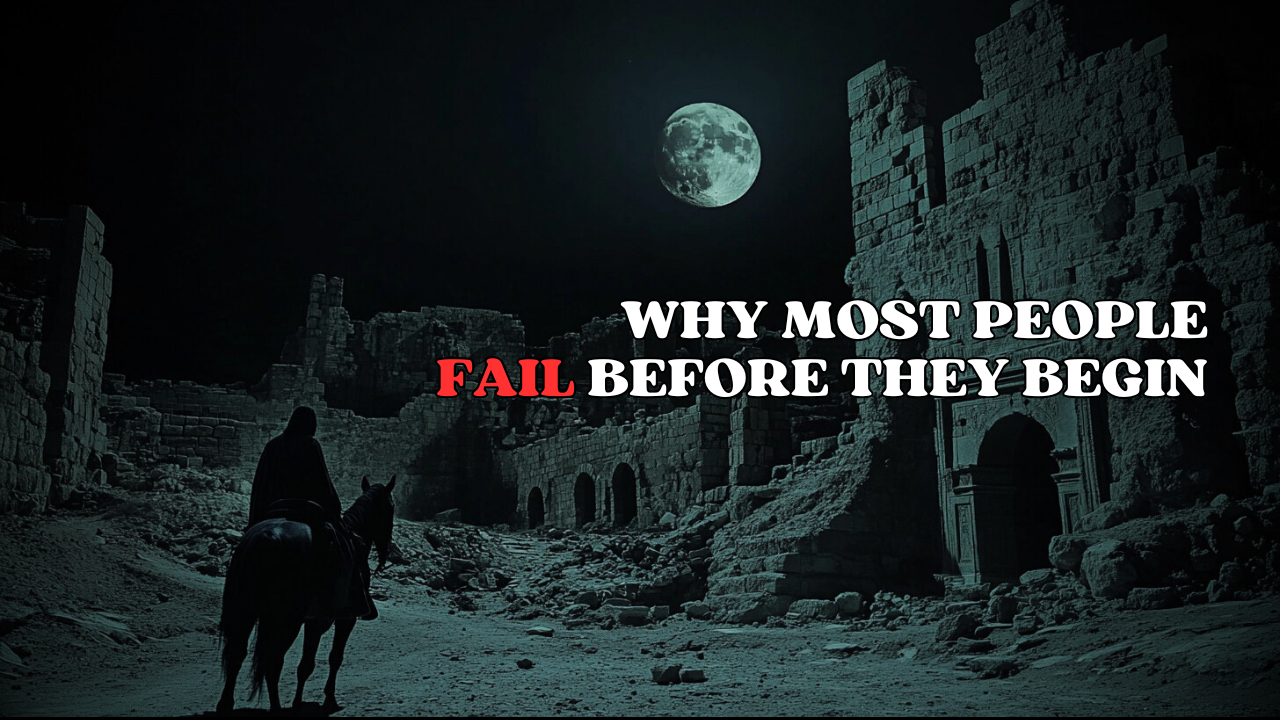
Why Most People Fail Before They Even Begin
Not because they lack talent.
Not because they don’t have resources.
Not because they aren’t trying hard enough.
They fail because they misread the moment.
Not because they lack talent.
Not because they don’t have resources.
Not because they aren’t trying hard enough.
They fail because they misread the moment.
They mistake movement for progress.
Noise for strategy.
Excitement for execution.
They charge in, ready to build, lead, and conquer—without first seeing what’s actually in front of them. And then they wonder why the walls crumble.
But Nehemiah? He played a different game.
He didn’t show up swinging hammers and barking orders. He didn’t rally the troops before he understood the battlefield.
Instead, he did something counterintuitive. He waited. He watched. He walked the ruins in silence.
“So I went to Jerusalem and was there three days. Then I arose in the night, I and a few men with me. And I told no one what my God had put into my heart to do for Jerusalem.” (Nehemiah 2:11-12)
Before you build anything—your business, your ministry, your life—there’s a crucial step most people skip.
You have to see it before you speak it.
Because the wrong words at the wrong time?
They don’t just slow you down. They sabotage the entire thing before it even begins.

The Key to Fruitfulness
Last week, the Lord spoke to me and said, "There is a faithfulness that will unlock a fruitfulness."
This word resonated with me, and I knew it was a call for the body of Christ to press in, to remain steadfast, and to trust the process He has ordained.
We live in an age where instant gratification is the norm. People want results without process, fruit without root, transformation without endurance. But in the Kingdom of God, things do not operate this way. There is a process of pressing in, of remaining faithful even when we do not yet see the fruit, and this is where breakthrough is born.

Last week, the Lord spoke to me and said, "There is a faithfulness that will unlock a fruitfulness."
This word resonated with me, and I knew it was a call for the body of Christ to press in, to remain steadfast, and to trust the process He has ordained.
We live in an age where instant gratification is the norm. People want results without process, fruit without root, transformation without endurance. But in the Kingdom of God, things do not operate this way. There is a process of pressing in, of remaining faithful even when we do not yet see the fruit, and this is where breakthrough is born.
The Nature of Grafting
The Lord gave me a picture of a branch and a vine. A branch cannot bear fruit on its own; it must be grafted into the vine, receiving life and sustenance from it. And how does a branch become grafted? It must be pressed tightly against the vine until the two become one. The fibers must intertwine, the wounds must heal together, and in time, the branch is no longer separate but fully integrated.
However, it is important to understand that this is not a word about salvation. This is not about being "grafted in" like the Gentiles were grafted into the promises of God (Romans 11:17-24). Salvation is surely a grafted-in process, but it is something Jesus has already done. We receive its benefits by grace through faith in Christ (Ephesians 2:8-9). What this word is speaking to is the process of staying firmly in place—remaining steadfast, long-lasting, patient, and immovable—until strength is released, until the nature of the situation changes, and even until your own identity and perspective are transformed.
This is not just about pressing into the Vine as Christ. It is a metaphor for being deeply rooted, for staying in one place long enough for roots to go down, for fruitfulness to emerge, and for endurance to produce maturity (James 1:3-4).
Many people move from place to place, from calling to calling, and from commitment to commitment, never remaining planted long enough to see the harvest.
The Call to Remain: Bob Jones’ Prophetic Word
Bob Jones once shared a powerful prophetic word: "There are too many tumbleweeds in the body of Christ. If you want fruits, you have to put down roots."
"There are too many tumbleweeds in the body of Christ. If you want fruits, you have to put down roots."
- Bob Jones
A tumbleweed is carried by every wind, never staying in one place, never maturing, and never producing fruit. But a tree that is planted by streams of water (Psalm 1:3) will bear fruit in its season. The Lord is calling His people to root themselves in Him, in their assignments, in their communities, and in His promises. This is the key to seeing real, lasting fruit.
Faithfulness is not passive—it is active perseverance. The Lord is calling His people to remain, to press in, and to trust that the season of fruitfulness is coming. Do not give up because you do not yet see the results. His promise is sure. His word will not return void.
The enemy would love for you to disengage, to become weary in well-doing, but the Lord says, "Stay. Keep pressing. Keep believing." What He has spoken will come to pass.
A Prophetic Invitation
This is the invitation: press into the Lord as never before. The fruit will come, but the process must be honored. Do not despise the season of grafting. Do not grow weary in the waiting. The Lord is doing a deep work, and the harvest will be abundant.
The time is now. Faithfulness will unlock fruitfulness. Stay pressed against the Vine, and watch as His life begins to flow through you in a way you have never experienced before.
Be encouraged. The Lord is faithful, and He will complete the work He has begun in you.