

The Compatibility Code
Most of us think of the fruit of the Spirit as a private list.
Love. Joy. Peace. Patience. Kindness. Goodness. Faithfulness. Gentleness. Self-control.
Nine nice words to hang on a wall.
But what if Paul wasn’t handing us a personal development checklist?
What if he was describing a compatibility code?

Most of us think of the fruit of the Spirit as a private list.
Love. Joy. Peace. Patience. Kindness. Goodness. Faithfulness. Gentleness. Self-control.
Nine nice words to hang on a wall.
But what if Paul wasn’t handing us a personal development checklist?
What if he was describing a compatibility code?
The Spirit cuts us into shape.
Left to ourselves, we’re jagged. Sharp corners. Edges that slice instead of join.
Ever tried to jam two puzzle pieces together that don’t fit? You can push, you can bend, you can force… but it doesn’t make a picture. It makes a mess.
The fruit of the Spirit isn’t just about what grows inside of you—it’s about how you’re reshaped for someone else. Each virtue sands down the edges:
Love makes space.
Joy makes you buoyant.
Peace makes you steady.
Patience gives you margin.
Kindness softens the impact.
Goodness makes you trustworthy.
Faithfulness makes you reliable.
Gentleness makes you safe.
Self-control keeps you from snapping.
Together, they make you fit.
The bond of peace is the glue.
Paul calls it “the bond of peace” in Ephesians. That’s not an accident.
Peace isn’t passive. It’s adhesive. It’s the Spirit’s way of locking us together, piece by piece, until a bigger picture emerges.
Alone, you’re just a strange shape. With others, you become part of a masterpiece.
Division breaks the picture.
The enemy knows this. That’s why gossip, suspicion, and bitterness always feel so corrosive—they’re solvents, dissolving the bond of peace.
The culture of hell is division. The culture of heaven is unity.
And unity isn’t sentimental. It’s supernatural.
The challenge.
Don’t just ask, “Am I bearing fruit?”
Ask, “Am I becoming more compatible with others?”
Because heaven shows up not in perfect individuals, but in imperfect people cut to fit, bonded together by peace.

The Childlike Advantage
There’s a danger most of us don’t see coming. It’s subtle, slow, and it hides behind words like “maturity” and “wisdom.” One day you’re curious, willing, open to the unknown—and the next, you’re cautious, closed, and endlessly analytical. It doesn’t happen overnight, but if we’re not careful, the childlike wonder Jesus said was essential to enter the Kingdom can quietly slip away. When willingness, open-mindedness, listening, and agreement start to fade, so does our ability to move in step with God. And what’s at stake isn’t just how much joy or adventure we experience—it’s whether we’ll even recognize the opportunities God is placing right in front of us.
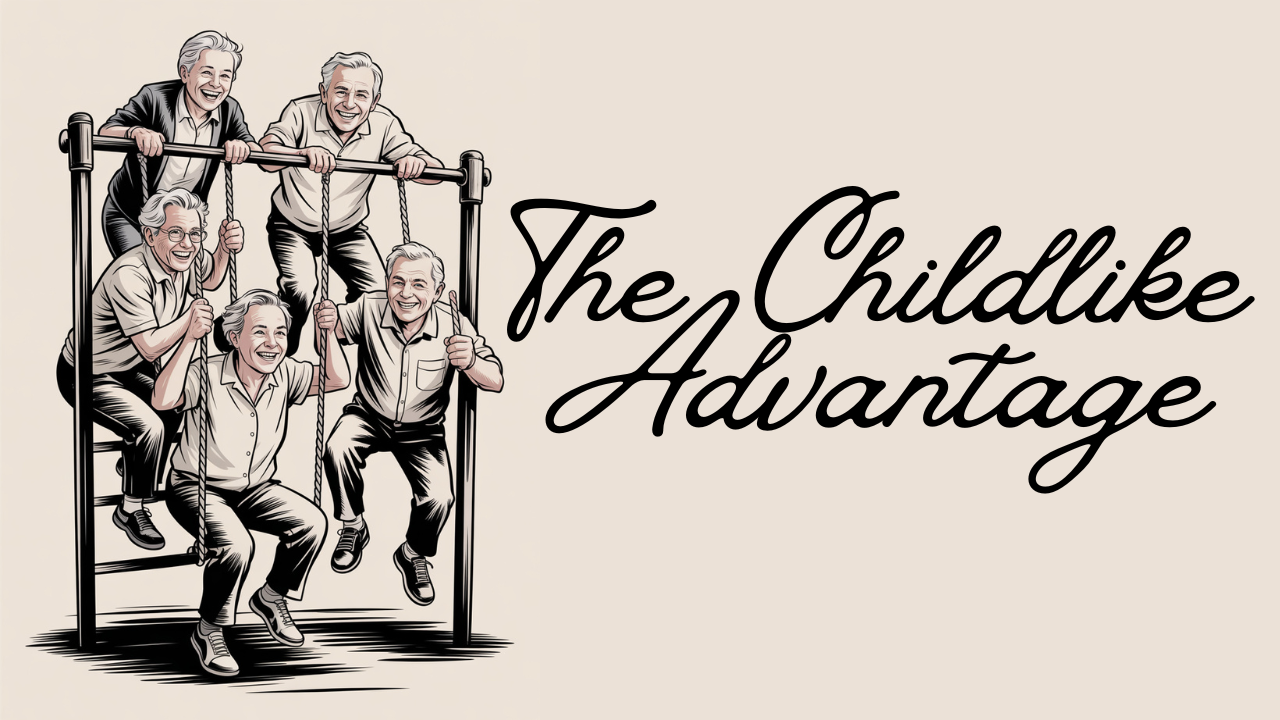
There’s a danger most of us don’t see coming. It’s subtle, slow, and it hides behind words like “maturity” and “wisdom.” One day you’re curious, willing, open to the unknown—and the next, you’re cautious, closed, and endlessly analytical. It doesn’t happen overnight, but if we’re not careful, the childlike wonder Jesus said was essential to enter the Kingdom can quietly slip away. When willingness, open-mindedness, listening, and agreement start to fade, so does our ability to move in step with God. And what’s at stake isn’t just how much joy or adventure we experience—it’s whether we’ll even recognize the opportunities God is placing right in front of us.
Here is an interesting truth: The older we get, the more difficult it gets to actually live an abundant and blessed life.
When you’re eight, you’ll jump off the roof into a kiddie pool because your cousin swears it’s “basically the same as Olympic diving.”
By thirty-eight, you won’t even switch brands of toothpaste without six weeks of research.
Somewhere between learning to drive and learning what “deductible” means, we lose the four qualities that make life—and faith—work:
Willingness
Open-mindedness
Listening
Agreement
Jesus said it like this, “Unless you change and become like little children, you will never enter the kingdom of heaven” (Matthew 18:3).
That wasn’t sentimental. That was a Kingdom strategy.
1. Willingness
Willingness is saying yes before you’ve got all the information.
It’s the “Alright, let’s see what happens” that pulls you into God’s story.
Peter had it when he tossed the nets after an all-night fishing fail.
The leper had it when he said, “If you’re willing, you can heal me.”
Both ended up with more than they came for.
The problem? Adults learn to say no fluently.
We rebrand fear as “caution” and rejection as “discernment.”
But heaven reads it as “pass.”
If willingness was a dating profile, most of us have ghosted it.
2. Open-Mindedness
Open-mindedness doesn’t mean agreeing with everyone.
It means you leave room for the possibility that God’s doing something you didn’t see coming.
Proverbs 1:5 says:
“Let the wise listen and add to their learning.”
The Pharisees missed Jesus because He didn’t match their blueprint.
They wanted a Messiah in a war horse parade, not a guy in sandals having dinner with tax cheats.
Closed minds turn miracles into problems.
Open minds turn problems into miracles.
3. Listening
James 1:19 says:
“Be quick to listen, slow to speak, slow to become angry.”
That’s adorable advice in theory. In reality, most people “listen” the way a cat watches you clean its litter box—pretending to care while plotting its next move.
Jesus, on the Emmaus road, knew the punchline. But He let the two guys talk themselves in circles before He revealed it.
That’s the skill: hearing someone’s whole story without interrupting to fix it or top it.
Listening is the Kingdom version of reconnaissance. It tells you where the enemy is, where the treasure is, and which door not to kick down.
4. Agreement
Amos 3:3 asks:
“Do two walk together unless they have agreed to do so?”
Agreement is like drafting in NASCAR. Two cars can go faster together than alone because of the slipstream.
It doesn’t mean you’re twins—it means you’re headed in the same direction and willing to share the lane.
Paul told the Philippians:
“Be of one mind, having the same love…”
Disagreement burns fuel. Agreement builds speed.
How We Lose It
Somewhere along the line, the superpowers get swapped for armor.
We put on skepticism.
We wear pride like cologne.
We double-down on our own voice and stop listening to anyone else’s.
We think we’re getting wiser. Really, we’re just getting harder to lead—by people and by God.
The Childlike Loophole
Jesus didn’t say “Act like a child.” That’s what’s happening in most political comment sections.
He said “Be like a child.”
Children trust fast.
They say yes before the fine print.
They try weird ideas.
They listen because they don’t assume they know everything.
And they agree because they’d rather keep playing than prove a point.
It’s not naive. It’s strategic.
It’s how you keep the Kingdom flowing through your life instead of stalling in the “Well, that’s not how we’ve always done it” lane.
The Takeaway
Say yes sooner.
Assume you’re missing something.
Listen longer than is comfortable.
Look for reasons to agree, not excuses to bail.
You don’t need to go back to your childhood.
You need to bring your childhood forward.
Because the Kingdom is wide open—but it’s only got a child-sized door.
How to balance Work & Rest
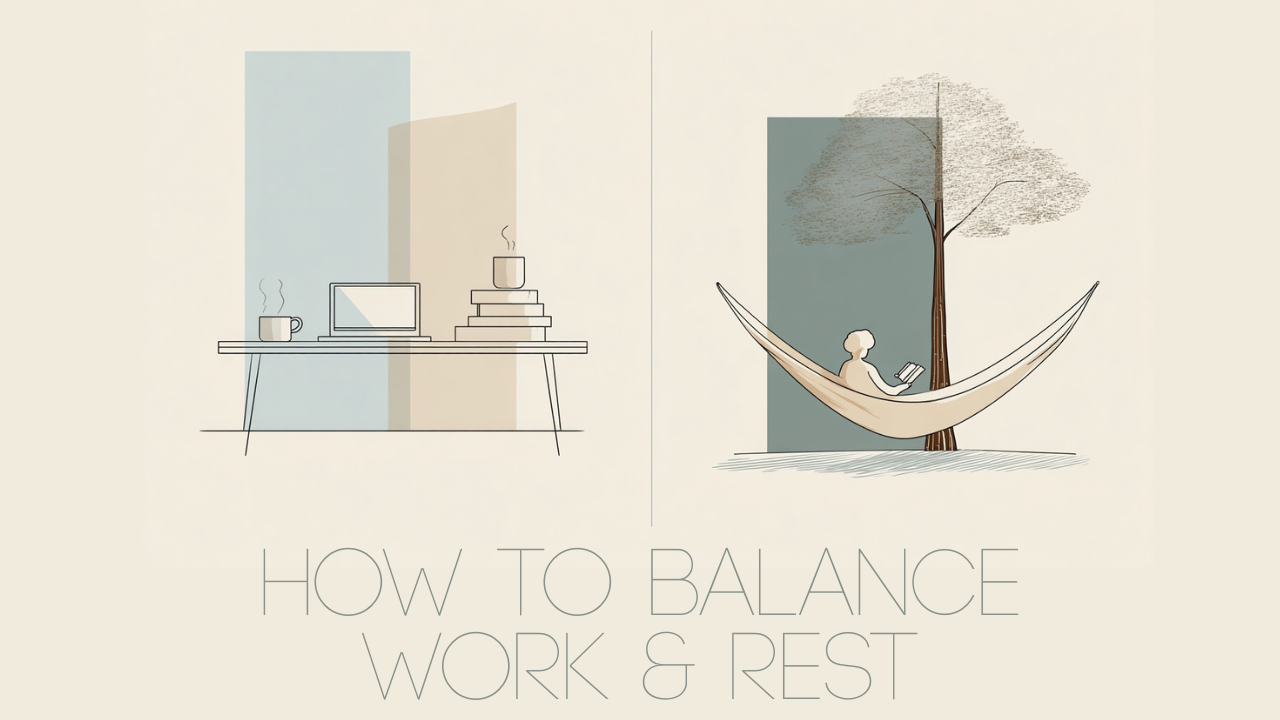
Before God gave Adam and Eve a garden, He gave them something far more foundational: rhythm.
A rhythm of rule and rest.
Of stewardship and surrender.
Of doing and being.
Genesis opens with a mandate: “Be fruitful, multiply, take dominion.” But the very next beat? God stops. He blesses the seventh day. He rests.
God modeled something we often forget: Dominion doesn’t begin with hustle—it begins with holy rhythm.
Before God gave Adam and Eve a garden, He gave them something far more foundational: rhythm.
A rhythm of rule and rest.
Of stewardship and surrender.
Of doing and being.
Genesis opens with a mandate: “Be fruitful, multiply, take dominion.” But the very next beat? God stops. He blesses the seventh day. He rests.
God modeled something we often forget: Dominion doesn’t begin with hustle—it begins with holy rhythm.
If You Don’t Run Your Life, It Will Run You
Nehemiah shows up in chapter 13 and finds Judah in chaos. Winepresses are running on the Sabbath. The rhythm has been hijacked. Commerce is king. Conviction is gone.
Nehemiah’s not quiet. He throws down the challenge: “Shut the gates!”
Translation: This dysfunction doesn’t get to run your story anymore.
And maybe it’s not ancient Judah we’re talking about. Maybe it’s you.
Grinding. Hustling. Tired but still scrolling. Busy but never full.
Your pace is out of sync with your purpose.
Let’s fix that.
1. Stop Thinking More Stuff Will Bring Joy
More isn’t the answer. It’s the addiction.
We chase it like a god—more followers, more cash, more control. But the Bible already told us: “Life does not consist in the abundance of possessions.”
Joy doesn’t live at the end of your to-do list.
It lives in the presence of God.
Want more joy? Stop climbing. Start abiding.
Joy doesn’t need to be earned. It needs to be received.
2. Frame Out Godly Desire and Submit It
Desire isn’t the enemy. Ungoverned desire is.
Greed is just desire with no leash.
But godly desire—prayed over, submitted, filtered through purpose—creates legacy.
Here’s the new blueprint:
Pray first, then plan.
Dream, but test the dream.
Don’t build a life that feeds your ego. Build one that glorifies God.
Desires are powerful. But only when they’re pointed in the right direction.
3. Give God Your Best — Not Your Leftovers
We say He’s first. But He gets what’s left.
We collapse on the couch and call it rest. That’s not rest—that’s recovery. And you weren’t made to survive; you were made to thrive.
God deserves your best excellence—and your best rest.
Work like it’s worship.
Rest like it’s trust.
When you Sabbath, you’re making a declaration: “God, You’re the source—not me.”
If you don’t have a rest ethic, your work ethic is a liability.
What’s at Stake?
If you don’t take dominion over your time and your desires,
they will take dominion over you.
You’ll become a worshiper of your own hustle.
Your family will feel it. Your soul will ache from it.
You’ll survive instead of live.
But restore the rhythm?
Peace returns.
Purpose rises.
Blessing multiplies.
The Invitation: Shut the Gates
Shut the gates on fear.
Shut the gates on distraction.
Shut the gates on the hustle that’s stealing your peace.
Step off the hamster wheel.
Step into the presence of God.
Give Him your first.
Give Him your best.
And watch Him do more with your six days than you could with seven.
Say This Out Loud:
I am not a slave to the hustle.
I am rooted in Christ and I live from His rhythm.
I was created for glory—not burnout.
I give God my first and my best—every day.
I do not run after more—I rest in enough.
I walk in peace, purpose, and supernatural joy.

Watch the Mission or Join It
And God is still looking.
Not for tourists.
Not for spiritual nomads, camera in hand, chasing the next holy Instagram post.
Not for ministries trying to pose in front of Antifa graffiti.
Not for spectators.
He’s looking for people.
People who build.
People who move in.
People who stay.

We rebuilt the walls.
We restored the temple.
We wept.
We worshipped.
But the city is still empty.
And God is still looking.
Not for tourists.
Not for spiritual nomads, camera in hand, chasing the next holy Instagram post.
Not for ministries trying to pose in front of Antifa graffiti.
Not for spectators.
He’s looking for people.
People who build.
People who move in.
People who stay.
People who don’t need a perfect picture before they pick up a shovel.
Nehemiah 11 is a peculiar chapter. It doesn’t preach well.
It reads like a census. A roll call.
But it’s the sound of people choosing.
Choosing to dwell in the ruins.
To live in a place everyone else had written off.
This wasn’t glamour. This wasn’t glory.
This was calling.
God’s looking for those who say:
“Here I am. Plant me in the ruins. I will not leave until it looks like Eden again.”
This isn’t judgment.
This is invitation.
There’s a difference between watching revival and becoming it.
Between visiting a city and becoming its root system.
Too many believers are spiritual renters.
They move where the presence is “popping.”
They hop from Sunday to Sunday, live stream to live stream, city to city.
God’s not asking for your attendance.
He’s asking for your residency.
Three Prophetic Movements for Builders
1. Stop Chasing Beauty. Occupy the Ashes.
The Instagram algorithm rewards the beautiful.
So we chase blessing. We move toward ease.
We wait for the open door in the obvious place.
But what if beauty isn’t found—it’s formed?
Isaiah 61:3 doesn’t say God gives beauty to the beautiful.
It says He gives beauty for ashes.
Which means someone has to move into the ashes.
You’ve been praying for an open door.
God’s been pointing at the rubble.
He’s not sending you where the fruit is.
He’s sending you where the roots are missing.
Not to steal someone else’s harvest.
But to dig. Plant. Bleed. Pray.
You’re not chasing Eden.
You’re restoring it.
Question:
Where have you been chasing beauty instead of stewarding brokenness?
2. Stop Spectating. Start Stewarding.
We love good worship.
We crave great messages.
We binge revival content the way others binge Netflix.
But the Kingdom isn’t built by critics or consumers.
It’s built by planted people.
We don’t need more charisma.
We need more commitment.
You are not outside of God’s move.
You are the vessel He wants to move through.
You are not a spectator of the sacred.
You are His sanctuary.
The Lord isn’t hyped by hype.
He’s drawn to homes—people who say, “Come abide in me.”
Hard places are holy ground when we stop asking for comfort and start asking for a commission.
Jesus didn’t livestream heaven.
He moved in to Nazareth.
He didn’t just comment.
He committed.
Question:
Where are you watching what God is doing instead of partnering with Him?
3. Commit Before You Comment.
Social media taught us to react.
Heaven is teaching us to root.
You don’t bring the Kingdom by pointing at problems.
You bring the Kingdom by planting your feet.
God’s not calling you to post about broken places.
He’s calling you to live there.
To stay when it’s awkward.
To dig when it’s dry.
To speak life when no one claps back.
This is the era of refiners.
The age of the occupiers.
The movement of those who remain.
God is saying: “I’m in the dust. I’m in the ruins. I’m in the unimpressive place.”
Stay.
Speak.
Steward.
Watch beauty rise from below your feet.
Question:
Where are you being called to stay, even though it still looks unimpressive?
Final Declaration: Eden, Again.
God is rebuilding cities.
But not through superstars.
Through servants.
Through stayers.
Through people who don’t need to see it all today because they trust the tomorrow He’s building.
“I am looking for a people,” says the Lord.
Not to escape the world.
But to rebuild it.
Not to spectate, but to partner.
Not to run from cursed ground,
but to speak beauty into ashes.
That’s you.
You are not the crowd.
You are the core.
You are not the fan.
You are the family.
You are not waiting for permission.
You already carry the presence.
So dwell.
Build.
Stay.
Restore.
Because Eden isn’t lost.
It’s just waiting for someone to say:
“Here I am. Plant me in the ruins.”
And God is saying:
“I’m doing it through you.”

The Power of Covenant
Most of us are great at making commitments.
We commit to eating clean.
To going to the gym.
To being nicer to our spouse.
To getting serious about God.
And then… life happens.
You get tired.
You get offended.
You get distracted.
And just like that, your commitment is out the window.
You know why?
Because commitment isn’t the same as covenant.
Most of us are great at making commitments.
We commit to eating clean.
To going to the gym.
To being nicer to our spouse.
To getting serious about God.
And then… life happens.
You get tired.
You get offended.
You get distracted.
And just like that, your commitment is out the window.
You know why?
Because commitment isn’t the same as covenant.
Covenant isn’t sexy. But it’s powerful.
In the book of Nehemiah, something radical happens.
The people don’t just apologize for messing up.
They go all in.
They write it down.
They sign their names.
They say, “We’re done playing games. This time, we mean it.”
That’s not commitment.
That’s covenant.
Here’s the difference:
Commitment is emotional.
Covenant is intentional.
Commitment says, “As long as this feels right.”
Covenant says, “Even when it doesn’t.”
You’re not tired. You’re unaligned.
You’ve been praying for power, for breakthrough, for purpose.
And you keep wondering why you’re not seeing results.
I’ll tell you why:
Because power follows covenant, not feelings.
You can cry all you want.
You can mean well.
You can post inspirational Bible verses on Instagram all day long.
But if you’re not living in covenant, nothing sticks.
You want results? Make it real.
Here’s how:
1. Make it public.
Stop hiding.
Tell someone what God is doing in your life.
Say it out loud. Write it down. Own it.
You want change? Great. Put it out there.
2. Make it disciplined.
Want to walk in freedom?
It’s not about motivation. It’s about rhythm.
Set the schedule. Show up. No excuses.
Sunday church. Daily prayer. Real accountability.
That’s how grown-ups build a life that lasts.
3. Make it holy.
This isn’t self-help.
This isn’t about being a better person.
This is about surrender.
You don’t need another plan. You need a Savior.
You don’t need to try harder. You need to die to yourself.
Religion says “Do better.”
Covenant says “It’s already done.”
You’re not loved because you perform.
You’re loved because He bled.
You’re not saved because you “meant well.”
You’re saved because Jesus said, “It is finished.”
Listen to me.
You’re not broken beyond repair.
You’re not too far gone.
You’re not the exception.
You are loved.
Right now.
As you are.
And He’s waiting for your yes.
Not your perfect behavior.
Not your spotless record.
Just your yes.
That’s the beginning of covenant.
And that’s where the power is.
Now stop waiting for the feeling.
Stop waiting for the mood.
Step in.
Say yes.
And watch what happens.
You don’t need to be perfect. You just need to be all in.
Let’s go.

The Playground Strategy Isn’t Working
There’s a difference between fighting a war and picking a fight.
Too often, what gets labeled “spiritual warfare” is nothing more than a jolt of caffeine, a hit of dopamine, and a random burst of emotion disguised as strategy. We call it warfare, but it’s not. It’s noise. It’s lashing out. It’s babbling in battle gear.
It’s the kid who kicks the bully in the shin and sprints away—because there’s no plan to stand, no commitment to see it through, no positioning to actually win.
The problem with this approach? It may feel bold, but it’s mostly reaction. It doesn’t build. It doesn’t reclaim. It doesn’t last.
There’s a difference between fighting a war and picking a fight.
Too often, what gets labeled “spiritual warfare” is nothing more than a jolt of caffeine, a hit of dopamine, and a random burst of emotion disguised as strategy. We call it warfare, but it’s not. It’s noise. It’s lashing out. It’s babbling in battle gear.
It’s the kid who kicks the bully in the shin and sprints away—because there’s no plan to stand, no commitment to see it through, no positioning to actually win.
The problem with this approach? It may feel bold, but it’s mostly reaction. It doesn’t build. It doesn’t reclaim. It doesn’t last.
War—real war—requires endurance. It demands a different posture: quiet resolve, long-term investment, and the willingness to hold your ground even when the headlines fade.
You don’t win a war with a single tweet. You don’t take ground by storming the gates once a year at a conference. You win when you stop reacting and start building.
The Kingdom isn’t dropped in like a flash mob. It comes through farmers, not fighters. Through architects, not anarchists. Through people who wake up every morning and sow into something that will outlast them.
Yes, the enemy is real. But so is strategy. And timing. And wisdom. And alignment. And the kind of obedience that doesn’t need a microphone to feel powerful.
It’s time to stop running at giants with slingshots we only dust off when we feel “led.” It’s time to become a people of precision and persistence.
We don’t need more noise. We need a network. A grid of commitment. A culture of faithful resistance.
So let’s ditch the playground tantrums.
And let’s start building something the gates of hell can’t shake.
Because that’s how Kingdoms come.

Affirmation Is Not the Doorway to Joy
This article challenges the cultural obsession with affirmation as the path to healing, arguing instead that true joy begins with truth—not comfort. It explores how grace-fueled transformation starts with conviction, confession, and repentance, not denial or flattery. Rooted in the gospel, it reminds us that while tears may come first, they are the seeds of a deeper joy only Christ can bring. Transformation isn’t achieved—it’s received. And joy, in the end, is not manufactured but harvested through surrender.

Affirmation of a lie only leads to further deception—and deeper bondage.
It might numb the shame.
It might offer a quick hit of soul relief.
But hours later, truth comes knocking… and the hangover begins.
Simply trying to verbally rescue people from shame or suffering isn’t the role of a Christian.
Our job isn’t to edit reality for comfort.
It’s to tell the truth—with love, with grace, and with an eye toward real freedom.
Because real transformation doesn’t begin with affirmation.
It begins with truth.
But not cold, detached truth—truth carried by grace.
Salvation by grace through faith in Christ alone opens the door.
It’s the Spirit who convicts.
It’s grace that leads to confession.
And it’s the kindness of God that empowers repentance.
We don’t climb our way into joy.
We’re led into it.
This is how joy is born.
Before there is real, lasting joy, there are tears.
Tears are the seeds.
Not because sadness is spiritual, but because honesty is.
Remorse.
Shame.
Conviction.
These aren’t enemies to avoid.
They’re signals—pointing us back to the One who carries our burden and rewrites our story.
They bring us fully and honestly to the end of ourselves—
To the revelation of our dependency.
To the reality of our union with Christ.
Transformation doesn’t happen when we hide from the truth.
It happens when we step into it—
Fully exposed, completely known, and deeply loved.
So sow your sorrow.
Water it with grace.
Let the Spirit do what only He can do.
Because in Christ, even your tears have purpose.
And joy is not just possible—it’s inevitable.

The One Mountain Mandate
Jesus didn’t teach us to pray so we’d sound holy.
He taught us to pray so we’d build something.
“Your kingdom come, your will be done, on earth as it is in heaven.”
—Matthew 6:10
Not just a poem.
Not just a lyric.
A blueprint.

Jesus didn’t teach us to pray so we’d sound holy.
He taught us to pray so we’d build something.
“Your kingdom come, your will be done, on earth as it is in heaven.”
—Matthew 6:10
Not just a poem.
Not just a lyric.
A blueprint.
Heaven is the top of the mountain.
Earth is the base.
And the call?
Bring the top down.
Before Moses ever led people, he climbed.
Before he gave commands, he received them.
Before he changed the world, he was changed.
“Then the Lord said to Moses, ‘Come up to Me on the mountain and be there; and I will give you tablets of stone, and the law and commandments which I have written, that you may teach them.’”
—Exodus 24:12 (NKJV)
Not do there.
Be there.
Because if you don’t learn to be with Him,
you’ll have nothing to give from Him.
Isaiah echoes the same rhythm.
“Come, let us go up to the mountain of the Lord. There He will teach us His ways, and we will walk in His paths.”
—Isaiah 2:3 (NLT)
This is practical.
This is mystical.
This is a command.
Jesus basically says, “Ministry is to look this way.”
The Temptation
The temptation, when we haven’t gone up the mountain to be with the Lord,
is to replace the mountain with a man-made model.
A successful-looking substitute.
Something someone else built—
that once worked.
So we replicate.
Again and again.
But replication is not revelation.
The crowd size at an event?
Doesn’t frame success.
The offering total?
Doesn’t frame success.
The YouTube views?
Not it.
Even a viral moment?
Still not it.
Heaven On Earth
Heaven on earth—that’s the measure.
Catalytic moments that bend gravity.
Moments that shift culture.
Moments that pull history in the direction of glory.
That’s the only model that matters.
So here’s how the pattern plays out.
You go in to go up.
Not to escape the world, but to receive something for it.
You create space. You fight for minutes. Because minutes create moments.
The kitchen table becomes Sinai.
The car ride becomes sacred.
But it’s always uphill.
It costs time.
It costs silence.
It costs honesty.
The mountain will always cost you something.
You’ll want to skip it.
You’ll want to serve before you’ve sat.
You’ll want to talk before you’ve listened.
You’ll want to react before you’ve abided.
That’s what makes the mountain hard.
But that’s what makes the mountain holy.
And when you go up, go to receive.
This isn’t a retreat.
This isn’t a quiet time with curated vibes.
This is covenant.
You don’t go up to feel something.
You go up to receive someone.
Moses didn’t walk out of the cloud with a feeling.
He walked out with a greater relationship, and tablets.
Truth you can carry.
Words that still set captives free.
“And He gave to Moses… two tablets of the testimony, tablets of stone, written with the finger of God.”
—Exodus 31:18
Moments with God aren’t just for memory.
They’re for mandates.
And then—
you come down.
Because the mountain isn’t the mission.
The mission is what you bring down from the mountain.
Newton said what goes up must come down.
But heaven says what goes up must come down with glory.
You weren’t filled to stay full.
You were filled to be poured out.
So your job? It’s your ministry.
Your home? It’s your mission field.
Your street? It’s your sermon.
The evidence of the encounter isn’t how you felt in the cloud—
It’s how you live in the crowd.
The fire wasn’t meant for storage.
It was meant for cities.
And Eden—this is the pattern.
Go in. Go up.
Receive. Come out.
Bring it down.
Not once.
Not someday.
Every day.
Because the world isn’t transformed by people who had a moment at the mountain.
It’s transformed by people who came down glowing, commissioned, and generous.
“Now it was so, when Moses came down from Mount Sinai… the skin of his face shone while he talked with Him.”
—Exodus 34:29
IN is UP.
OUT is DOWN.
That’s the rhythm of revival.
Let’s go.