

The One Mountain Mandate
Jesus didn’t teach us to pray so we’d sound holy.
He taught us to pray so we’d build something.
“Your kingdom come, your will be done, on earth as it is in heaven.”
—Matthew 6:10
Not just a poem.
Not just a lyric.
A blueprint.

Jesus didn’t teach us to pray so we’d sound holy.
He taught us to pray so we’d build something.
“Your kingdom come, your will be done, on earth as it is in heaven.”
—Matthew 6:10
Not just a poem.
Not just a lyric.
A blueprint.
Heaven is the top of the mountain.
Earth is the base.
And the call?
Bring the top down.
Before Moses ever led people, he climbed.
Before he gave commands, he received them.
Before he changed the world, he was changed.
“Then the Lord said to Moses, ‘Come up to Me on the mountain and be there; and I will give you tablets of stone, and the law and commandments which I have written, that you may teach them.’”
—Exodus 24:12 (NKJV)
Not do there.
Be there.
Because if you don’t learn to be with Him,
you’ll have nothing to give from Him.
Isaiah echoes the same rhythm.
“Come, let us go up to the mountain of the Lord. There He will teach us His ways, and we will walk in His paths.”
—Isaiah 2:3 (NLT)
This is practical.
This is mystical.
This is a command.
Jesus basically says, “Ministry is to look this way.”
The Temptation
The temptation, when we haven’t gone up the mountain to be with the Lord,
is to replace the mountain with a man-made model.
A successful-looking substitute.
Something someone else built—
that once worked.
So we replicate.
Again and again.
But replication is not revelation.
The crowd size at an event?
Doesn’t frame success.
The offering total?
Doesn’t frame success.
The YouTube views?
Not it.
Even a viral moment?
Still not it.
Heaven On Earth
Heaven on earth—that’s the measure.
Catalytic moments that bend gravity.
Moments that shift culture.
Moments that pull history in the direction of glory.
That’s the only model that matters.
So here’s how the pattern plays out.
You go in to go up.
Not to escape the world, but to receive something for it.
You create space. You fight for minutes. Because minutes create moments.
The kitchen table becomes Sinai.
The car ride becomes sacred.
But it’s always uphill.
It costs time.
It costs silence.
It costs honesty.
The mountain will always cost you something.
You’ll want to skip it.
You’ll want to serve before you’ve sat.
You’ll want to talk before you’ve listened.
You’ll want to react before you’ve abided.
That’s what makes the mountain hard.
But that’s what makes the mountain holy.
And when you go up, go to receive.
This isn’t a retreat.
This isn’t a quiet time with curated vibes.
This is covenant.
You don’t go up to feel something.
You go up to receive someone.
Moses didn’t walk out of the cloud with a feeling.
He walked out with a greater relationship, and tablets.
Truth you can carry.
Words that still set captives free.
“And He gave to Moses… two tablets of the testimony, tablets of stone, written with the finger of God.”
—Exodus 31:18
Moments with God aren’t just for memory.
They’re for mandates.
And then—
you come down.
Because the mountain isn’t the mission.
The mission is what you bring down from the mountain.
Newton said what goes up must come down.
But heaven says what goes up must come down with glory.
You weren’t filled to stay full.
You were filled to be poured out.
So your job? It’s your ministry.
Your home? It’s your mission field.
Your street? It’s your sermon.
The evidence of the encounter isn’t how you felt in the cloud—
It’s how you live in the crowd.
The fire wasn’t meant for storage.
It was meant for cities.
And Eden—this is the pattern.
Go in. Go up.
Receive. Come out.
Bring it down.
Not once.
Not someday.
Every day.
Because the world isn’t transformed by people who had a moment at the mountain.
It’s transformed by people who came down glowing, commissioned, and generous.
“Now it was so, when Moses came down from Mount Sinai… the skin of his face shone while he talked with Him.”
—Exodus 34:29
IN is UP.
OUT is DOWN.
That’s the rhythm of revival.
Let’s go.

Don’t Just Build the Fire Pit (And Forget the Flame)
Stop obsessing over perfect structures and start tending to people. Using the metaphor of a fire pit and flame, this article draws from Nehemiah’s example to show that real leadership requires both systems and souls—framework and fire. You don’t just build for the sake of building; you build to host something alive. Leaders are accountable not just for what they construct, but for who gathers because of it.

Anyone can dig a hole and call it a fire pit.
Stack some stones. Make it symmetrical.
Post a photo. Feel accomplished.
But a fire pit without flame is just landscaping.
And a flame without fuel burns out fast.
Movements are the same.
Structure without people is cold.
People without structure scatter.
Nehemiah knew this.
He built the wall. But he didn’t stop there.
He looked around and asked: Where are the people?
He didn’t celebrate a finished framework.
He asked a deeper question: Who are we building this for?
Then he counted them. Appointed them.
Named roles before the city was full.
Because real leaders don’t wait for crowds.
They steward sparks.
The fire came because he prepared a place for it.
And the people stayed because there was warmth and direction.
Too many leaders today are obsessed with building fire pits.
The polished structure. The perfect model.
But no one wants to light the match.
Or worse—they expect a fire with no wood, no air, no effort.
If you build the pit but forget the flame, all you’ve done is decorate the ground.
If you chase the flame but refuse to build, all you’ve got is a wildfire.
Leadership is both.
Build the place.
Fuel the fire.
Tend the people.
And never forget:
You’re not building for the sake of building.
You’re building for the sake of those who will gather around the flame.

Success is a Magnet
Most people think finishing is the finish line—they believe success secures itself. But success is actually a magnet, attracting both opportunity and opposition. Nehemiah shows a different way: finishing isn’t enough—you must also fortify. This blog challenges the common mindset of "celebrate and coast" and invites you into a wiser way of thinking—protect what you build, or risk losing it.
Success is a magnet.
It pulls opportunity.
It pulls momentum.
It also pulls enemies.
Nehemiah finished Jerusalem’s wall in 52 days.
Miraculous. Historic.
But Nehemiah knew the truth most people forget:
Finishing isn’t the finish line.
When you succeed, you attract everything — the good and the bad.
Supporters. Imitators. Critics. Saboteurs.
Your success becomes a signal. A spotlight.
That’s why Nehemiah didn’t celebrate when the wall went up.
He fortified it.
He posted guards.
He tightened the perimeter.
He finished and fortified.
Because a blessing unguarded is a blessing abandoned.
How to Protect Your Reputation
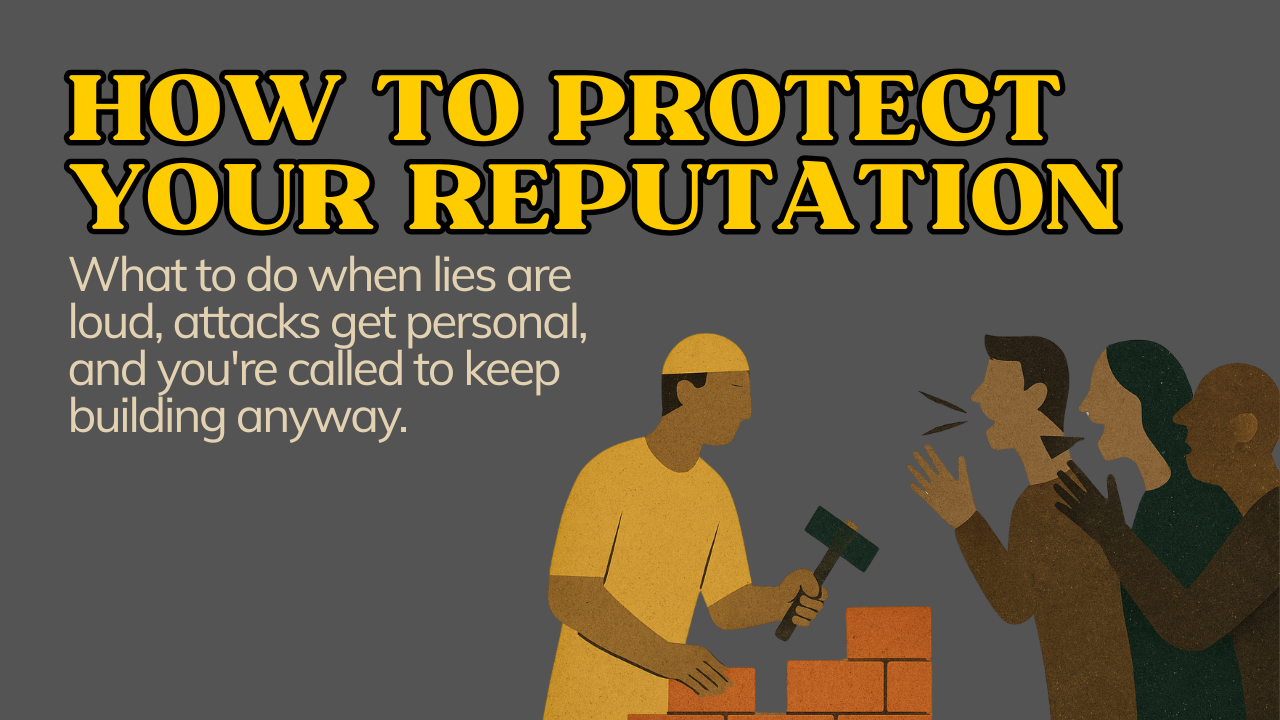
How to protect your reputation when you're under spiritual, personal, or public attack—drawing wisdom from Nehemiah 6. When you're building something meaningful, resistance is inevitable. Rather than reacting to gossip, slander, or false accusations, the biblical approach is to stay grounded in integrity, avoid petty arguments, trust God for vindication, and keep your hands on the work. With a bold, minimalist tone inspired by Seth Godin, this piece challenges readers to remain faithful to their calling in the face of character assassination and distraction. The higher you build, the louder it gets—but your persistence is your protection.

Nehemiah was almost done. The wall was nearly finished. The noise got louder.
That’s the pattern.
Build something that matters, and opposition will follow. Not just criticism — assassination. Of your purpose. Your character. Your authority.
But you don’t have to play their game.
In the Kingdom, the win isn’t applause — it’s obedience.
Staying faithful to your assignment is the victory.
When resistance comes — and it will — don’t panic. Don’t retaliate.
Keep building.
1. Guard Your Private Life Like It’s Sacred (Because It Is)
The enemy doesn’t need much — just a crack in the door. A scrap of gossip. A late-night message that never should’ve been sent.
And if he can’t find anything real? He’ll make it up.
So don’t give him anything.
No fuel. No crumbs. No open windows.
Your integrity is the firewall. Your character is your cloak.
Your private life is the scaffolding of your public influence. Protect it like your calling depends on it — because it does.
2. Don’t Argue with Fools
There’s a difference between being wise and being loud.
Proverbs says, “Do not answer a fool according to his folly.” Translation? Stop arguing with trolls.
The moment you start defending yourself to the wrong crowd, you’ve already lost. Because their goal isn’t truth — it’s distraction.
And the minute you stop to engage, the wall stops rising.
Let them tweet. Let them spin. Let them make YouTube videos about you.
You don’t owe everyone an answer. You owe God your obedience.
3. Let God Be Your PR Team
Psalm 37:6 — “He will make your righteousness shine like the dawn.”
God is better at vindicating you than you are. Way better.
When you walk in obedience, your life becomes undeniable.
And when that fruit starts falling off your tree? Even your enemies will have to admit it’s real.
Time and truth are a team — and they always win in the end.
4. Keep Your Hands on the Bricks
This is where it gets gritty.
Nehemiah didn’t stop. Not for threats. Not for gossip. Not for false accusations.
He stayed on the wall.
He knew what we often forget: the goal of slander is not just to hurt you — it’s to stop you.
But every brick you lay is a middle finger to hell. Every prayer, every step, every act of faithfulness is a declaration: I will not come down.
Because Heaven is watching. And Hell is trembling.
The Higher You Build, the Louder It Gets
This isn’t just about damage control. It’s about destiny.
If they’re trying to pull you down, it’s probably because you’re finally standing up.
So let them talk.
You? Keep your hands dirty with the work.
Don’t let a liar’s words stop a holy assignment.
Don’t trade your hammer for a microphone.
Don’t come down from that wall.
What you’re building is bigger than the backlash.
And what God is doing in you is louder than anything they can say about you.

Influence Without Control
In this article, Darren explores the powerful difference between control and influence through the lens of Nehemiah’s leadership. He challenges the idea that leadership requires a title or authority, showing instead that true influence is built on moral authority, integrity, and consistency.
You can’t make anyone do anything.
Not really.
You can coerce.
You can manipulate.
You can force.
But that’s not leadership. That’s control.
Nehemiah didn’t control people.
He influenced them.
And that’s the invitation:
To lead without control. To influence without a title.
You want to change your world?
Start here.

When the People Cry Out
There’s a moment—
A shift.
A sound too raw, too human, too urgent to ignore.
It doesn’t come from enemies.
It comes from within the walls.
From the people we thought were safe.
From the voices we trained ourselves not to hear.
They weren’t strangers.
They were family.
The very people of God.
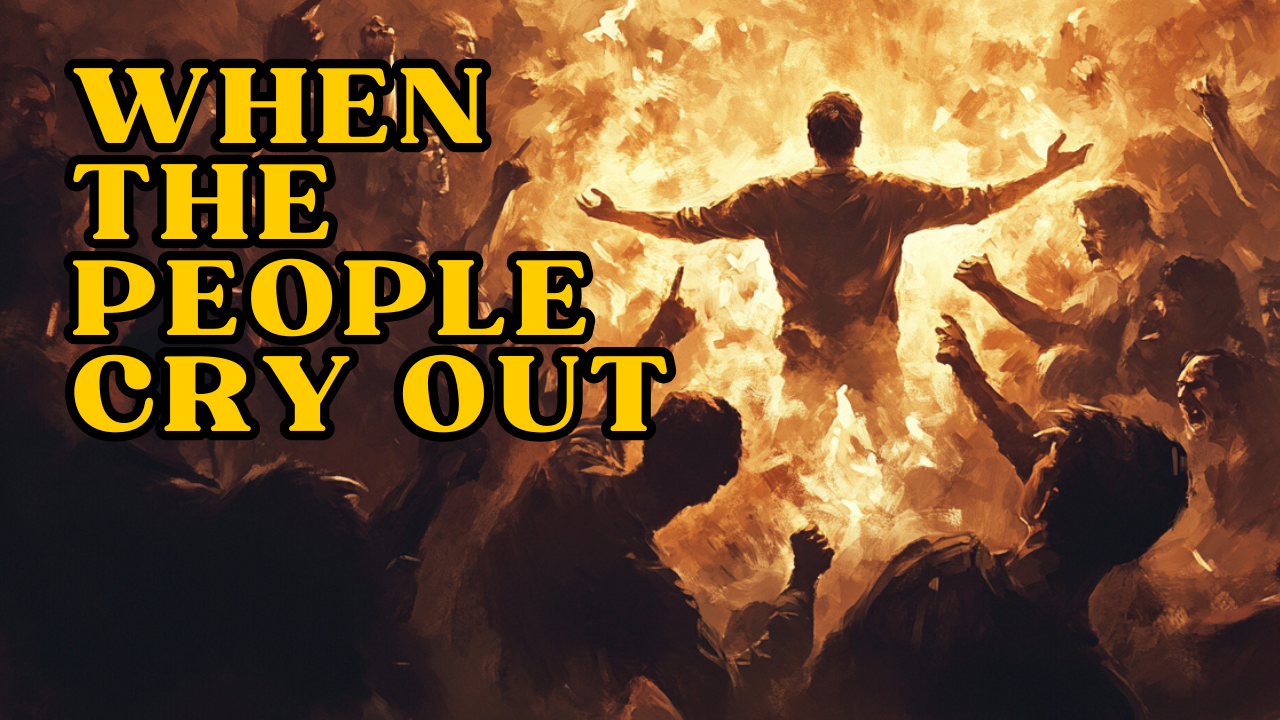
Nehemiah 5:1–13
There’s a moment—
A shift.
A sound too raw, too human, too urgent to ignore.
It doesn’t come from enemies.
It comes from within the walls.
From the people we thought were safe.
From the voices we trained ourselves not to hear.
They weren’t strangers.
They were family.
The very people of God.
And they were being crushed.
The text says,
“There arose a great outcry...”
It wasn’t noise.
It was signal.
The kind that slices through distraction.
The kind that makes a true leader pause—
Not to analyze, but to act.
Nehemiah didn’t manage the crisis.
He embodied it.
He got angry.
But not the kind of anger that burns bridges—
The kind that builds new ones.
Because he knew:
What’s the point of rebuilding walls if the people behind them are enslaved?
What good is a move of God if it doesn’t move us toward justice?
What’s the value of leadership that only asks, “What’s in it for me?”
Leadership isn’t about being in charge.
It’s about being in between.
Between the pain and the promise.
Between the silence and the sound.
1. Hear the Cry. Prophesy the Future.
Don’t dismiss what disturbs you.
Leadership begins with listening—not with the ears, but with the soul.
You can’t solve what you refuse to feel.
“There arose a great outcry of the people…” (Nehemiah 5:1)
Real leaders hear what others ignore.
And when they hear it—they speak.
They name what God is saying.
They create the future by declaring it.
2. Name the Wrong. Don’t Cover It.
Call it. Don’t coat it.
Injustice thrives in ambiguity.
Religious language has a way of making rot look holy.
But Nehemiah didn’t spiritualize sin—he exposed it.
“I was very angry… I brought charges against the nobles and the officials.” (Nehemiah 5:6–7)
Confrontation is compassion in motion.
When you name the wrong, healing can finally begin.
3. Expect Repentance. Build for Breakthrough.
Bold leadership breaks strongholds.
We’ve grown too used to managing dysfunction.
Nehemiah demanded change—and got it.
Not because he was loud, but because he was clear.
“We will restore… we will do as you say.” (Nehemiah 5:12–13)
When leaders speak with integrity, people respond.
Not just with applause—but with action.
You’ve heard something
A whisper. A rumble. A cry.
Maybe it’s not public.
But in your spirit, it’s loud.
This is your cue.
Not to wait.
Not to delegate.
Not to play it safe.
Because Kingdom leadership doesn’t wait for permission.
It answers the cry.
So—will you?
Will you rise?
Will you risk?
Will you lead?
Because heaven is listening.
And the people are crying.
Let it be you.
Let it be now.
Let it be loud.

Build And Defend
We love the idea of building.
The thrill of starting something new. The excitement of vision, calling, purpose. The sense that we’re participating in something bigger than ourselves.
But what happens when opposition shows up?
What happens when the enemy sees what you're building and decides it’s worth tearing down?
Most people hesitate. They assume that if an idea is truly from God, it shouldn’t require a fight.
Nehemiah knew better.

We love the idea of building
The thrill of starting something new. The excitement of vision, calling, purpose. The sense that we’re participating in something bigger than ourselves.
But what happens when opposition shows up?
What happens when the enemy sees what you're building and decides it’s worth tearing down?
Most people hesitate. They assume that if an idea is truly from God, it shouldn’t require a fight.
Nehemiah knew better. His people weren’t just building. They were battling while they built.
They worked with one hand and held a weapon in the other. They didn’t take off their armor. They never let their guard down.
Because if it’s worth building, it’s worth protecting.
We Build, but We Don’t Guard
It happens all the time.
A business launches, but no one builds the systems to sustain it.
A marriage begins, but no effort is made to protect it.
A dream is birthed, but distractions steal it away.
We ask for blessing but don’t build boundaries.
We cry out for breakthrough but don’t establish safeguards.
We get frustrated by attacks but never take steps to prevent them.
Nehemiah’s people understood that anything worth building will be challenged. So, they stayed ready.
If You Don’t Guard It, You’ll Lose It
"Those who carried burdens were loaded in such a way that each labored on the work with one hand and held his weapon with the other." (Nehemiah 4:17)
Imagine building a house with one hand while holding a sword in the other.
It’s not convenient. But it’s necessary.
Because if you aren’t holding a sword, the enemy assumes you’re easy to take down.
Want to protect your marriage? Guard your words, your time, your priorities.
Want to keep your calling alive? Guard your focus.
Want to build a lasting legacy? Guard your habits.
Loose grips sink ships.
The solution is simple.
Guard it and grip it!
Stay Ready So You Don’t Have to Get Ready
"None of us took off our clothes; each kept his weapon at his right hand." (Nehemiah 4:23)
Most people think they’ll get battle-ready when the fight comes.
They assume they’ll develop discipline when life demands it.
They hope they’ll build resilience when hardship shows up.
It doesn’t work that way.
Nehemiah’s men slept in their armor. They were always ready.
You don’t wait until the attack to pray.
You don’t wait until the crisis to strengthen your marriage.
You don’t wait until the enemy starts taking ground to fight back.
Prepare now, so when the moment comes, you don’t have to scramble.
Find Your People and Fight Together
"In the place where you hear the sound of the trumpet, rally to us there. Our God will fight for us!" (Nehemiah 4:20)
You can’t win this fight alone.
You need people who will rally when you’re under attack.
You need voices that will remind you of the vision when you’re ready to quit.
You need a team that doesn’t scatter when the enemy shows up.
Nehemiah’s men didn’t run from the fight. They ran toward it.
When your marriage is struggling, don’t isolate—get help.
When your business is under attack, don’t retreat—find support.
When you feel spiritually drained, don’t disengage—press into your community.
The enemy wants you alone. The wise know better.
What Are You Building and Are You Protecting It?
Most people don’t fail because they lacked vision.
They fail because they weren’t ready for resistance.
The difference between those who finish and those who quit isn’t calling, talent, or gifting.
It’s vigilance.
Are you guarding what God gave you?
Are you staying battle-ready?
Are you surrounding yourself with people who will fight with you?
Building is only half the job.
Protecting is the other half.

Fighting for What Matters
You are where you are because of the fights you were willing to have—or the ones you avoided. It’s that simple.
Somewhere along the way, we bought into the lie that keeping the peace is the goal. But Jesus didn’t call us to be peacekeepers. He called us to be peacemakers. And there’s a big difference. Peacekeepers avoid conflict. Peacemakers step into it, take ownership, and build something better in its place.

You are where you are because of the fights you were willing to have—or the ones you avoided. It’s that simple.
Somewhere along the way, we bought into the lie that keeping the peace is the goal. But Jesus didn’t call us to be peacekeepers. He called us to be peacemakers. And there’s a big difference. Peacekeepers avoid conflict. Peacemakers step into it, take ownership, and build something better in its place.
Why Christians Struggle with Conflict
Let’s be honest—Christians are notoriously bad at handling conflict. We avoid it. We fear it. And when we do engage, we often do it terribly. Why?
We confuse kindness with passivity. We think that being nice means never rocking the boat. That avoiding confrontation is a virtue. But in reality, avoiding necessary conflict isn’t kindness—it’s cowardice. I know how strong your fight life is by how strong your prayer life is. If you don’t know how to contend in the secret place, you’ll never know how to contend in the public space. We think that being nice means never rocking the boat. That avoiding confrontation is a virtue. But in reality, avoiding necessary conflict isn’t kindness—it’s cowardice.
We’ve been conditioned to keep the peace. Many of us were raised in church cultures that emphasized harmony over honesty. We were told to "forgive and forget" instead of addressing real issues. And so we became people-pleasers rather than truth-tellers.
We don’t like discomfort. Fighting for what matters is uncomfortable. Calling out sin is awkward. Confronting toxicity is painful. It’s easier to pretend everything’s fine than to do the hard work of real reconciliation and real leadership.
We’re afraid of losing relationships. The fear of rejection keeps us silent. We’d rather let a friendship or a marriage slowly deteriorate than risk a conversation that might change everything.
But avoiding conflict doesn’t make it go away—it makes it worse. And when we refuse to fight for what matters, we give the enemy free rein in our lives, our families, and our communities.
Fighting Isn’t the Problem. Avoiding the Fight Is.
Most people in the church don’t know how to fight. We’ve been taught to back down. To let it go. To let the enemy run rampant in our marriages, our families, our careers, and our calling because we think that avoiding conflict is a sign of maturity.
It’s not.
Nehemiah understood this. In Nehemiah 4, the opposition showed up as soon as the work started. Samballat and Tobiah mocked and ridiculed them, trying to get in their heads. That’s how the enemy works. The moment you move from talking about something to building something, the opposition shows up.
So what did Nehemiah do? He prayed—and then he acted. He set guards. He armed his people. He made sure they were ready to fight. And then he told them something crucial:
Do not be afraid of them. Remember the Lord, who is great and awesome, and fight for your brothers, your sons, your daughters, your wives, and your homes. (Nehemiah 4:14)
He didn’t tell them to run. He told them to remember.
Remember who God is. Remember what’s at stake. Remember what you’re building—and why it’s worth fighting for.
The Cost of Avoiding the Fight
Some of you are stuck. You’ve been circling the same mountain for years because, at some point, God called you to something, and you didn’t step in. Fear crept in. The enemy got in your head. And instead of fighting, you backed down.
Good news: You can get back in the fight. God restores the years the enemy has stolen.
The enemy wants to get in your head. He wants to discourage you, depress you, and convince you that you’ve lost your appointment. But here’s the truth:
You are anointed.
You are appointed.
And the enemy can’t take that from you.
So What Do You Do?
Pray like a warrior. Stop praying passive prayers. Stop asking God to do what He’s given you the authority to do. Pray boldly. Pray militantly. I know how strong your fight life is by how strong your prayer life is. If you don’t know how to contend in the secret place, you’ll never know how to contend in the public space. Stop praying passive prayers. Stop asking God to do what He’s given you the authority to do. Pray boldly. Pray militantly. Pray publicly.
Fight for your faith. If your faith is weak, everything else will be. Get filled with the Holy Spirit. Pray in tongues. Build yourself up in the most holy faith.
Fight for your family. Revival begins at home. Love your spouse. Date your spouse. Fight for your kids.
Fight for your future. God has a plan for you, but you have to fight for it. Declare His promises. Take action. Stop waiting for the perfect moment—it doesn’t exist.
The Bottom Line
The enemy has a strategy to take you out. To keep you stuck. To keep you scared. But you weren’t called to be passive. You weren’t called to sit on the sidelines.
You were called to fight.
And fight we will.
Because we serve a warrior King.