
The Internet Put Joseph Z on Trial. The Bible Just Acquitted Him.
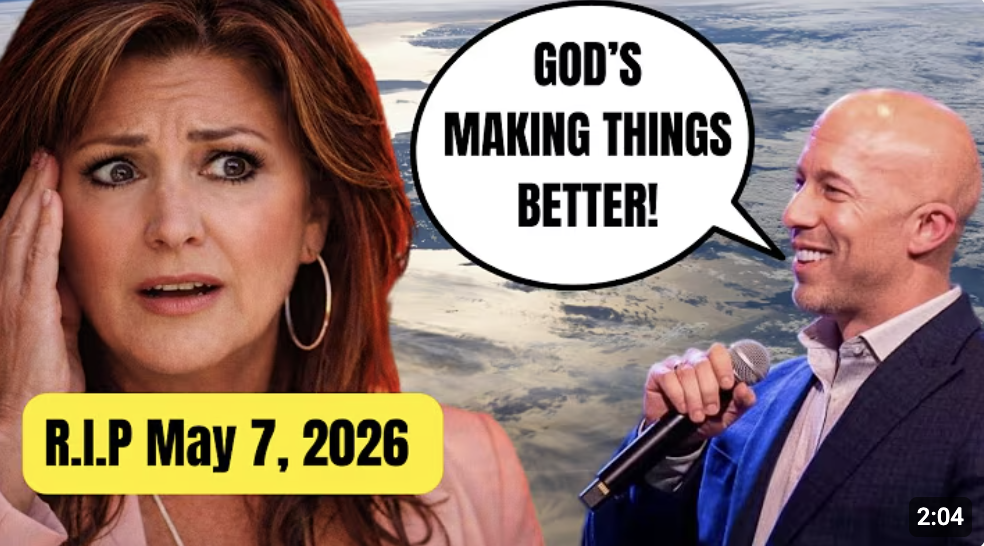
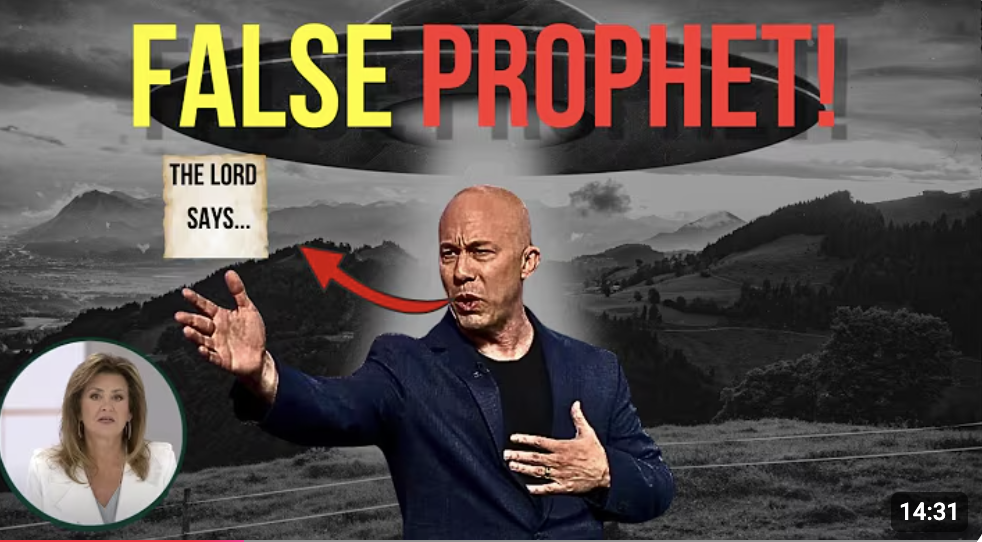
They pulled out their Logos Bible Software like it was a murder weapon. They built thumbnails with red arrows. They called it discernment. What it actually was — was a disgrace.
The Machine Turned On
Somewhere between the ring light turning on and the shocked-face thumbnail getting uploaded, discernment culture decided it had a verdict. A man stood beside a woman who was suffering, spoke life over her, honored her, called out her inheritance — and the internet grabbed its pitchforks before her family even had a chance to grieve.
This is not a think-piece about whether you liked Joni Lamb's ministry. This is not a defense of every decision Daystar ever made. This is something far more important: a defense of the prophetic word itself, and an indictment of the shallow, reactionary, spiritually illiterate culture that crucified a minister for daring to carry hope into a room that most people wouldn't even enter.
Joseph Z walked into the hardest place — and he opened his mouth and let Heaven speak. And for that, the internet decided he was a fraud.
Let me be direct: the case against Joseph Z is not a theological argument. It is a content strategy. And it is one of the ugliest things currently wearing the face of Christianity.

Before You Judge the Word, Learn to Read It
Here is what Joseph actually said:
"You have passed. And you are coming to the other side now."
— Joseph Z, prophetic word over Joni Lamb
The critics heard that and immediately concluded: he promised she would live. He told her she would recover. He gave a false word. Case closed, let's build the thumbnail.
But that conclusion only holds up if you have never once read your Bible with symbolic imagination. And apparently a lot of discernment influencers haven't.
The entire scriptural narrative is saturated with transition language. Israel doesn't just walk — they pass through the Red Sea. They don't simply enter Canaan — they cross the Jordan. David doesn't experience difficulty — he walks through the valley of the shadow of death. Jesus doesn't just die — He passes through death into resurrection glory.
The concept of "passing through" and arriving at "the other side" is not a prosperity promise. It is one of the most ancient and sacred ways Scripture describes spiritual transition, divine promotion, and the completion of a season — including the ultimate transition that every believer is promised.
"Passing through to the other side" has always meant more than earthly survival. Sometimes, it means glory itself.
The critics assumed those phrases meant Joni Lamb would recover her physical health and continue her earthly ministry. But if you take the prophetic language seriously — and if you believe, as the Scripture does, that entering eternity is not defeat but promotion — then Joseph's words land with staggering precision.
She passed. She came to the other side.
That is not a failed prophecy. That is a word that may have been far more accurate than even Joseph knew when he spoke it. And the critics, in their rush to execute, missed it entirely.

The Crown and the Scepter — What You Don't Know Is Exposing You
Then Joseph said this:
"Have I not given you the crown? Have I not given you the scepter? And will you not gain a second scepter says the Lord?"
— Joseph Z, prophetic word over Joni Lamb
The internet heard "second scepter" and assumed: he's promising her a bigger television network. More influence. Expanded earthly reach. Obviously false. She died instead.
But let's actually do the theological work that discernment culture refused to do.
Crowns in the New Testament are not symbols of earthly prosperity. They are symbols of completed endurance and eternal reward. Paul speaks of the crown of righteousness — awarded to those who have finished the race. James references the crown of life promised to those who endure under trial. Revelation presents crowns to overcomers who have passed through suffering and remained faithful. Every single crown in the New Testament points in the same direction: backward through suffering, forward into eternal honor.
A crown is not a promise that your earthly platform will expand. A crown is a declaration that your faithfulness has been seen, and your reward is secured.
The scepter carries the same weight. Throughout Scripture, the scepter represents delegated divine authority. Esther approaches the king's scepter — she does not earn power, she is extended it by the sovereign. Genesis prophesies the scepter will not depart from Judah. Psalm 45 speaks of the righteous scepter of the King Himself. The scepter is about rulership conferred from above, not platforms built from below.
When Joseph speaks of a "second scepter," he is not talking about Daystar 2.0. He is speaking in a biblical register that points toward eternal inheritance and heavenly authority — the kind that Scripture says every believer who finishes faithfully receives in the age to come.
"Do you not know that the saints will judge the world?" — and if the world is judged by you, are you incompetent to try trivial cases?1 Corinthians 6:2
"To the one who conquers, I will grant him to sit with me on my throne, as I also conquered and sat down with my Father on his throne."Revelation 3:21
A second scepter. A dimension of eternal authority and rulership that the saints who overcome will carry into glory. Joseph Z spoke language rooted so deeply in Scripture that the critics couldn't recognize it — and rather than doing the work to understand it, they declared him a fraud.
The embarrassment in this situation does not belong to Joseph Z.
Paul Already Told You What Prophecy Is For. You Just Ignored It.
Here is the theological foundation that the entire online discernment case collapses against. Paul wrote it explicitly. It is not hidden. It is not obscure. It is sitting right there in one of the most read books of the New Testament:
"But the one who prophesies speaks to people for their upbuilding and encouragement and consolation."1 Corinthians 14:3
Edification. Exhortation. Comfort.
That is the apostolic definition of New Testament prophecy. Not weather forecasting. Not a guaranteed press release from Heaven about the exact sequence of future events. Prophecy exists to build people up, to strengthen them, to bring divine comfort to human suffering.
So apply that standard to what Joseph actually did in that room:
Did he build Joni Lamb up? Yes. Did he strengthen her? Yes. Did he honor her faithfulness? Yes. Did he bring supernatural comfort to a woman who was visibly overwhelmed and suffering? Yes. Did he point her toward eternal inheritance when earthly endurance was running thin? Yes.
Joseph Z did exactly what the Apostle Paul said prophecy is for. The critics did the opposite of what Scripture says the church is for.
He functioned with precise New Testament accuracy in that room. And then the discernment industry — the one that constantly claims to be the guardian of biblical standards — evaluated his word using standards Paul never established, frameworks the New Testament never set up, and a theology of prophetic ministry that reads more like Old Testament judicial law than New Testament pastoral grace.
If you are going to invoke Scripture to judge a prophecy, you should at least invoke the right passages. And the right passages say Joseph Z passed the test.
What They Actually Wanted — And Why That's the Problem
Here is the part no one in discernment culture wants to say out loud, so I will say it clearly:
A lot of the people who attacked Joseph Z were not upset about the prophetic word. They were upset about the tone of the prophetic word.
They wanted rebuke. They wanted exposure. They wanted Joseph Z to walk into that room, look Joni Lamb in the eye, and publicly call out everything they had already decided was wrong with her, her ministry, and Daystar. They wanted condemnation dressed up as prophecy. They wanted the word of the Lord to sound like one of their thumbnails — accusatory, damning, and satisfying to an audience already primed for outrage.
Instead, Joseph Z walked in with mercy. He walked in with honor. He called out inheritance. He spoke to what God saw in her, not what Twitter had already decided about her. And to the exposure machine, mercy looks like compromise. Honor looks like enablement. Comfort looks like false prophecy.
But Jesus had a habit of kneeling beside the people that religious outrage mobs wanted destroyed. And He had a habit of frustrating those mobs by doing it publicly, without apology.
The woman at the well. The woman caught in adultery. Zacchaeus in the tree. The disciples didn't always understand it either. But grace has never asked for the permission of the crowd before it moves.
The Exposure Movement Has a Theology Problem
Let's go deeper, because the issue isn't just one bad-faith critique of one prophetic word. The issue is a movement that has built its entire identity — its content model, its audience, its revenue stream, its cultural authority — on the act of spiritual destruction.
Discernment ministry, at its best, is a genuine gift to the Body of Christ. The New Testament is clear that the church needs people who can identify false teaching, confront wolves, protect the flock. That is holy and necessary work.
But what we are watching across Christian YouTube right now is not that. What we are watching is spiritual TMZ — an attention economy built on the recycled wreckage of other ministers, where every tragedy becomes content, every controversy becomes a series, and every prophetic phrase becomes forensic evidence in a case that was decided before the trial began.
Think about the incentive structure. These channels grow when there is a target. The bigger the target, the bigger the audience. The more righteous-sounding the outrage, the better the watch time. Death is great content. Tragedy is engagement. The more a grieving family is suffering, the more raw material there is for the next thumbnail.
When your ministry model requires casualties to function, you have stopped being a shepherd and started being a predator.
And here is what the theology of the exposure movement ultimately produces: a church that is more practiced at tearing down than building up, more fluent in accusation than intercession, more comfortable performing discernment for an audience than actually doing the painful, private, relationship-requiring work of genuine accountability.
Real accountability requires relationship. It requires going to your brother first — Matthew 18 is not a content strategy, it is a command. Real discernment requires humility about your own interpretive limitations. Real shepherding requires that you actually love the sheep — including the complicated ones, including the ones you disagree with, including the ones you are confronting.
None of those things generate YouTube revenue. So none of those things happen.
Continuationism Is Not the Same as Charismatic. Someone Tell the Critics.
There is a particular irony in watching theologically Reformed or Calvary Chapel-adjacent ministers appoint themselves as the judges of prophetic ministry. And it needs to be named.
You can affirm, in a doctrinal statement, that spiritual gifts continue to exist — and simultaneously hold deep, functional distrust toward every practical expression of those gifts in the real world. That is called being a continuationist who is not actually charismatic. It is a real and common theological position. And it produces people who are technically qualified to discuss whether gifts exist, while being constitutionally unqualified to evaluate whether any given expression of those gifts is authentic.
Imagine asking someone who has never heard jazz to serve as the critic at a jazz festival. They could tell you the instruments are real. They could confirm that jazz is a genuine musical tradition. They could debate its origins and its legitimacy as an art form. But the moment the music started, their framework would fail them — because you cannot evaluate from the outside something that only makes sense from the inside.
Prophetic ministry is not a theoretical construct. It is a lived spiritual reality that operates within a covenant framework, a community context, and a pastoral relationship. Judging it from a tradition that has systematically distanced itself from it is not discernment. It is category error with a microphone.
What the Word Actually Was — And Why It Matters
Strip away the noise. Strip away the thumbnails and the reaction videos and the Logos Software dramatic openings. Look at what actually happened in that room.
A woman who had given decades of her life to Christian media was facing the end of her earthly journey. She was emotionally overwhelmed. Physically depleted. The weight of suffering was visible on her face. And into that room walked a prophetic minister who opened his mouth and, whether he fully understood it or not, gave her this:
You have passed. The hard part is behind you. You are coming to the other side. God sees what you endured. He has placed a crown on your faithfulness. He has given you authority. And there is more — a second dimension of inheritance and honor — waiting for you where you are going.
That is not a failed prophetic word. That is a stunning one.
If Joni Lamb heard those words and drew comfort from them — if she crossed from this life with the sound of Heaven's honor still echoing in the room — then Joseph Z did something extraordinary. He may have given her language for her departure before either of them knew that departure was imminent. He may have sent her forward with courage, with identity, with the sound of her Father's voice naming her faithful.
And the discernment industry turned that into a prosecution.

The Verdict
New Testament prophecy is not a press conference. It is not a divine press release with timestamped predictions that can be forensically audited after the fact. It is pastoral. It is covenantal. It is symbolic in its language, personal in its delivery, and its purpose — by Paul's own apostolic definition — is to build up, to exhort, and to comfort.
Joseph Z did all three. Precisely. Powerfully. At a moment when it mattered infinitely.
The exposure movement did none of those things. It did not build up. It did not comfort. It did not strengthen. It took a sacred moment between a prophet and a dying woman and turned it into content, clicks, and community notes.
That is the thing that should be exposed. That is the thing that deserves the theological scrutiny. That is the movement that needs to be held accountable to the standard of Scripture — because Scripture has a great deal to say about those who devour the flock they claim to protect.
And He Himself gave some to be apostles, some prophets, some evangelists, and some pastors and teachers, for the equipping of the saints for the work of ministry, for the edifying of the body of Christ.
— Ephesians 4:11–12
The prophetic office is not an embarrassing liability that the church reluctantly tolerates. Christ gave it as a gift. He gave Joseph Z as a gift — to Joni Lamb, to that room, and in this moment, to the entire Body of Christ as an example of what it looks like to carry Heaven's word into the hardest human places without flinching.
The internet wanted a false prophet. What it got was a faithful one. And it was too busy building its case to notice the difference.